Somewhere between animal and mineral: the precarious life of the film extra

By Eleanor Halsall

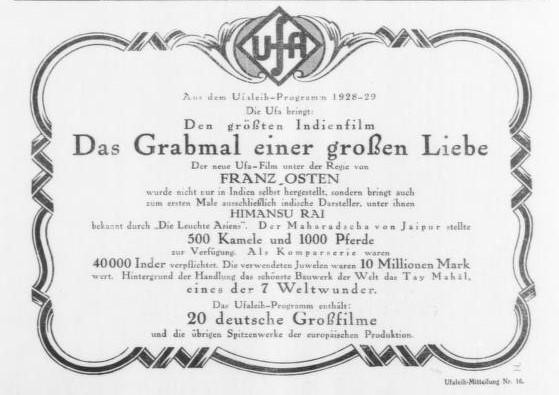
Film historiography is rich with tales of movies boasting casts of thousands, the hyperbole contributing to a film’s renown. Gandhi (Attenborough, 1982) is credited by the Guinness Book of Records as having had the largest ever crowd scenes involving 300,000 extras, a feat achieved long before computer generated imagery (CGI) altered the score. War and Peace (Bondarchuk, 1965) portrayed a battle using 12,000 real soldiers; an achievement previously surpassed by the Ufa propaganda film, Kolberg (Harlan, 1945) which made use of some 15-20,000 troops, their availability facilitated by a state of outright war. Das Weib des Pharao/The Pharaoh’s wife (Lubitsch, 1921) supposedly required 150,000 extras; with Kinematograph later commenting that ‘because such a large number of extras was not available in Germany, they had to make use of the unemployed’ (14 September 1927). This latter statement resonates with the precarity of the extra’s role: ‘Acting (as an extra) means earning money; having to feed a family; having to fight a continuous battle for an engagement for 10 marks a day; always being in the shadow of luck and not being noticed’ (Dortmunder Zeitung, 9 July 1937). In promotions (see below) for its silent film, Das Grabmal einer grossen Liebe/Shiraz (Osten, 1928), Ufa prided itself for the flock of 500 camels and 1,000 horses, 40,000 Indian extras, and the loan of priceless jewels from the Maharaja of Jaipur, in that order, a textual hierarchy locating the 40,000 humans somewhere between animal and mineral. 
What was it like to be an extra in German film production during these mid-century decades? One of the more instructive films for this discussion is Fritz Lang’s Metropolis (1926). Not only did Lang employ huge numbers of extras, but his treatment of this bedraggled, anonymous workforce might be described as negligent at best: ‘Lang’s tendency was to flatter the powerful, while picking on the weak and vulnerable, not only the crew, but the lowly extras’ (McGilligan, 118). Lang kept producer Erich Pommer busy with his demands for thousands of extras which included 4,000 bald men, 500 hungry children, and an army of naked males who were forced to act in the freezing winter conditions at the cavernous studio at Staaken, a former Zeppelin hanger in Berlin (119). At a time of mass unemployment and economic destitution, persuading people to participate was relatively straightforward because, in spite of the callous treatment they were subjected to on set, they were at least fed.
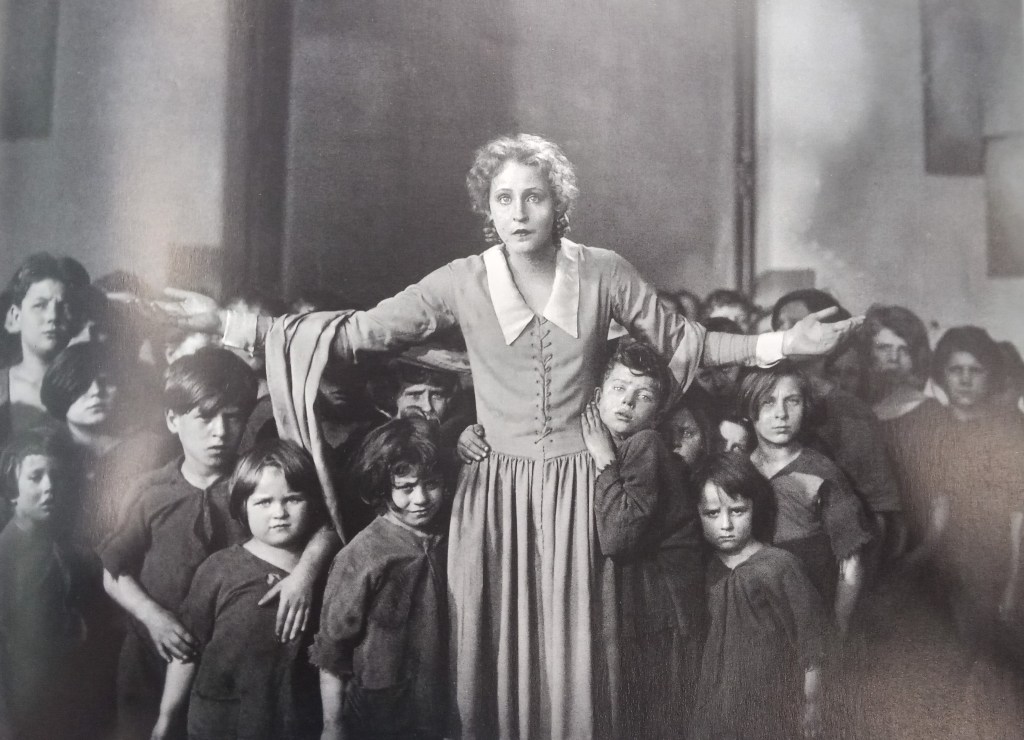
Brigitte Helm and extras

Lang was not the only director whose treatment of this transient workforce was controversial. Leni Riefenstahl’s production of Tiefland (1944/1953), a film that took more than four years to complete, included 100 Sintis who she personally selected from concentration camps; once filming was complete, they were despatched to Auschwitz where the majority were murdered (Tegel 2006). Several decades later, Werner Herzog ran into problems when he was pursued by allegations that Peruvian extras had been dragooned to appear in Fitzcarraldo (1982), a story about an individual who had been guilty of violence and abuse against locals at the beginning of the 20th century (Filmkritik 1979).
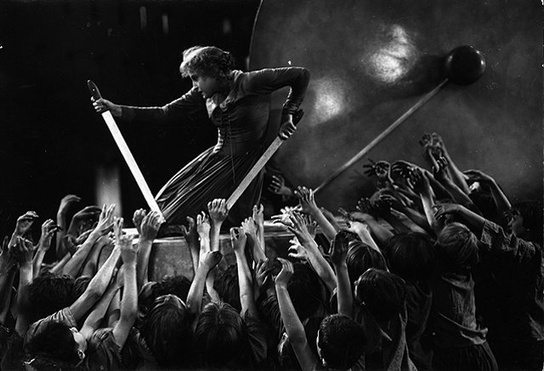
Brigitte Helm and extras

Visual metaphors in Metropolis illustrate the subaltern status of the film extra. In one, the levers wielded by Brigitte Helm contrast with the arms of the children in stretched upwards in apparent supplication. In another, extras appear crushed against one another, sharing Gustav Fröhlich’s panic.
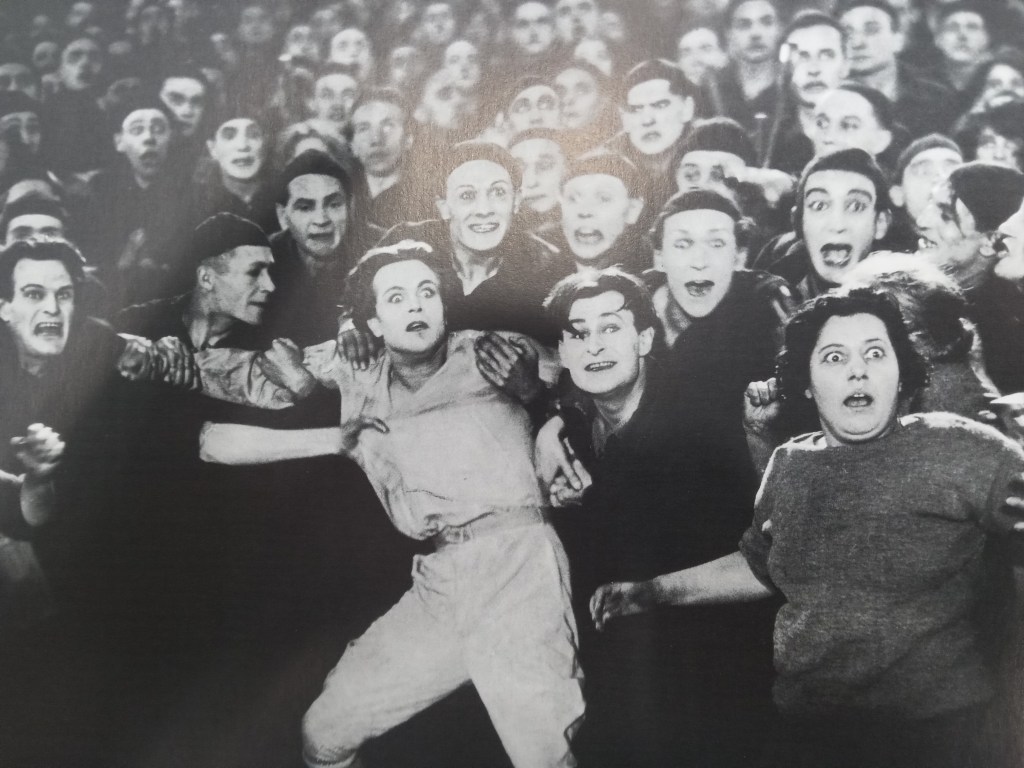
Extras in Metropolis

The extra subsisted on the fringes of film production, a position of extreme precarity, low wages and absence of self-determinism. It was a role requiring endless patience and a high degree of stamina. Far removed from the speaking parts which commanded attention on the screen, in terms of agency an extra was much closer to the props and requisites that provided the background scenery. Dedicated entrances at large studios such as Babelsberg and Geiselgasteig, as well as separate canteens and changing rooms, emphasised their physical separation from the rest of the cast and crew. Extras received no accreditation and had no dialogue, yet their presence was essential as what Picturegoer described as ‘atmosphere representatives’ (23 January 1932). Chosen by characteristics such as gender, height, ethnicity and age, these were the people who jostled in crowd scenes, created the Geräuschkulisse – the background buzz – in restaurants and theatres, and milled about on train platforms as bodies for the lead actors to push through. Just as the carpenter ordered spans of wood, so the production team would source the appropriate extras. Unlike planks of wood, however, extras had to be managed, fed, paid and, in an ideal world, looked after properly.

In German speaking countries the role of extra is usually described as a Komparse viz. Komparserie (the cast of extras) a term which Duden informs has its origins in the Italian term comparsa. Statist was more commonly applied for work in theatres, but also appeared in articles about film. The Kleindarsteller (a bit part actor) was generally named in the internal cast list, yet at other times was described as a film extra, an ambiguity reinforced by regular term switching in internal studio documentation. The Körperdouble (the stunt or body double) and the Lichtdouble (the light double or stand in), terms welded together from two languages, are used to replace the main actors either where the latter’s safety or dignity is concerned or when the photographer needs a body to check lighting and focusing.

Who worked as an extra? Film Magazin described the Komparserie as consisting mostly of former artistes and stage workers (24 March 1929); and Slide (2012) dedicates a chapter to Hollywood’s erstwhile silent stars who were reduced to working as extras. This notion of the extra as an elite individual who has fallen on hard times even features in The Last Command (Sternberg, 1928) when Sergius Alexander, a former grand duke played by Emil Jannings, is reduced to hustling with others to get occasional work as an extra in Hollywood. In an ironic twist, Jannings received the first ever Academy Award for acting…as an extra!

When names of film extras emerge, they usually do so obliquely, typically through a news item about an accident on set or a reference in meeting minutes. In July 1931 a dancer waiting to perform on Der Kongreß tanzt/Congress Dances(Charell) at Babelsberg, was fatally injured when a carbon ember landed on her dress, setting it alight (Mein Film, 1931). Lili Ernesto’s demise did not even warrant a mention in the board minutes. The accidental death of another female extra in March 1944 occurred during production of Wiener Mädeln / Viennese Maidens (Forst, 1945/1949) and resulted in a half day suspension of filming. ‘Pilandrovà – Komparsin’ is the only indication of the person whose demise resulted in a claim for compensation – RM 10,996.90 – to the benefit of the production company, Wien Film (R 109-III/58). In August 1933 Ufa’s board approved funding for a prosthetic leg for one Mr Jilenkoff. Referred to as an ‘incidental participant’ on Der weisse Teufel / The White Devil (Wolkoff, 1930), Jilenkoff’s actual role and the cause of his amputation is not known (R 109-I/1029a).

Slide (2012) describes how Hollywood extras were paid according to how authentically they fitted the type. Wearing their own clothes, especially formal dress, attracted slightly higher payments which could make a significant difference if work continued for several days. A similar system operated in Germany. In 1942, for example, an extra required to be an incidental part of a crowd scene (classed as more than 75 people) took home RM10 per day. If the extra was a professional person, however, this increased to RM15. An actor wearing ordinary day clothes could claim RM20; donning a historical costume or a better-quality outfit attracted RM25, but an actor in a ball gown or top hat and tails might earn RM35. Speaking parts were remunerated at RM40 and singing at RM30. Bringing personal equipment attracted supplements, such as RM5 for a set of skis or RM3 for opera glasses. Skills in another language used on set were more richly rewarded with a supplement of RM50 (R109-I/9a). The following table shows how some of these payments increased over the period 1935-1949: 

Payments for film extras and stand ins193519421949
Participation in crowd scenes (75 or more)RM10RM15RM20
Everyday street clothesRM15RM20RM25
Smarter street clothes or historical costumeRM17RM25RM30
Frock coat, ball gown or similarRM25RM35 RM35
Rider, swimmer, skier, sailor and similar sports activitiesRM25RM35 RM35
Speech, mime or songRM30RM40RM40
Supplements for: –    
Standing in as a light double0RM10RM10
Bringing opera glasses, tennis rackets, small suitcasesRM3RM3RM3

Data from DEFA report on pay and conditions for extras, DR 117 33224, December 1949

In addition to these rates, provision was made to cover delays, overtime and cancellation due to poor weather conditions, when government approved payments could be made. Although some conditions gradually improved for extras, after 1933 the barriers to entry became increasingly restrictive. Building on earlier bureaucracy which oversaw the employment of film extras through the Arbeitsamt (Die Bastion, 19 April 1936), Bavaria Filmkunst appointed Dr Alexander Gessner in February 1939. His specific role was to manage actors and extras, defined as those commanding a daily rate of less than RM 200, and to liaise with directors and producers to ensure that only extras with the correct paperwork were employed on films (R 109-I/2357). This was symbolic of the tight control that the regime in Berlin exercised over the German film industry, a situation further entrenched when the Ministry of Propaganda created a dedicated agency for film extras – the Einsatzstelle für Filmkleindarsteller – in September 1941; the purpose of which was to provide a contingent of officially sanctioned extras, and provide them with regular contracts and income (R 109-I/1034b).

Around the world, and in spite of the use of CGI, the film extra continues to be in demand. Perhaps this comment, from post war Austria explains the attraction? ‘The work of the people employed as extras is hard and without luxury. In the heat of the studio they often wait for hours in winter clothes, in winter outdoor scenes in summer dresses and light suits … this is how the nameless actors contribute to the success of the film. In spite of everything, they love their occupation, and the days on set … not only mean work and earnings for them, but also a certain satisfaction by participating in the cultural work of the film’ (Österreichische Zeitung, 10 July 1948). 

References

Anon, ‘Babelsberger Bilderbogen’; die bekannten Gesichter, Jeversisches Wochenblatt, 27 February 1931.

Anon, ‘Es ist nicht alles Gold… Die soziale Lage der Filmkomparserie’, Die Bastion, 19 April 1936, 2.

Anon, ‘Figuren im Hintergrund’, Film Magazin, 24 March 1929.  

Anon, ‘Tragischer Unfall in einem Filmatelier’, Mein Film, 295, 7.

Anthony Slide, Hollywood Unknowns: a History of Extras, Bit Players, and Stand-Ins, University Press of Mississippi, 2012.

BArch DR 117/25928, ‘Die letzte Nacht’.

BArch DR 117/33224, ‘DEFA Zentral Fundus’.

BArch R 109-I/9a, ‘Berlin Film GmbH’.

BArch R 109-I/1029a, 30 August 1933. Ufa Board Minutes.

BArch R 109-I/1034b, PK 1469, 1 Oct 1941. Ufa Board Minutes.

BArch R 109-II/40, ‘Tobis Filmkunst GmbH’.

BArch R 109-III/58, ‘Schadensrechnung’, 22 July 1944.

Berndt Böhle, ‘Und einmal kommt doch das Glück…’, Dortmunder Zeitung, 9 July 1937, 9.

Carl-Erdmann Schönfeld, ‘Franz Osten’s The Light of Asia (1926): A German-Indian Film of Prince Buddha’. Historical Journal of Film, Radio and Television 15:44 (1995): 555–61.

Das Herkunftswörterbuch, Duden, 2020.

Filmkritik – n273 September 1979, 442-443.

Friedrich v. Zglinicki, Eduard P. Andrés, Wie komme ich zum Film?  

Heinz Udo Brachvogel, Kinematogaph, Nr. 1072, 14 Sep 1927, 13.

L. F., ‘Das Heer der Namenlosen des Films’, Österreichische Zeitung, 10 July 1948, 6.

Margaret Chute, ‘That Little Extra’, Picturegoer, v.1 n.35, 23 January 1932. 

Patrick McGilligan, ‘Fritz Lang, the nature of the beast, Faber and Faber, 1997. 

Susan Tegel, ‘Leni Riefenstahl’s Gypsy Question Revisited: The Gypsy Extras in Tiefland’, Historical Journal of Film, Radio and Television, 26:1 (2006), 21-43. 
Conference Report: Film Studios

By Steven Roberts

The ‘Film Studios’ conference provided a forum for international research, looking beyond traditional geographical, historical, and methodological boundaries of studio research in keeping with the comparative STUDIOTEC project, which hosted the event in Bristol between 5-7 June 2023. Over three full days, the ideas of invited speakers flowed freely and were received by an attentive audience, who then put forward insightful questions during each session. Postgraduate students, early career and established researchers all participated in the production of knowledge. In addition, one of STUDIOTEC’s exciting outputs, a Virtual Reality experience, transported delegates to historic European studios. 
Given that creative spaces were the conference theme, let’s begin with the carefully chosen venue. The Watershed is a media production and film exhibition centre that has become a cultural landmark for the city and nationally, also attracting scholarship (Presence 2019). Conference delegates walked through the cinema lobby to be received each morning in the café, with generous views over the Bristol harbourside. The ample glass frontage connected internal and external space, reminding me of the distinctive locations in which artistic hubs like the Watershed can be found. Presentations themselves were delivered in the ‘Waterside’ rooms, just next to the site’s Pervasive Media Studio. The place of studios proved to be a strong theme, with research spanning Italy, India, Britain, Ireland, the USA, China, Germany, Czechia, Japan, Nigeria, France, Poland, South Korea, Romania, the United Arab Emirates, Australia, Chile, Argentina, Thailand, Saudi Arabia, and Singapore.

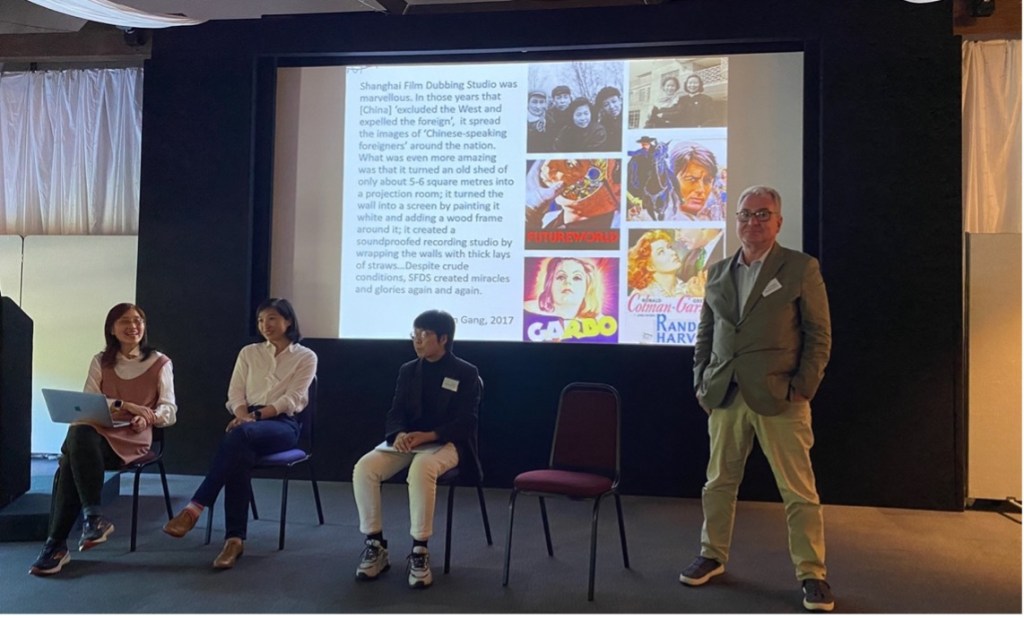
The ‘film studios in twentieth-century China’ panel take questions

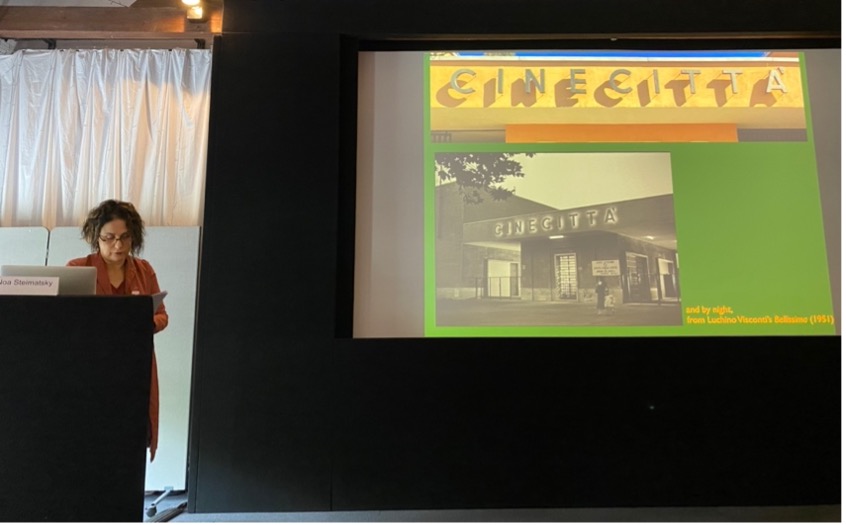
Studios’ interconnectedness with their locality and nation was emphasised in the first keynote address, given by Noa Steimatsky, whose paper (‘Displaced in Cinecittà: Historiographic itineraries’) was layered with historical and poetic allusions to Italy’s past. ‘Walled and gated, Cinecittà is a circumscribed place’ in a physical sense, but, argued Steimatsky, alternative histories can help when ‘locating the studio in fascist Rome’, which is one of its key contexts.

Noa Steimatsky: ‘Displaced in Cinecittà: Historiographic itineraries’

Steimatsky’s paper mapped realised examples of architectural display and fascist propaganda onto the city, while also recalling an envisioned utopian ‘media industrial’ or ‘cinematographic zone’ (with reference to archival planning documents of the period). In this urban project, there was a key tension between the shapeshifting nature of studios and the fixed promises and projections of the regime. However, this fascinating paper went on to discuss the periodic coalescence of creative and political imperatives as Cinecittà transformed into a POW camp, highlighting the studios’ material correspondence to the classical military castra. Evidence of the studios’ alternating appropriation by fascism and then British intelligence significantly expanded on published work, including Steimatsky’s book chapter for In the Studio (2020), edited by the second keynote speaker, Brian R. Jacobson (please read to the end of the blog post to learn more about this last paper.) 

It was exciting to see speakers variously respond to the themes of studio ‘histories, evolution, innovation, futures’ indicated in the conference subtitle. Panels such as ‘British studios before 1930’, ‘Film studios in twentieth-century China’, and ‘Excavating studio histories’ had a historical and historiographic focus, in using sources that tracked evolving studios from the silent, early sound and post-war eras of global cinema. Historical crisis and political change also proved to be a factor for studios’ evolution in certain panels, such as ‘Studios and filmmaking after war and partition’ and ‘film studios in state-socialist Poland’, respectively, which chimed with issues discussed in Steimatsky’s opening keynote. 

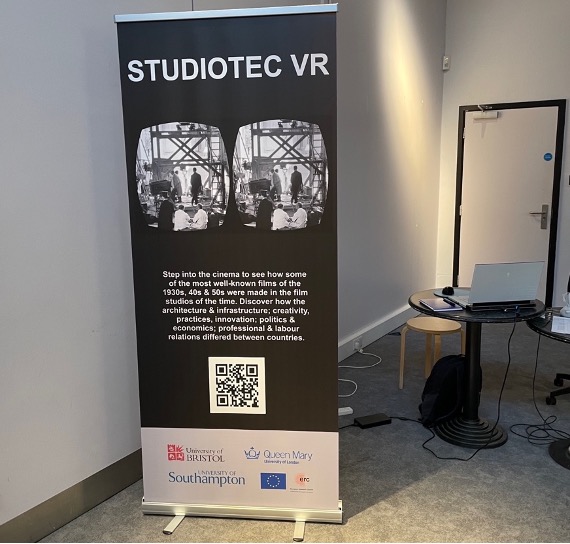
STUDIOTEC VR: step into cinema (and the studios behind it)

Tuesday afternoon’s plenary session on Virtual Reality punctuated proceedings with the welcome opportunity to come together and gather our thoughts on the role of technology in contemporary studio studies. Amy Stone gave a precise overview of ‘STUDIOTEC VR’, but which delegates could also sign-up to experience individually, and in 360-degree virtual space, by wearing a headset under Stone’s guidance in the breakout space. The session considered the application of interactive design and user experience data in developing and refining the immersive tours of British, Italian, German and French studios. Researchers on the STUDIOTEC team had fed into the design process, so that appropriate modelling and educational reuse of primary sources could enhance the product. Lively discussion followed between conference delegates and the wider project team, touching on the opportunities of adaptability, standardisation, and aesthetics in virtual reality for better informing us about film studios in the not-too-distant future, and as the tech industry develops. 

Innovative filmmaking connected to studios was explored in quite a few papers, including the context of ‘Virtual filmmaking’ that fittingly preceded Stone’s plenary address. Panels such as ‘contemporary animation studios’ and ‘animation studios’ explored the symbolic and material qualities of a multi-faceted technique, and the different environments in which this has flourished. The reliance on specific technical knowledge in the production workforce was also highlighted in panels such as ‘British studios’ (on construction, costumes, and staging techniques) and two diverse panels on ‘Studio working life and practices’. Although the field has sometimes usefully focused on architectural and technological aspects in isolation, other research reminds us that studios can belong to broader networks that include large communities of people. In this same vein, panels on ‘transnational studios and filmmaking’ and (yes indeed!) ‘beyond the studio’ reflected on the inter-cultural and social contexts of material infrastructures.

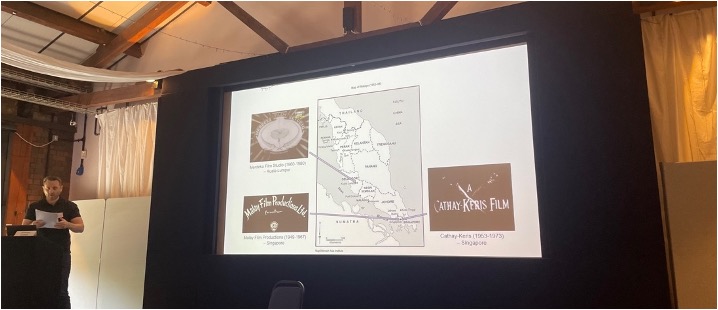
Jonathan Driskell: ‘Striking glamour: Studios and stardom in the “golden age” of Malay cinema’

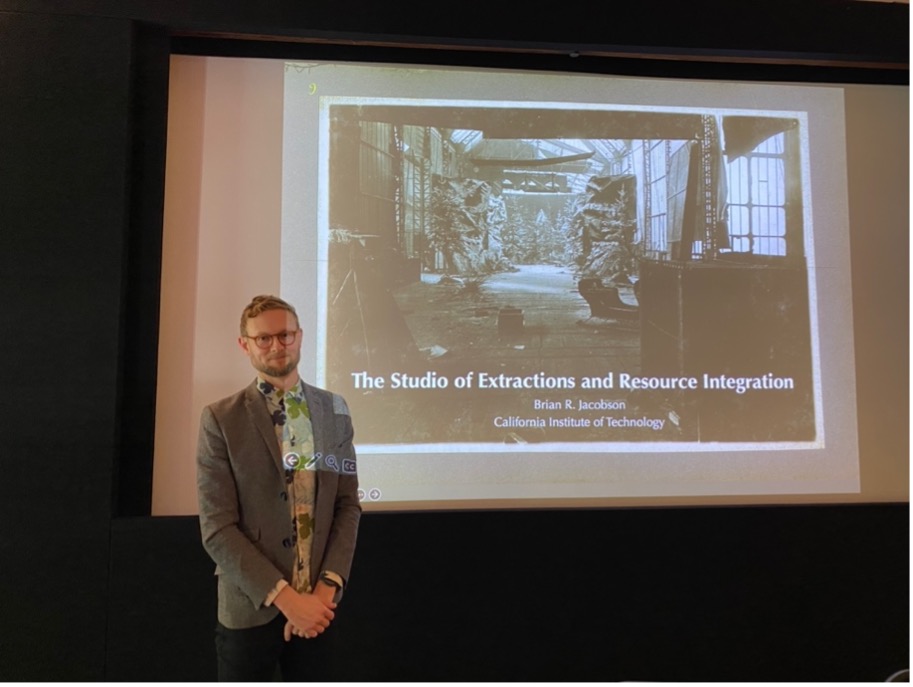
The second keynote was given by Jacobson and was titled: ‘The studio of extractions and resource integration’. It embraced the revisionist thinking and even specific questions raised by previous papers, such as finding a place for film analysis in studio studies, or how historical examples can be brought into relation with current practices around sustainability. Jacobson began by acknowledging contributions to the field by Steimatsky, Sarah Street, Thomas Schatz and others, particularly as to how studios provide a ‘motor’ for various types of historical research. Revisiting the earlier approach to ‘filmless film studies’ which partly characterised the materialist monograph Studios Before the System (2015), the paper considered how both studios and their products embody the material world which industry ‘manages, uses and manipulates’.

The second keynote was delivered by Brian R. Jacobson

Echoing the taxonomy from his forthcoming book, Jacobson outlined the early cinema of extractions which developed into a cinema of resource integration, yoked to a resource-dependent economy. There followed a detailed analysis which aimed to ‘collide textual and material forms’, using case studies drawn from silent Hollywood cinema: The Lonedale Operator (D.W. Griffith, 1911) and Sunshine Molly (Lois Weber, 1915). Although the films relate to the mining and oil (extraction) industries, Jacobson noted that this was also for illustrative purposes, and that a range of examples resonating with the world’s resources could bridge ‘textual form, form of content, and the material conditions of production’. Alongside its open appreciation for canonical silent films and responses to them (e.g., Tom Gunning), the keynote address was informed by the later research of Caroline Levine, Lee Grieveson, and Jennifer Peterson. The total effect was one of looking backwards in time through a contemporary lens, with the films now appearing like a warning sign for our future. The methodology led to rich discussion during audience questions, considering the focus, affordances, and political role of analysis, and related terminology such as ‘indexicality’ and the ‘cinema of attractions’. When all was said and done, we were reluctant to call ‘cut!’ on the conference’s closing scene. Doubtless, the conversation around studios will continue.  

Film Studios: Histories, Evolution, Innovation, Futures

An ERC-funded conference exploring film studios as a global phenomenon held at the Watershed, Bristol, 5-7 June 2023

Watershed 1, Canon’s Road, Bristol BS1 5TX

Register here by 18th May

MONDAY 5TH JUNE

1000-1100Registration
1100-1230Welcome and Keynote 1Noa Steimatsky, ‘Displaced in Cinecittà: Historiographic itineraries’
1230-1330Lunch 
1330-1500Panel session 1Panel 1A: Studios and filmmaking after war and partition
Francesco Di Chiara and Paolo Noto, ‘Supplying (the means of) production. Studios as producers in post-war Italy’
Amrita Biswas, ‘Post-partition cine-ecology: Calcutta’s film production culture (1947)’ 
Panel 1B: British studios before 1930
Tony Fletcher, ‘Sound before Blackmail: Clapham, Wembley and the production of short sound films before 1929’
Simon Brown, ‘Hepworth studios at Walton’
Ian Christie, ‘North London studios before 1920’
1500-1530Break 
1530-1700Panel session 2Panel 2A: Contemporary animation studios: Brand identity, technology and representation 
Helen Haswell, ‘The “Formerly-Great Pixar Studios”: Brand identity and perception in the post-acquisition Pixar’
Eve Benhamou, ‘Crafting a studio identity in the digital era: Hand-made appeals, analogue artistry and cartoon saloon’
Maliha Miriam, ‘A Productions and JoJo and Gran Gran: The impact of women within the British animation production pipeline’
Panel 2B: Film studios in twentieth-century China
Ting Luo, ‘Self-referentiality as self-promotion: Mingxing Studio’s meta-films in early Chinese cinema (1922-1932)’
Weihong Bao, ‘The productivity of life: Film studios in 1930s Shanghai’
Lin Feng, ‘Dancing in chains: Shanghai film dubbing studio and the creative performance in the Mao Era’ 
1700End of day 1 

TUESDAY 6TH JUNE

0945-1115Panel session 3Panel 3A: Animation studios
Till Grahl, ‘Women at the DEFA animation studio, Dresden’
Pavel Skopal, ‘“Poor Guys from the Second Floor”. Art worlds and working routine in a Czechoslovak animation film studio’
Megumi Hayakawa, ‘Apprenticeship, workshop and community: Otogi Pro and its impact on Japanese animation’ 
Panel 3B: Beyond the studio
Yuqian Yan, ‘In the open air: Rethinking the meaning of control in and beyond studio spaces in 1920s China’
Connor Ryan, ‘Nollywood, Lagos, and people as infrastructure’
1115-1145Break 
1145-1315Panel session 4Panel 4A: Excavating studio histories
Polly Rose, ‘Eleanor Avenue and Lilian Way: Mapping the footprint of the Buster Keaton Studio, 1920-28’
Morgan Lefeuvre, ‘The Pagnol studios in Marseille: A singular experience of decentralisation of French film production’
Lawrence Webb, ‘Reconstructing the MPO studio: Advertising, film, and visual culture in sixties New York’ 
Panel 4B: Stories from ‘HollyWoodge’ – film studios in state-socialist Poland
Ewa Ciszewska, ‘How it is like to establish film animation studio? On the beginnings of the Se-Ma-For studio’
Emil Sowiński, ‘The Educational Film Studio and the Policy of Film Debuts in the 1970s and 1980s’
Konrad Klejsa and Jarosław Grzechowiak, ‘Feature film studio in Lodz in the 1980s in the lights of internal documents from film production units’ 
1315-1415Lunch 
1415-1545Panel session 5Panel 5A: British studios
Geoff Brown, ‘How not to rebuild a film studio: Gaumont-British’s botched expansion at Shepherd’s Bush’
Caroline Ness, ‘Couture in post-war British film production’
Steven Roberts, ‘Staging Richard III: Studio history, nation and adaptation’ 
Panel 5B: Virtual filmmaking
Tom Livingstone, ‘Film studios and new technologies: Virtual Production’
Michael Samuel, ‘TVAI: Generative media and AI television programming — a case study of Mismatch Media and Nothing, Forever (2023-)’
Soumaya Snoussi, ‘South Korean film industry, stepping into the new age of virtual production studios’ 
1545-1615Break  
1615-1700Plenary sessionEnd of day 2STUDIOTEC VR session

WEDNESDAY 7TH JUNE

0945-1115Panel session 6Panel 6A: Transnational studios and filmmaking
Stephen Morgan, ‘Pagewood, 1935-1952: Tracing the transnational fortunes of an Australian film studio’
María Paz Peirano and Alejandro Kelly, ‘Between the national and the transnational: Commercial and industrial links between Chilefilms and Argentina Sono Film in the 1940s’
River (Yilin) Jiang, ‘From the studio to the street: The intersectional moment between Classical Hollywood and the French New Wave in Jean-Luc Godard’s Le Mépris (1963)’
Panel 6B: Studio working life and practices 1
Adina Brădeanu, ‘The double life of a film studio: Professional identity and everyday life at the “Alexandru Sahia” documentary studio’
Francesca Tesi, ‘Stabilisation of Alessandro Blasetti’s troupe in Fascist Cinecittà’
Alex Boutellier and Panos Raptis, ‘The future is Unreal: How the intermediality of Virtual Production is changing professional practice’ 
1115-1145Break 
1145-1315Panel session 7Panel 7A: Developing new studios and film industries
Abdulrahman Alghannam, ‘Film studios and locations in the GCC countries: Current trends and challenges’ 
Anchalee Chaiworaporn, ‘Branding the studios with New Audiences: The case of Thailand’s Five Star Production and GTH’ 
Musab Alamri, ‘The status of film studios in Saudi Arabia: A producers’ perspective’
 Panel 7B: Studio working life and practices 2 
Jonathan Driskell, ‘Stars and Strikes: Community, Commitment and Conflict in Malay Film Studios in the 1950s-1960s’ 
Llewella Chapman, ‘”A Central wardrobe”: Mapping wardrobe and costume work in British studios through magazines and trade papers, 1946-1950’ 
Stephen Andriano-Moore and Li Chuan Evelyn Mai, ‘Enlight Movie Word: Challenges and implications of Virtual Production, Artificial Intelligence, and Automation in the Chinese film studio’ 
1315-1415Lunch 
1415-1545
1600
Keynote 2 Closing remarks
End of conference
Brian Jacobson, ‘The studio of extractions and resource integration’

Creating Miniature Worlds

By Sarah Street 

The appeal of ‘tiny things’ has long been recognized to satisfy ‘our desire for mastery and elucidation’. Film studios were perfect environments to demonstrate their usefulness in ‘bringing scaled-down order and illumination to an otherwise chaotic world’ (The Guardian, 4 Nov 2018). This was particularly the case in post-war Britain, as the studios attempted to return to normal by creating ingenious means of saving costs, time and resources. Models were used to assist different processes and technologies. They were constructed as mini sets which helped with planning shooting, lighting set-ups and solving other logistical issues. Models were also made as parts of sets which used materials that could be mistaken for ‘real’ materials such as bricks, columns or parts of a building. They were also integral to special effects and creating the illusion of perspective: when filmed they looked as if they were lifelike size. They were also good publicity for studios, featuring in special film industry displays which included set models that were shown at various Ideal Home Exhibitions. While as reported in a recent blog post members of the public did not often visit studios, the models’ portability meant that at least some of the techniques of filming could be appreciated elsewhere.  

But obtaining information on this important studio facility is difficult, and not many models of sets seem to have survived. An exception is one held by the BFI of a set model from Queen of Spades (1949). Curator Claire Smith describes the model’s advantages: ‘There is a strong sense of architectural proportions – working in half inch to the foot scale – easily interpreted by set builders and set dressers’. The beautifully made model incorporated Oliver Messel’s elaborate designs: ‘In one such detail, the bed’s pelmet is fringed with pipe cleaners, which simultaneously provide charm, structure and support’.

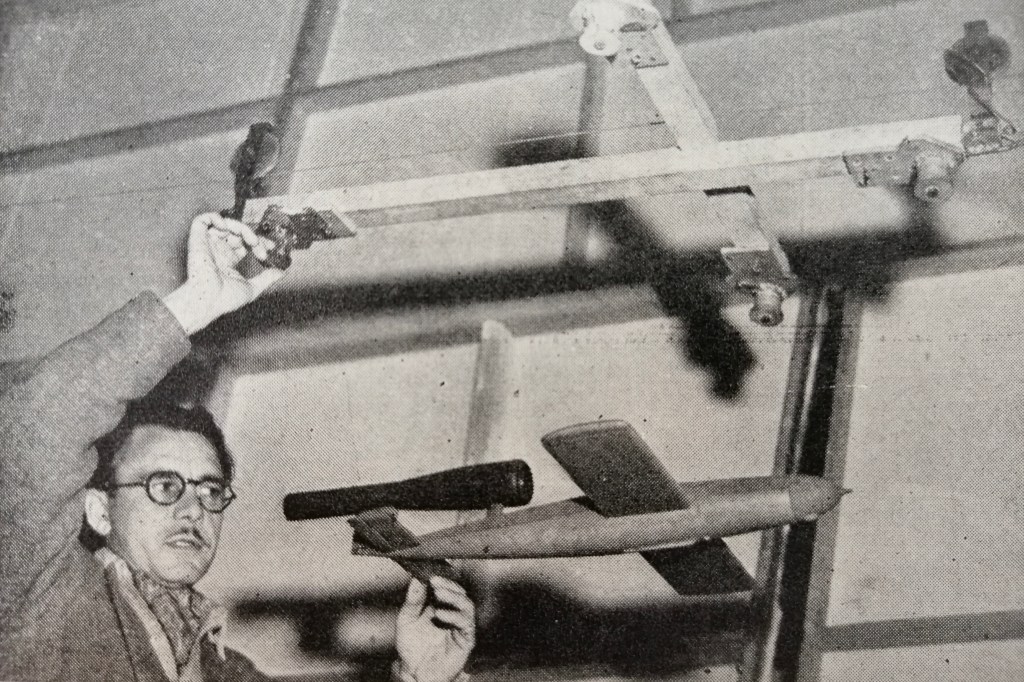
The trade press in Britain occasionally referenced set models when reporting on productions in progress. In the immediate post-war period a range of techniques were used to help make studios more economical in terms of staff time and materials. Models were used to supplement both studio and location shooting. They were also a source of commentary such as the notable work of special effects expert Percy Ralphs, whose V-1 (flying bomb) model was flown over a foreground model hospital for Green for Danger (Kinematograph Weekly, 25 July 1946: 35). 

A one-inch scale model was made of wood and metal and ‘flown’ on the lot at Pinewood from overhead cables. It approached the camera at almost roof-top height with the exhaust flaming at its tail. ‘The exhaust flame was the most difficult effect to achieve, but this was finally accomplished by placing a roman candle firework in the tail, which had draught holes drilled in it to keep the flame going while in motion’ (Kinematograph Weekly, 4 July 1946: 22-23).

An unusual model was required for The Blue Lagoon (1949), an adventure film about two children who are shipwrecked and marooned for years on a tropical island in the South Pacific. A report explained how the most realistic effects were achieved: ‘A tiny octopus, pickled in a jar, was lent to Pinewood Studios Art Department by the Natural History Museum to serve as a model for the construction of an octopus needed for one of the most dramatic scenes in the film’ (The Cinema Studio, 23 June 1948: 12). Experiments were carried out by designers Edward Carrick, Elvin Webb and Tony Inglis to make a sequence in which Jean Simmons and Donald Huston escape from an octopus. A nine feet long tentacle was wound around an actor and photographed as it was being dragged away. For the film this was projected in reverse so that the tentacle appears to come out of the water and encircle the man’s body. The whole octopus was constructed in plaster sprayed with a rubber solution and three of its eight tentacles were flexible. The Natural History Museum also provided models and photographs from which a barracuda, a shark, and underwater seaweed were made in plaster sprayed with a rubber solution. The close-ups were shot at Pinewood using pools built on the sound stage and on the lot. 

Edward Carrick found models very useful for planning intricate camera movements which involved tracking an actor’s movements going up stairs or across a hallway. Models saved time planning lighting set-ups and the positioning of microphones by the sound crew. In Captain Boycott (1947) the character Hugh Davin’s (Stewart Granger) cottage has two levels. The model, which helped plot the relationship between camera and the set, was used as one of Pinewood’s ‘film studio’ exhibits in the Ideal Home Exhibition, 1947. When Carrick published Designing for Films (1949: 62-3), he included a plan and sections of the same cottage. 

The large set allowed for freedom of movement for the actors and was constructed to evoke maximum verisimilitude concerning the spaces, materials and ‘lived in’ appearance. The detail provided by Carrick showed that as well as using the model shooting was anticipated at the drawing and construction stage of the designs which were also crucial for saving time and cutting costs. 

Another set model exhibited at the Ideal Home Exhibition was Take My Life (1947), a thriller directed by Ronald Neame.

Some models helped introduce new production methods. Art director Terence Verity experimented with a turntable setting (a method which had been used in theatre) for The Hasty Heart (1949), shot at Elstree Studios, Borehamwood. This involved a composite set mounted on a rostrum. When revolved, different aspects of the set could easily be filmed. The model included miniature lighting rails so that the director, camera crew and electricians could test in advance how filming would work out in practice (The Cinema Studio, 26 Jan 1949: 6-9).

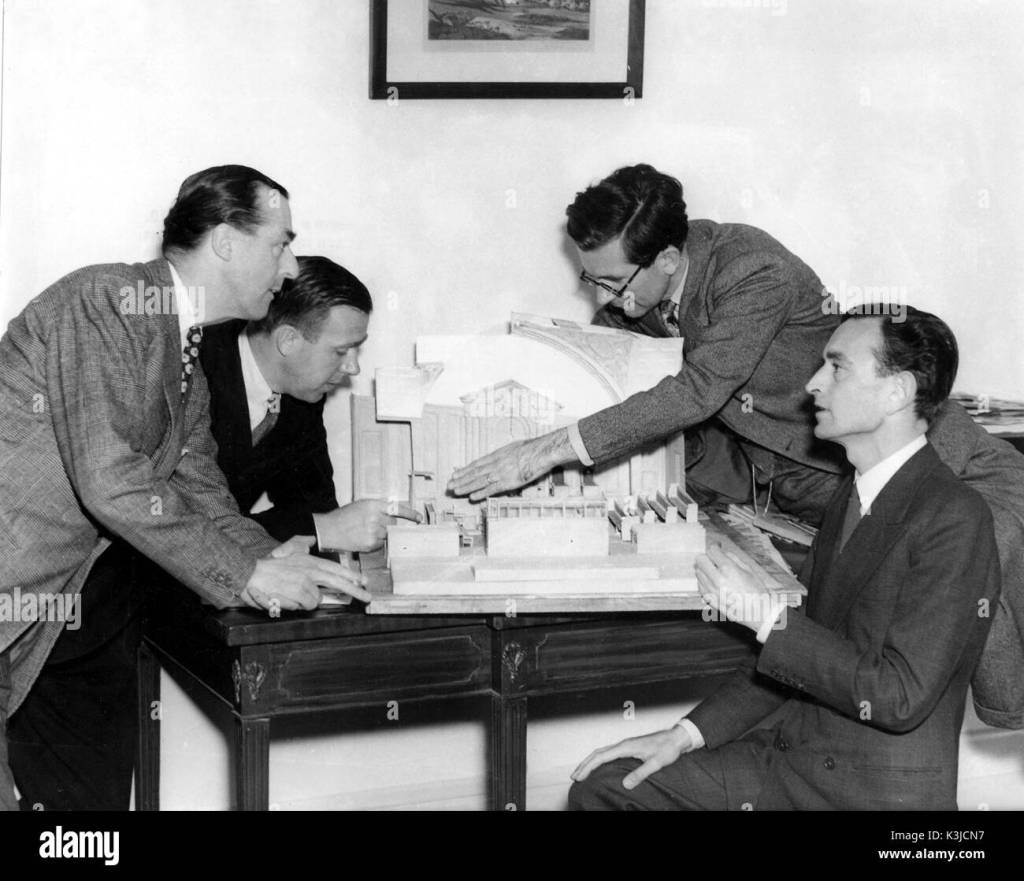
Here we have a rare image of a set designer – Carmen Dillon – using a model in conjunction with her sketches of a set for The Sword and the Rose, a US-UK co-production about the life of Mary Tudor filmed at Pinewood and Beaconsfield in 1953.

Models occasionally publicised the construction of new studios, as seen here in this model of the Gaumont-British studios, Shepherd’s Bush. The model was sent on a tour to selected London cinemas in the Gaumont-British chain (Kinematograph Weekly, 21 December 1933: 27; Norwood News, 19 January 1934: 13).

It’s not entirely clear when models were first used to assist film production, but there are famous examples from the silent era such as the films of Georges Méliès and the model work used for Metropolis. They were also an important element of planning theatre sets. As the above examples demonstrate, use of models intensified during times of economic retrenchment. They’re important in the history of film technologies as key, evolutionary processes which anticipated today’s use of miniature sets, CGI and 3D ‘virtual’ modelling, The tiny and not-so-tiny worlds made possible via VR technology, including our own use of it for STUDIOTEC, similarly involves re-creating studios of the past using today’s technology. Off we go, down the ‘virtual’ corridor of Denham Studios…

‘Philippa’ arrives at Pinewood

By Richard Farmer

The summer of 1946 was an exciting time at Pinewood. The studio had just reopened after the war, de-requisitioned after being used for a variety of filmmaking and non-filmmaking purposes during the conflict. Visitors to the site would have found a studio seeking to face up to the challenges of the post-war world, eager to find ways to create interesting and profitable films despite continued scarcity of many filmmaking staples. 

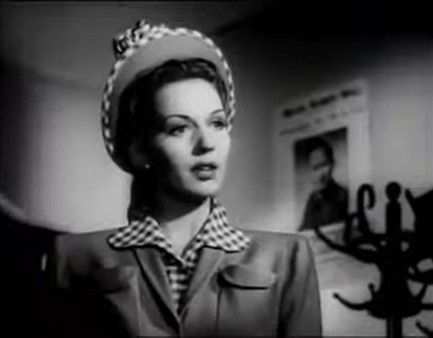
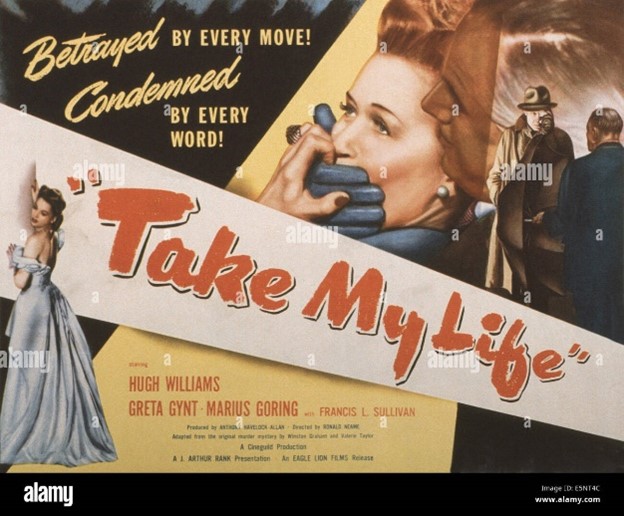
At some point during that summer of 1946 a special hat designed by a ‘top-line’ London milliner, the ‘tall and beefy’ Hugh Beresford, arrived at Pinewood, ready to be placed carefully atop the head of Greta Gynt (Daily Mirror, 22 March 1948: 4). Thus anointed, Gynt would walk out onto the set of Take My Life (1947), a mid-budget thriller directed by Ronald Neame for Cineguild, in which she played an opera singer desperate to clear her husband of murdering a former girlfriend – a crime he she is convinced he did not commit. 

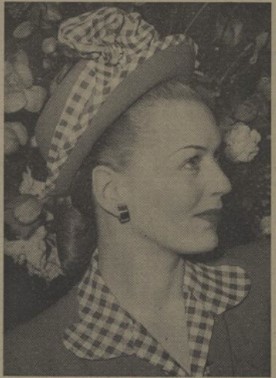
Greta Gynt unveils the Philippa, with trim to match her blouse, in May 1947

The hat, dubbed the ‘Philippa’ after Gynt’s character in Take My Life, was simple, ‘a new-trend halo, worn to the back of the head, with a neat flat-topped crown’; the brim eased off at the rear ‘until it is non-existent, thus allowing for any individual hair style to be worn low at the back of the neck’  (Manchester Evening News, 14 May 1947: 1; Truth, 23 May 1947: 510). An important innovation, and one that spoke to an ongoing shortage of fabric, was that different trims could be added by the wearer, allowing women to use off-cuts and remnants to match the Philippa to other parts of their outfit. When Gynt appeared at the hat’s unveiling at Regent Street’s Hungaria Restaurant in May 1947 – just days before Take My Life’s London premiere – her hat’s brown-and-white checked gingham trim matched her blouse: both had been adapted from a child’s frock.     

Dalton: ‘very bald’

British milliners were very keen to revive interest in hats. Clothes rationing was still in effect across Britain, and although consumers continued to be subject to restrictions on what they could buy there was a desire among British clothes designers and manufacturers to stimulate a greater interest in fashion after years of Utility clothing and austerity controls. Britons had not needed to hand over any of their precious allocation of clothing coupons when buying a hat, but in August 1942 Hugh Dalton, President of the Board of Trade and the man with political responsibility for clothes rationing, had warned that in order to save cloth ‘I think we shall more and more have to go without hats. Anyone who retains his natural hair ought to go without a hat’ (Daily Mirror, 28 August 1942: 1). It was pointed out that Dalton was himself ‘very bald.’ 

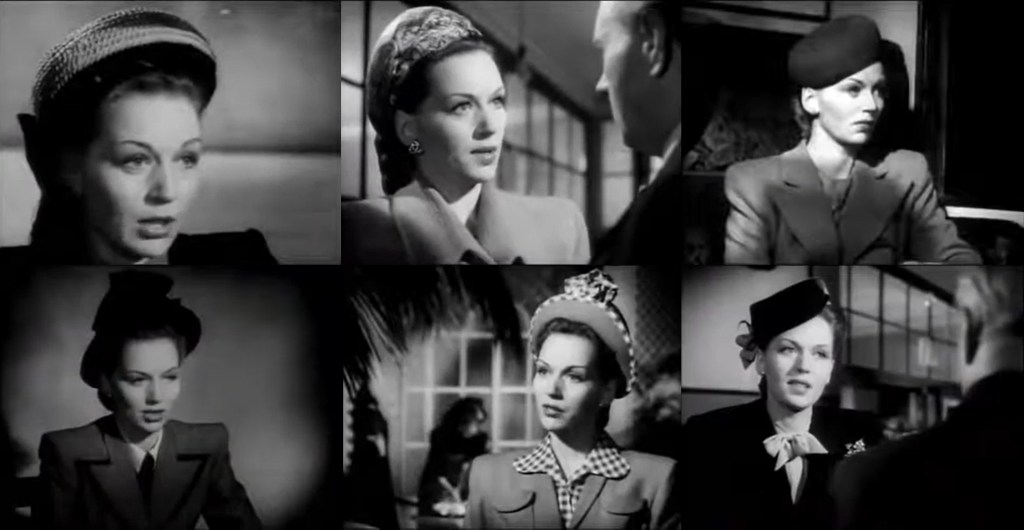
Take My Life: the many hats of Greta Gynt

With prices rising and supplies scarce, more Britons decided to forego headgear than before the war; the piece that Beresford designed for Gynt was part of a wider campaign orchestrated by the Millinery Information Centre to ‘coax women back to the habit of wearing hats instead of the ubiquitous headscarf or nothing at all on their heads’ (Sunday Times, 4 May 1947: 7). The Philippa was just one of a number of fetching lids worn by Gynt in Take My Life, a film that might have been out under the title Six Hats for Greta. British film producers were willing to help in this regard, both because better-dressed films were thought to be more appealing to cinemagoers and because manufacturers could be called upon to promote the film in which their goods appeared. Around Britain, hat shop windows became billboards for Take My Life.

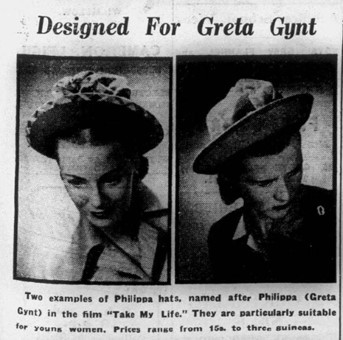
Wilmslow Advertiser, 27 June 1947

Four hundred milliners around Britain were engaged to make various versions of the hat in a range of textiles, patterns, colours and prices. Although many costume designers worked with an eye on how outfits would look when photographed, it is not clear if Beresford created the Philippa specifically for Gynt to use in Take My Life; it might instead have been selected by the filmmakers from a range put forward by the Millinery Information Centre. Indeed, it seems likely that the Philippa was not the only hat provided to Cineguild, even if it was the only one that went into mass production. Beresford noted that ‘One of the reasons it was chosen is the number of close-ups required in the film – and its off-the-face line gives such a flattering effect’ (Manchester Evening News, 14 May 1947: 1). The design also worked to keep Gynt’s face free of shadows. 

Whereas before the war Beresford’s hats had tended to be expensive and exclusive – one of them was worn by the model in Cecil Beaton’s famous ‘Fashion is indestructible’ photoshoot for British Vogue in September 1941 – the Philippa was aimed squarely at the mass-market. ‘Intended primarily for the teenager and the junior miss,’ prices started at just 15 shillings (Truth, 23 May 1947: 510). Younger, less-well-off women were probably the most dedicated cinemagoers in Britain. They were also, perhaps, the least likely to wear hats. The Millinery Information Centre claimed that women watching popular films were considerably less likely to sport a hat than those going to see “highbrow” cinema: 80 per cent of women in the queue to see The Last Chance (Die letzte Chance, 1945) and 75 per cent in the queue for De Sica’s Shoe Shine (Sciuscià, 1946) wore hats, as compared to just 32 per cent to see Ava Gardner in the noir Singapore (1947) and 30 per cent for the 1947 musical I Wonder Who’s Kissing Her Now (Daily Mail, 12 February 1948 p. 3). Putting the Philippa in Take My Life, a film intended very much for the mainstream,made perfect sense in terms of target market.

Hatted and hatless patrons queue to see Yankee Doodle Dandy at the Capitol in Stoke-on-Trent

It’s not clear how successful the Philippa was. The pale green version Gynt wore in Take My Life did not hinder her efforts to solve the mystery at the heart of the film, but I have not been able to find any information about how well the hat sold or how consumers reacted to it. Announced with a fanfare, the Philippa seems to have quickly faded from view (or at least the pages of British newspapers). What is clear, however, is that film studio costume and publicity departments were keen to exploit the continued popularity of the product they made, working with other industries and other forms of consumer culture in an attempt to position film at the heart of British life and fashion. 

Film Studios conference, Bristol

Call for Papers

Film Studios: Histories, Evolution, Innovation, Futures

5-7 June 2023

University of Bristol

Keynote speakers: Brian R. JacobsonNoa Steimatsky

The ERC-funded STUDIOTEC project welcomes proposals for individual twenty-minute papers and pre-formed three-paper panels for Film Studios: Histories, Evolution, Innovation, Futures, an in-person, three-day conference organised by the University of Bristol, UK, and held at the Watershed, Bristol, 5-7 June 2023.

Academic interest in the spaces and places of film production has grown in recent years, and this conference will take stock of recent and current research into film studios around the world. While ideas of the Hollywood studio system have tended to dominate the collective imaginary, recent research has made clear that different film studios have evolved in distinct ways in response to varying local contexts. It is this diversity that the conference wishes to emphasise, exploring commonalities between film production infrastructure in different parts of the world while noting the specific factors that have shaped the development of film studios in different geographical temporal, political and economic circumstances.

Intended to demonstrate the interdisciplinary nature of studio studies, Film Studios: Histories, Evolution, Innovation, Futures will explore film studios as a global phenomenon, considering their material as well as economic and socio-cultural dimensions and the links they have established with the various environments within which they operate. The conference aims to highlight the diverse range of practices and labour types that contribute to the successful operation of a film studio, the key role that studios have played in film production and technical innovation, and how studios have shaped the professional and social lives of film industry employees.

We are interested in all areas of studio studies, and in film studios in all periods and all parts of the world, but would be especially interested to receive proposals for papers or panels looking at:

  • The influence of geographical, political and economic contexts on the location, development and operation of film studios
  • Film studios outside Western Europe and North America
  • The studio as a working environment (training and careers, professional practices, labour conditions, health and safety)
  • How film studios adapt to technological innovation (sound, colour, digital, etc.)
  • Women in film studios
  • The studio as a social space (exchange and circulation of cultural and professional practices, cooperation between studios, leisure activities)
  • The architecture and design of film studios
  • The representation of film studios in popular culture
  • Film studios’ intermediality (intersection with different media, e.g., broadcasting studios)
  • Networks of film production (studios’ ancillary services)
  • Archives and resources relevant to the academic study of film studios
  • Transnationality and film studios (co-production, movement of labour, etc.)
  • What does the future hold for film studios?

Proposals for individual papers must include an abstract (max 250 words) and a short speaker biography (max 100 words).

Panel proposals must include a 150-word rationale for the panel, a 250-word abstract for each of the three papers, and a biography for each speaker of no more than 100 words.

The deadline for submitting proposals is 10 February 2023, and proposals should be submitted to c.mereukeating@bristol.ac.uk or richard.farmer@bristol.ac.uk

Notification of acceptance will be sent out in March 2023.

For more information about the STUDIOTEC project, please visit https://studiotec.info/

Breakfast at Cinecittà’s: Italy’s Glocal Studio Tours 

By Carla Mereu Keating

As recently observed in the case of Britain, Germany and France, film studio tours featured prominently in studios’ promotional agendas and attracted significant media attention over the years. Following on from previous STUDIOTEC posts on the subject, this section casts an eye on film studio tours in Italy and explores the wide range of encounters that the press offered to public scrutiny.  

In the late 1930s Italian newspapers and film periodicals reported on several high-profile visits to Cinecittà, Italy’s jewel ‘city of cinema’ and Europe’s largest film studio at the time of its inauguration in 1937. Distinguished film industry visitors in the early years of the studio’s activity included RKO’s head of foreign sales Philip Reisman, who was invited to a colazione [breakfast] in the studio’s newly-opened restaurant in September 1937 (Cinema Illustrazione [CI], 29 Sept 1937: 12). In Rome after attending the film festival in Venice, Reisman was reported to have been favourably ‘impressed’ by the Italian welcoming party: 

I believe Cinema City has the most complete studios I have ever seen in my life (…) Italy is very anxious to get outsiders to produce there (…) and they are working to this end

Motion Picture Daily, 28 Oct 1937: 3

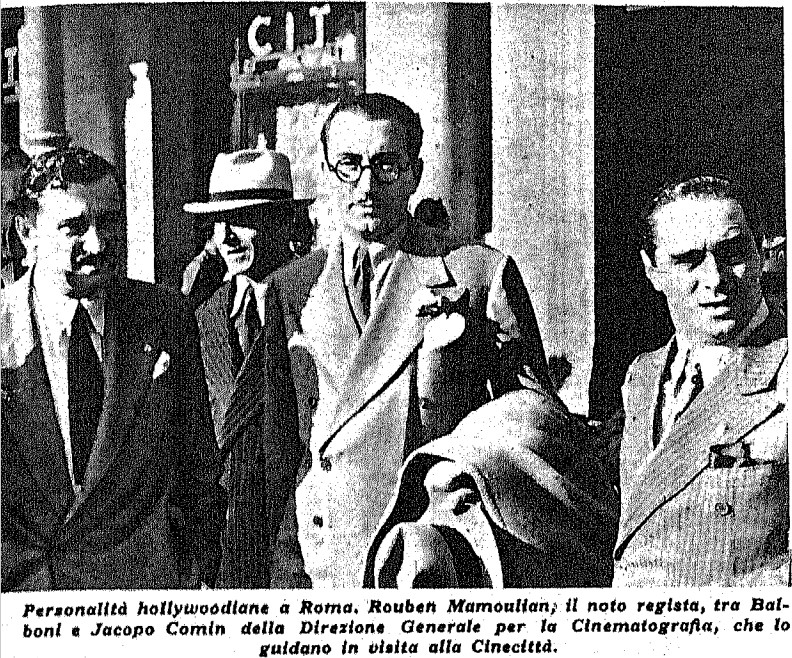
In the following months a number of well-known Hollywood figures, such as director Rouben Mamoulian (CI, 1938: 11), were reported to have toured the studios accompanied by Italian state representatives and film experts. 

Mamoulian visits Cinecittà 

If these business receptions meant to promote Italian studios’ modernization and to assert their competitiveness on a global scale, in the unsettled political climate which led to the outbreak of World War Two studio tours also aimed to reinforce Italy’s geopolitical orientation. For example, in December 1937, a Nazi delegation headed by Reichsleiter Rudolph Hess visited Cinecittà and watched the shooting of L’allegro cantante (1938). In early June 1940, only a few days before Mussolini declared war on the side of Nazi Germany, a Japanese diplomatic mission was shown around the newly-opened state film school located across the road from Cinecittà.

In these same years, Italians also travelled abroad to visit foreign film studios. For example, in August 1938 Benito Mussolini’s son Vittorio toured Berlin’s UFA studios in the company of Nazi Propaganda Minister Joseph Goebbels (CI, 10 Aug 1938: 10). Cinephile Vittorio was neither a novice in studio tours nor was he unaware of their controversial politics. Infamously, in the summer of 1937, Vittorio had been invited by US film producer Hal Roach to visit his Culver City studios after the latter had announced an unpropitious co-production deal with the Italian. Roach’s invitations to a dinner party in honour of his guest were met with some embarrassment in Hollywood, with the anti-fascist Motion Picture Artists Committee reportedly

call[ing] on the decent people of Hollywood who emphatically dissent from the welcome accorded Signor Mussolini to redeem the name of our community by sending a carload of medical supplies to Spain

Photoplay, Jan 1938: 72

A new movie Mecca

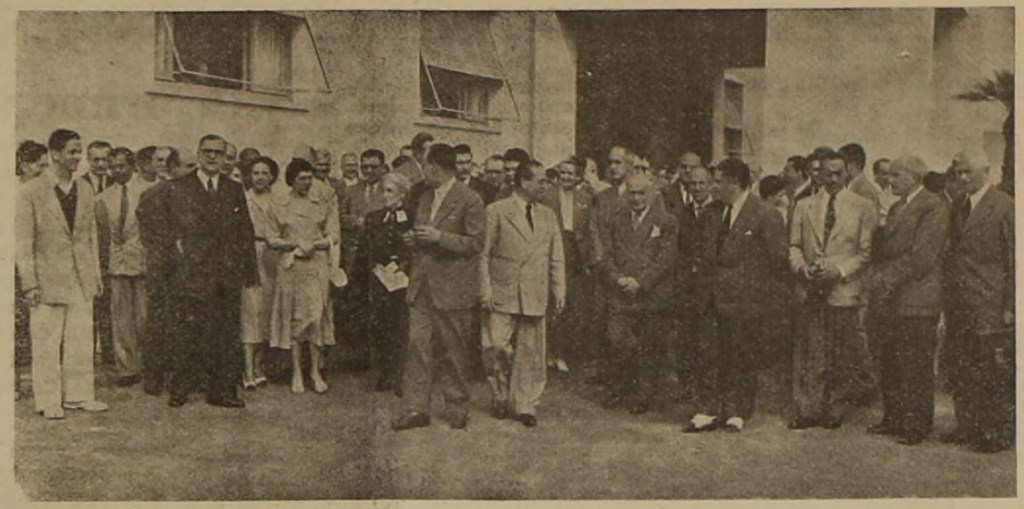
As Italian film companies gradually resumed activity after the end of the war, studios reopened their doors to visitors. Because of its status as a displaced persons camp, Cinecittà was slowly restored to its splendour during the late 1940s. Eager to demonstrate its health and safety standards, in June 1949 a visit to the iconic studio was organised for an international delegation of scientists, in Rome for the Second World Health Assembly (Araldo dello Spettacolo [AdS], 23 Jun 1949: 3).   

Health scientists visit Cinecittà

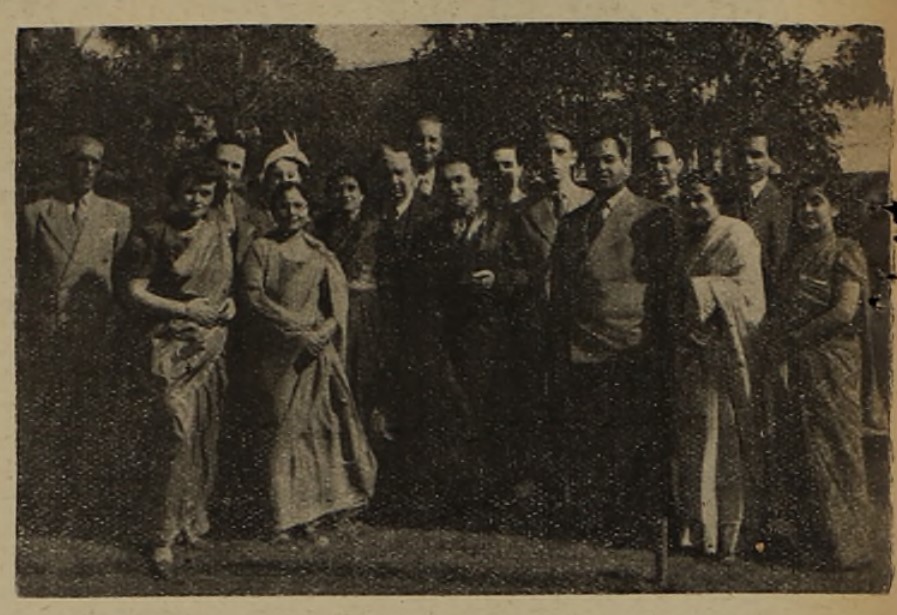
Cinecittà was not the only film studio attraction worth sightseeing. Other film studios in Rome had their chance to shine. Film company Titanus, for example, was particularly keen to show off their recently renovated Farnesina complex and invited film industry personalities and the press to cocktail parties and tours of its state-of-the-art projection and dubbing facilities (AdS, 15 Sept 1949: 1). In October 1950, LUCE’s refurbished newsreel studio opened its doors to representatives of the Syrian government, visiting the publicly-owned institute to study their organization in the light of building a similar one back in Syria (Cinespettacolo, Oct 1950: 18). Scalera’s studio similarly welcomed illustrious visitors to raise the company’s international profile. In June 1949, for example, India’s Ambassador to Italy Dewan Ram Lall and family visited the studio and attended the filming of Al diavolo la celebrità (Fame and the Devil) in the company of tenor Ferruccio Tagliavini and the film’s international cast (AdS, 27 Jun 1949: 2).

Indian diplomats at Scalera 

Postwar studio tours appear to serve two main film-industrial purposes: to increase opportunities for in-country co-production and to find new commercial avenues for marketing and distributing Italian films abroad. Attracting interest from various regions of the globe, tours also offer a glimpse into Italy’s changing domestic and foreign policy and the emergence of Rome as an international movie Mecca.  

Many are the examples in the early 1960s. In June 1961, a Brazilian film delegation, in Rome for the Brazilian Film Week, visited Incom’s modern studio complex. In October of the same year, the president of Argentina’s national film institute Enrique Taurel and a film delegation, after an audience with the Pope at Vatican City and various meetings with the Italian film industry association ANICA, were shown around the Cinecittà sets of Cleopatra (AdS, 27 Oct 1961: 1). In November 1962 Pakistan’s Minister of Education and Information Fazlul Quader Chowdhury visited Cinecittà to restart talks of co-production between the two countries (AdS, 15 Nov1962: 4).

Built on the outskirts of Rome between the late 1950s and the early 1960s, producer Dino De Laurentiis’ imposing new facilities (known as Dinocittà) soon rivalled Rome’s aging film studios. Visits took place one after another, including that of a French film delegation in October 1964, a Scandinavian film delegation in November 1964, and the Spanish Minister of Information and Tourism Manuel Fraga Iribarne in December 1965. These tours played a significant part in De Laurentiis’ wide-ranging financing and promotional campaigns, serving to establish and strengthen links with major international investors and to generate media frenzy for his ambitious projects such as the religious epics Barabbas (1961) and The Bible: In the Beginning (1966). 

Having a good time?

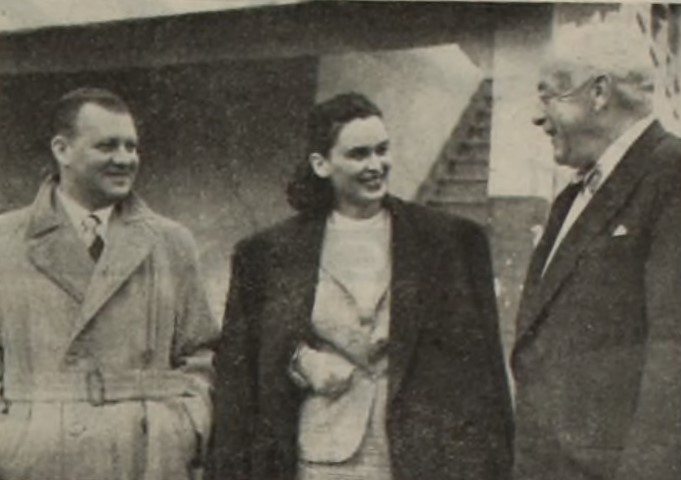
If foreign guests attracted publicity to the studios, so did film stars, who were amply used as a vehicle to promote film business in Italy. The presence of charismatic and attractive women, in particular, enriched studios’ aura of fascination and reinforced their status symbol. Several actresses appear in press photoshoots of Italian studio tours of the 1950s and 1960s. One example is Lucia Bosé, photographed at Titanus in the company of RKO’s vice president Philip Reisman (a veteran of Italian film studio tours!) and European manager Joe Belford (AdS, 6 Nov 1951: 3). Owning the foreign distribution rights for Miracle in Milan(1951) and Roma Ore 11 (1952), RKO’s representatives were in Rome to secure further business deals.

Bosé and RKO’s reps at Titanus

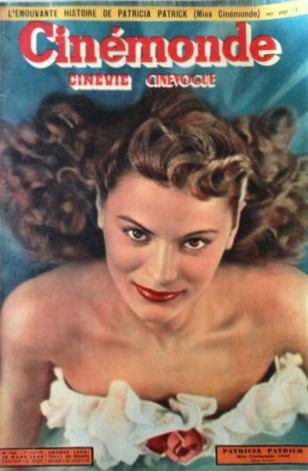
Film fans or young girls aspiring to have a career in film were also lured into the studios via a number of beauty contests and prize competitions conducted by fan magazines under film industry patronage. Here is one telling example. In September 1949 the Araldo dello Spettacolo published news of Patricia Patrick’s visit to Cinecittà as guest of Universalia’s film producer Salvo D’Angelo. The 21 year-old-model had recently been elected Miss Cinémonde by a French jury of film actors and directors and was rewarded with a trip to Rome and London (where she was chaperoned by Arthur Rank). If up to 1949 the prize offered by Cinémonde was a trip to Hollywood, in 1949 the desirable destination became Rome ‘because the Mecca has moved here, and the trip costs a lot less’ conceded the Araldo (24-26 Sept 1949: 2). 

Miss Cinémonde 1949  

It is hard to say how these foreign studio tours were envisioned to practically support young women in pursuit of a career in film and fashion, and whose commercial (and unrelated business) interests these trips ultimately served. Commenting on the experience in Hollywood of Janine Marsay, the winner of the 1948 Cinémonde competition, Box Office’s critic keenly remarked that while acting as the girl’s escort, RKO Radio advisers were also ‘generally showing her [Marsay] a good time’ (15 May 1948: 57). One can hauntingly speculate what ‘to be shown a good time’ might have actually meant for a young (and likely vulnerable) woman navigating for the first time a foreign environment alone, under the auspices of male film industry ‘advisors’.    

From sound stage to world stage

Affirming their cultural and social capital at home and abroad, Italian studio tours reflect the changing relationship that Italy’s film industry established with the print and screen media, with the powers that be and with society at large. If, in 1930s Italy, studio tours signalled a turn towards the development of a more solid production infrastructure and of new film commerce opportunities, studio activities were soon to be curbed by Mussolini’s autarchic and warmongering policies. Post-war studio tours, on the other hand, witness Italy’s unprecedented film-industrial growth and establish Rome as a global film-tourism destination. 

Studio tours speak of the different ways in which the cinema industry exercised its sphere of influence far beyond the boundaries of the studios and their immediate film-industrial purposes. As mediated, symbolic and experiential encounters, tours offer an insight into film studios’ glocality. Opening their doors to a selected few, but reaching a vast audience through sponsored media channels, 20th-century film studios sought to project their industrial, cultural and diplomatic role onto the world stage, striving to become global players while being firmly rooted in their locality. 

Acknowledgments

The author would like to thank the Modi, Memorie e Culture della produzione cinematografica italiana 1949-1976 project (MIUR-funded PRIN 2017, PI Prof. Mariapia Comand, University of Udine, Italy) for granting access to their digitised film press resources.

References

Anon., ‘Fuori programma’, Cinema Illustrazione, 29 September 1937, 12.

Anon., ‘RKO Planning to Gird Globe With Branches’, Motion Picture Daily, 28 October 1937, 1, 3.

Anon., ‘Fuori programma’, Cinema Illustrazione, 10 August 1938, 10.

Anon., untitled, Araldo dello Spettacolo, 23 June 1949, 3.

Anon., untitled, Araldo dello spettacolo, 27 June 1949, 2.

Anon., ‘Miss Cinémonde 1949 a Roma’, Araldo dello spettacolo, 24-26 September 1949, 2.

Anon., ‘Il congresso annuale della Titanus’, Araldo dello Spettacolo, 15 September 1949, 1.

Anon., ‘Rappresentanti del governo siriano visitano gli stabilimenti LUCE’, Cinespettacolo October 1950, 18.

Anon., ‘Reisman a Roma per la produzione italiana’, Araldo dello Spettacolo, 6 November 1951, 3.

Anon., ‘Negli incontri italo-argentini riaffermata la possibilità di accordi di coproduzione’, Araldo dello Spettacolo, 27 October 1961, 1.

Anon., ‘Un ministro pakistano visita Cinecittà’, Araldo dello Spettacolo, 15 November 1962, 4.

Ivan Spear, ‘Spearheads’, Box Office, 15 May 1948, 57.

Cornelius Vanderbilt Jr, ‘If the Windsors Had Come to Hollywood’, Photoplay, January 1938, 12-13, 72.

Touring the French studios

By Morgan Lefeuvre

Closed to the public – which gave them a dose of mystery and enhanced their appeal – the French studios welcomed throughout the period (and particularly in the 1930s) many representatives of the press, but also of political, economic or social circles. The studio visits, often reported in detail in the press, served several purposes. These varied according to the period but also according to who organised them: the studio management, an independent producer, or even bodies outside the film production community.

At the beginning of the 1930s, the transition to sound led to a profound renewal of the French cinematographic landscape, prompting studio managers to organise more and more studio tours for the press, to promote the excellence of their technical facilities. These sumptuous receptions almost all followed the same protocol: journalists were driven by coach from the centre of Paris to the studio where they were welcomed by a few representatives of the management and were then invited to visit the installations, before attending a screening and sharing a cocktail, or possibly a lunch. Here is how Marcel Carné, then a journalist for Cinémagazine, related the tour organised by the management of the Tobis studios in Epinay-sur-Seine in November 1929:

The coach has left Paris, and while the conversations are going on, the industrial landscapes of the northern suburbs pass by. […] At last we arrive, after the coach has turned into a small provincial street, calm and quiet. […] The dead leaves crunch under our feet as we get out of the vehicle. We inevitably pose in front of the photographer, click and already the kind and erudite technician A. P. Richard takes possession of our persons and leads us to the projection cabin [Cinémagazine, 8 November 1929, p. 214].

Although all the studios organised press receptions to show their new sound installations or present their productions, these receptions took on a remarkable importance in the biggest ones. They were particularly frequent at the Paramount studios in Saint-Maurice and the Pathé studios in Joinville, where journalists generally came in large numbers (several Pullmans were sometimes chartered for the occasion), partly because they were guaranteed to meet famous actors and to be served lunch, whereas the smaller studios generally only offered them a drink! Some privileged people sometimes visited the installations in smaller groups, or even alone in the company of a director, a scriptwriter, or a technician from the studio, who they were always proud to point out was a personal acquaintance. As a journalist from the Revue de Paris, who had come to visit Paramount Studios, reported with a touch of pride: ‘We find ourselves in front of an iron door of a suburban factory that can only be opened thanks to the signature of my companion Yves Mirande [Revue de Paris du 13 December 1932].

Although the first receptions organised during 1930 were mainly aimed at promoting the technical quality of the new installations, from the end of 1931 Pathé and Paramount organised press conferences at the studio in order to communicate on the good health of their company. While activity at Joinville slowed down considerably between December 1931 and February 1932 (with two weeks of complete closure), Pathé’s management organised a large reception on 19 February, inviting the press to spend a full day at the studio with a programme of three screenings and a lunch in the company of the most popular stars: Gaby Morlay, Marcelle Chantal, Simone Cerdan, Ginette d’Yd, Victor Francen and Charles Vanel. The day ended with a cocktail party before the journalists returned to Paris by coach. As no shooting was in process, no set visits were organised and the reception took place exclusively between the projection rooms and the studio bar-restaurant [La Cinématographie française, 27 February 1932, p. 14 and Ciné-Journal, 26 February 1932, p. 9]. These types of receptions organised for the press had the function of reassuring film professionals and silencing the negative rumours that were sure to spread at the slightest sign of a loss of momentum in production. The reporter of La Cinématographie française seemed to be quite seduced, as indicated in the conclusion of his report: ‘In summary, good day, good work, fast and easy, in a silence respected by professional people, and three good films. In a next meeting, we will see Les Croix de bois, which everyone is waiting for impatiently’ [La Cinématographie française, 27 February 1932, p. 14]. At Paramount, a similar meeting was organized on June 24, 1931, in order to cut short the rumors of the closure of the Saint-Maurice studios [La Cinématographie française, 27 June 1931, p. 62].

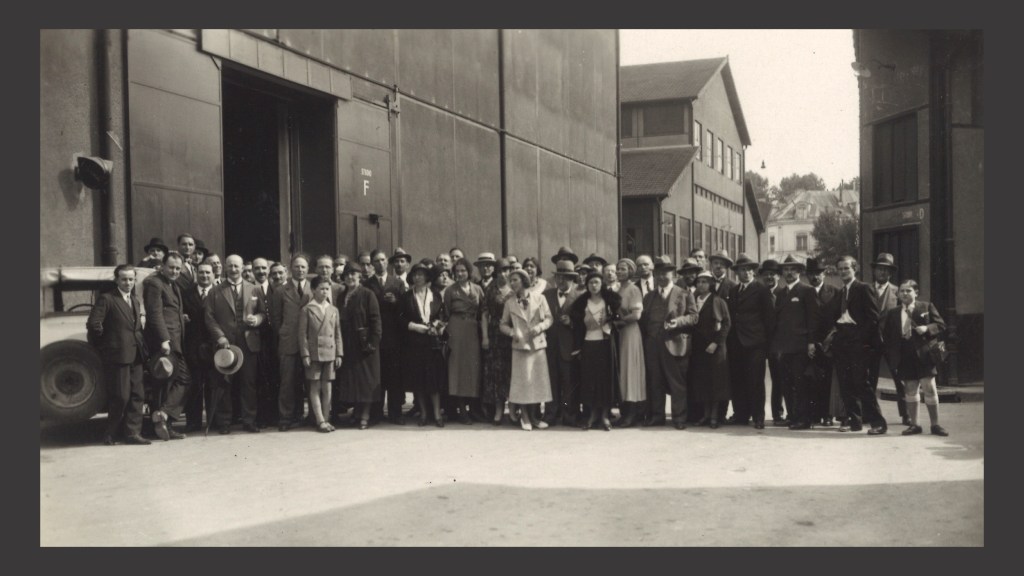
Visitors in the yard of the Pathé studios in Joinville during the National Cinema Days in 1931 – © Fondation Jérôme Seydoux Pathé

From 1929 onwards, and increasingly after 1933, press receptions were also organised in the studios by independent producers. Unlike the previous category, the aim here was not to showcase the studio itself, but rather a film, or possibly a production programme. These shorter receptions – no more than an hour or two – were often organised at the end of shooting in order to prepare for the promotion of the film, before its release on the screens. In September 1931, Super-Film, a rental and distribution company that had just started producing, organised a small reception in the Éclair studios in Épinay, on the set of its last film Prisonnier de mon cœur directed by Jean Tarride.

The journalists, received by MM. Weill, Chicherio and André Brûlé, were led into the studio where an amusing set by Meerson, representing a provincial prison, stood. Roland Toutain and Mary Glory performed a short scene from Prisonnier de mon cœur. Then Roland Toutain improvised an amusing little speech of welcome; Mr. Chicherio, the general secretary, explained what Super-Film was doing at present and what it intended to do: three new films to be made in two or three months. After a toast to the prosperity of Super-Film, the meeting ended [La Cinématographie française, 5 September 1931, p. 13].

Although these shots taken in the presence of the press were more staged than real, spontaneous work, the unpolished setting of the studio provided journalists with the feeling of seeing the work in progress, of entering into the secrets of creation, which gave their articles an additional attraction for the reader.

The studio also welcomed a wide variety of parties and receptions, the only purpose of which was to get people talking about both the studio’s directors and their prestigious visitors. People came to the studio to show themselves off, just as they would at the theatre or at an exhibition opening. In January 1930, a delegation of ‘personalities from the world of arts, literature and theatre’ visited the Joinville studios:

On Tuesday, Miss France 1930, accompanied by numerous personalities from the world of Arts, Letters and Theatre, visited the Pathé-Natan studios in Joinville.

Miss France 1930 attended the sound and talking shots of a scene from L’Enfant de l’amour, currently being directed by Marcel L’Herbier[…]. This visit of the most beautiful woman in France to the most beautiful studios in Europe was highly commented on [La Cinématographie française, 11 January 1930, p. 38].

This ‘pure courtesy’ visit had no other objective than to get the word out about the Pathé studios, beyond film circles, by feeding the society columns of the newspapers. A few weeks earlier, the winners of a beauty contest organised by Paris-Midi and Le Journal were received on the set of Augusto Genina’s Prix de Beauté, also in Joinville [La Cinématographie française, 5 October 1929, p. 15]. Among these numerous visits for free, the press regularly mentions actors who have come to see a few shots of a film directed by a ‘director friend’ or in which a ‘comrade’ was filming. The must was to be able to welcome a French star back from Hollywood, or even an American actor, to the set. La Cinématographie française presents as a great event, the visit of Cecil B. De Mille and Gary Cooper to the Saint-Maurice studios in July 1931, where they were accompanied by the French Minister of Public Education and Fine Arts, Mario Roustan [La Cinématographie française, 1st August 1931, p. 23]. Studio managers are quick to seize any chance they get to throw a party or an event that draws attention to their facilities. Whether it’s a visit to a monumental set, a scene with a lot of extras or the installation of new equipment, anything is considered an opportunity to invite the press and, if possible, the stars of the screen to spend a festive moment at the studio.

Cecil B. De Mille and Gary Cooper visit the Paramount Studios in Saint-Maurice near Paris in July 1931

Over time, the objectives of these tours and receptions diversified, with the studios regularly being used to help the country’s political, economic and commercial influence. Throughout the 1930s, many French and foreign politicians were welcomed to the Paris studios. The ministers responsible for the film industry (trade, fine arts, public education) but also members of parliament were regularly invited, mainly to Pathé and Paramount. If studio directors hoped to interest politicians in the functioning of production and to encourage them to defend the interests of the film industry in Parliament, French leaders also relied on the studios to highlight the technological and commercial dynamism of our industries in the eyes of foreign diplomats. The major Parisian studios thus welcomed many foreign delegations on official visits. The Ambassadors of Italy and Argentina, the Consuls of China and Egypt, the Resident General of Morocco, the Mayor of Tunis, the son of the King of Ethiopia and the Crown Prince of Morocco (then aged four!), all visited the Paramount and Pathé studios between June 1930 and August 1932. The purpose of these tours seems more diplomatic than economic. It was not directly a question of selling technology or films, but of honouring a friendly nation by receiving its representatives in what was then considered one of the jewels of French industry in terms of technical innovation and cultural influence.

Official visit of the Bey of Tunis and Prince Sidi Hassan (future King Hassan II of Morocco) to the Joinville studios in 1932 – © Fondation Jérôme Seydoux Pathé

Reserved for a few hand-picked personalities at the beginning of the 1930s, studio visits gradually opened up to a wider public, as their weight within the French film industry diminished. From the 1930s, visits were sometimes organised for members of associations or works councils. On 16 February 1935, members of the ‘Stenographic Alliance’ were welcomed to Joinville for a paid guided tour of the facilities [Bulletin trimestrielle de l’Alliance sténographique, January 1935, p. 3]. Each secretary was asked to pay 3 francs for a brief visit to the dream factory! At the end of the decade, the ‘Club des amis de Pour Vous’, a film magazine with a large circulation, regularly organised studio visits for its members, which were very successful [Pour Vous, 3 May 1939, p. 6]. In war time, tours of the studios began to be offered to the public to raise funds for various causes. During the Semaine du Cinéma, organised by the COIC, nearly 1,500 visitors flocked to the Saint-Maurice and Rue Francoeur studios to visit the facilities. The proceeds from these paid visits (10 Frs per person in 1941) were then donated to the POW relief fund [Aujourd’hui, 12 June 1941, p. 2]. After the war, the tradition continued and it was to help unemployed entertainment workers that the Buttes Chaumont studios opened their doors to visitors on Sunday 4 March 1945. Several hundred people came to visit the sumptuous medieval sets created by Max Douy for the film François Villon [Le Film français, 9 March 1945, p. 12]. Increasingly dilapidated and ageing, French studios no longer attracted foreign diplomats or Hollywood stars, but opened their doors to a public still keen to catch a glimpse for a few francs beyond the screen.

The public visits the sets of the film François Villon at the Buttes Chaumont studios – Regards, 15 March 1945

References

Anon. ‘Une journée de la presse à Joinville’, Ciné-Journal, no. 1173, 26 February 1932, p. 9.

Anon. ‘Paramount ne ralentit pas son activité en France’, La Cinématographie française, no. 660, 27 June 1931, p. 62.

Anon. ‘Miss France visite les studios Pathé’, La Cinématographie française, no. 584, 11 January 1930, p. 38.

Anon. ‘Au club des amis de Pour Vous’, Pour Vous, no. 546, 3 May 1939, p. 6.

Anon. ‘La visite des studios parisiens a obtenu un immense succès’, Aujourd’hui, 12 June 1941, p. 2.

Anon. ‘Les dimanches au studio’, Le Film français, no. 14, 9 March 1945, p.12.

Anon. [title missing] Revue de Paris du 13 December 1932. Archives BNF, coll. Rondel, RK 788.

Bulletin trimestrielle de l’Alliance sténographique, no. 116, January 1935, p. 3.

Marcel Carné,  ‘Le film parlant français – Une visite aux studios de la Tobis’, Cinémagazine, no. 45, 8 November 1929, p. 214.

Lucie Derain and Louis Saurel, ‘Studios’, La Cinématographie française, no. 665, 1 August 1931, p. 23.

J.M., ‘Prix de Beauté nous reçoit’, La Cinématographie française, no. 570, 5 October 1929, p. 15.

F. Morel, ‘Une journée aux studios Pathé-Natan’, La Cinématographie française, no. 695, 27 February 1932, p. 14.

Louis Saurel, Super-Film a reçu la presse aux studios Éclair d’Épinay’, La Cinématographie française, no. 670, 5 September 1931, p. 13.

Southall studio at war

By Richard Farmer

Southall studio

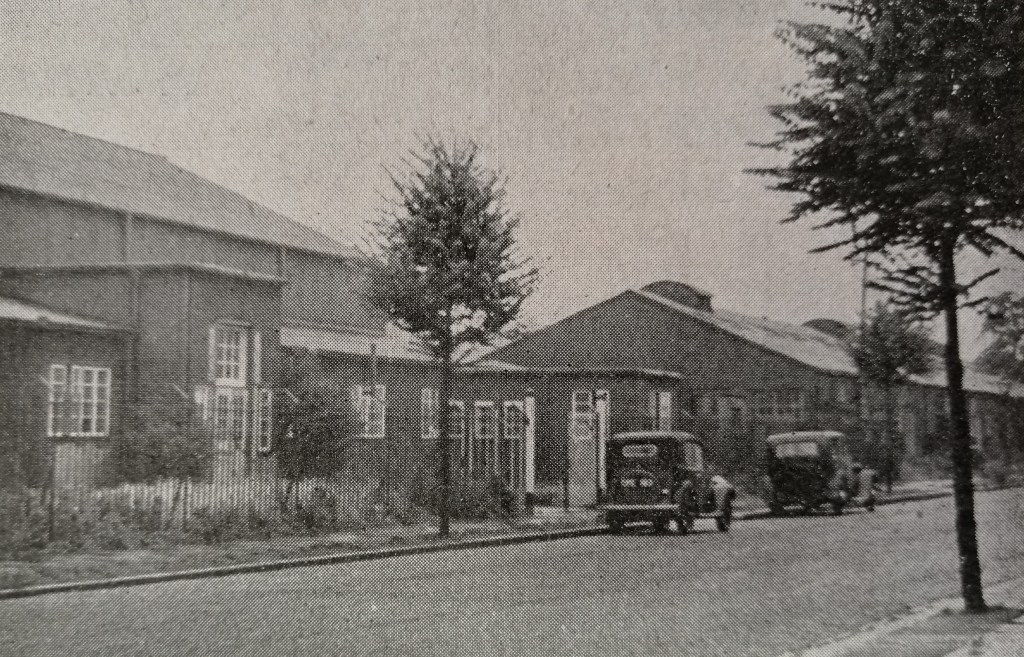
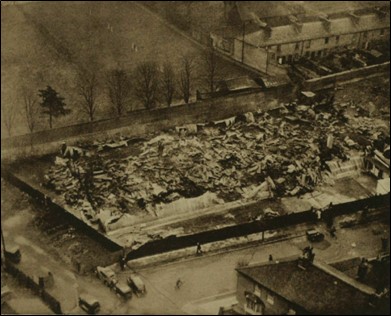
Southall studio in west London was built on the site of, and possibly converted from, a former aircraft hangar. It opened in 1924, remained largely unused until 1928, and was converted for sound production in the early 1930s (the vagueness of some of these dates is indicative of the relative paucity of detailed historical evidence as compared to some other studios). Maybe a dozen films were made between the opening of the original studio and its complete destruction by fire in October 1936, an event which led to the evacuation of nearby houses. The owners’ decision to rebuild the studio, for the princely sum of £9,666, was described by Kinematograph Weekly (KW) as ‘super-optimistic’ given that the British production sector was then deep in the clutches of one of its periodic crises and many existing studios were standing idle (Transport for London Corporate Archive: LT172/019/007; KW 12 January 1939: 112). Kine’s scepticism about the wisdom of rebuilding the studio was not entirely misplaced. Although ready to reopen in 1938, no films were made at the studio before the outbreak of the Second World War in September 1939. Or, indeed, for its duration.

Southall studio after the 1936 fire (Illustrated London News, 7 November 1936)

The studio’s owners were, however, keen to get some form of return on their asset and approached various government ministries to find out if they wanted to requisition the facility for storage or manufacturing. Although many other British studios were to put to work for non-filmmaking purposes, Southall was considered surplus to government requirements. The owners then adopted a different tack and applied to the local council for an entertainments licence that would allow the studio’s single 60 x 125 ft. stage to be used as a dancehall. The hall would become known as the Locarno, and Tommy Seymour-Blackburn – a former silent-era film comedian – was installed as manager. The Locarno had a polished wood-block floor and was decorated with coloured banners and what was described as a ‘huge background of Arctic scenery’ (West Middlesex Gazette [WMG], 27 January 1940: 7). Later, a new lighting scheme and a large cafeteria with fully licensed bar were also added. A Grand Opening Ball was held on 24 January 1940. It was attended by more than 400 people who danced until midnight to music provided by a nine-piece band led by Billy Wiltshire – a former professional cyclist in South Africa – and partygoers were said to be especially taken by Roy Marsh’s sterling work on the vibraphone.

The Grand Opening Ball (WMG, 20 and 27 January 1940)

However, the Locarno was not just a dancehall. It was also a roller-skating rink capable of accommodating 500 skaters at a time. But not just any old skating – ‘glider skating’. Glider skates were thought to be ‘the Rolls-Royce of roller skates’ and differed from earlier skates in that they had rubberised wheels (Daily Mail, 23 April 1936: 12). This meant that not only were they virtually silent – making it easier to listen and dance to music while skating – they were also able to grip the floor more effectively: earlier rinks had provided grip by sprinkling the floor with powdered pumice-stone with the result that skating was usually both noisy and dusty. (Such problems no doubt contributed to the bursting of an earlier roller-skating bubble in the 1910s, after which numerous rinks were converted into cinemas and one into Twickenham studio). 

Florence Franklin – ‘professional lady instructress’ (WMG, 6 April 1940)

A ‘a professional lady instructress,’ Miss Florence Franklin, taught punters how to skate and a range of novelty events including skating exhibitions and beauty contests – the winner of Miss Southall 1940 was promised a screen-test as a prize – were held to get people through the door (WMG: 2 March 1940: 7; 11 May 1940: 2). The most important novelty was probably a series of sports matches played on skates: usually roller-football, but occasionally roller-hockey. The Locarno’s first soccer-on-wheels event, with manager Blackburn officiating in evening dress, was played out between a team called the Assassins and another called the Killers. It ended in a hard-fought 1-1 draw. Another fixture, between Locarno staff and local ARP stretcher-bearers, was abandoned after what a local newspaper called ‘a positive riot’ (Middlesex County Times [MCT], 13 April 1940: 5). Matches were played by both men’s and women’s teams and drew good crowds. 

However, local newspaper reports make clear that not everything in the Locarno’s garden was rosy. Over the summer of 1940 the venue was twice fined for failing to adequately observe the blackout, and Blackburn was shown the door in May 1940 for failing to ensure that the venue complied with statutory safety regulations. A few months later a doorman – a former professional boxer – was hauled up before the beak for breaking the nose and jaw of a customer following an argument over the cost of admission. The case was dismissed when it was found that the potential customer and his party were the worse for drink and the altercation had been preceded by them throwing bottles at the Locarno’s entrance (MCT, 24 August 1940: 2). Blackout breaches and boozy bust-ups couldn’t close the Locarno, and neither could German bombs. Advertisements from late September 1940, just a few weeks after the start of the most intense period of the London blitz noted that ‘we carry on through air-raids’ and reassured guests that the ‘all-steel frame building’ in which they would be dancing and skating was ‘splinter, blast and fireproof’ (WMG, 28 September 1940: 2).

By the end of 1940, however, the situation had changed. In November that year the studio was requisitioned by the Ministry of Aircraft Production and turned over to Fairey Aviation, an aeroplane manufacturer with a factory at nearby Hayes. This, the studio’s owners noted in a letter to the council dated 3 December 1940, ‘came as rather a financial blow’, not least because they had taken the decision to spend money converting the studio into a dancehall only after being told that it would not be needed by the government (London Metropolitan Archives: MCC/ES/EL/1/355). The Locarno would reopen a few miles away in Ealing – a London borough with better-known cinematic associations, although the suburb’s most famous filmmaking facility was not involved – after a new venue was found above the Fifty Shilling Tailors at 105 Broadway. 

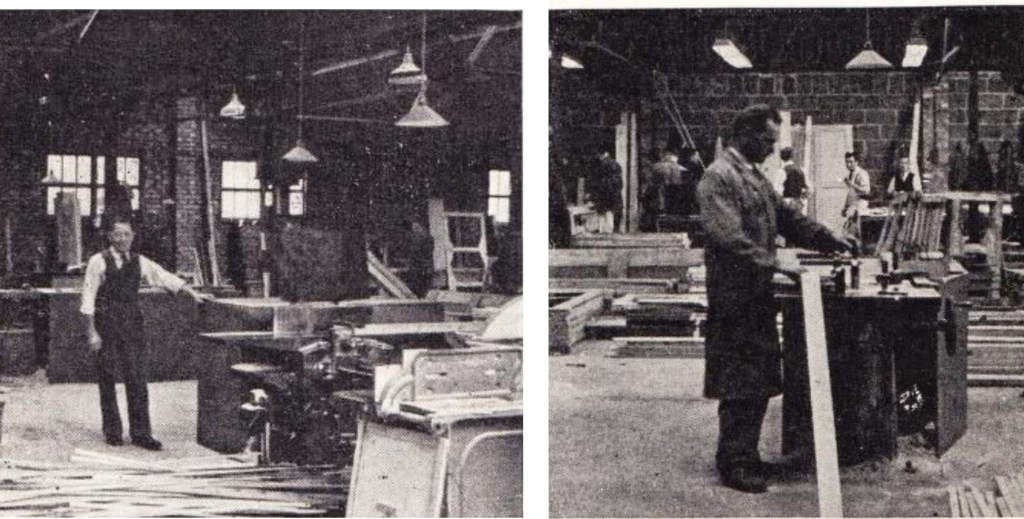
The carpenters’ shop at Southall studio (KW:  26 September 1946 and 10 July 1947) 

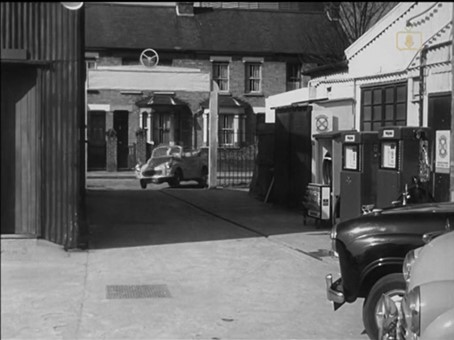
It was more than a year after the end of the war before Southall was derequisitioned and filmmaking could resume. Dancing With Crime (1947) went on the floor in December 1946 in what was still a very recently renovated facility: ‘The studio has a fresh and clean smell about it. New paint is everywhere’ (KW – British Studio Supplement, 26 September 1946: xiii). Although there were plans to enlarge the studio when Britain’s economic situation improved, there were no cutting rooms at Southall when it reopened and the film had to be driven to a sister studio at Twickenham for editing. Despite this slow start, the fifteen years after the war marked Southall’s golden age. A second, smaller stage was opened in the early 1950s, and for the remainder of the decade the studio churned out dozens of (predominantly low-budget) films – making uncredited appearances in both Date With Disaster (1957) and Stormy Crossing (1958) – with The Trollenberg Terror (1958) the final film to be made there. The studio was also home to producers making television programmes and live-action advertisements. 

Southall studio yard, as seen in Date with Disaster (1957)

Although Southall studio was only part of the rink organisation for a brief period in 1940, exploring some of the alternate uses to which it was put should remind us that many film studios have dynamic histories, and that the large, empty, flexible spaces used for film production were equally well-suited to other purposes. 

‘Who wouldn’t want to have a peek?’ Studio Tours in Britain and Germany

Sarah Street and Eleanor Halsall

Inspired by our visit to the Bottle Yard Studios, we wanted to know more about previous occasions when film studios opened their doors to outsiders. Studios entertained important guests such as film executives, financiers, critics, members of the civil service, royalty etc., but some visitors had less obvious importance to business, publicity, studio networking or status. While keen not to destroy the illusory magic of the movies, studios occasionally showed off their facilities and celebrated the technical feats accomplished in workshops and on stages. A search in the trade press and local newspapers showed up some interesting cases of people who were allowed to see inside studios in Britain.

The British and Dominions studios, Elstree, were visited in September 1935 by some 700 film fans from Coventry, including staff at local cinemas (Kinematograph Weekly [KW], 12 Sept 1935, p. 28). The large party travelled in two trains direct to Elstree and on arrival the manager gave them an ‘exhaustive’ tour of the studios, and they were treated to a screening of the latest films’ rushes in the private theatre.

A visit by French film pioneer Leon Gaumont in February 1936 to the Gaumont British Studios, Shepherd’s Bush, was a momentous and moving occasion. He toured the large studio buildings which stood on the actual spot where the old ‘glass house’ Gaumont studio was built in 1911. Gaumont immediately recognized Mr Hobbs, a lab technician who’d started work with him there in 1911. He also met Alfred Hitchcock and told Michael Balcon, head of production: ‘I am a little envious. If only all this had happened while I was still active!’ Clearly quite overcome by his visit, Gaumont is also reported as saying: ‘It is marvellous! That I should have lived to see such development, such progress! You are doing wonderful work; the growth and expansion of the firm has been truly magnificent’ (KW, 27 Feb 1936, p. 45).

Some tours were extensive and detailed. Teddington Studios welcomed visitors from the London Court of the Guild in February 1937. They went first to the studios’ preview theatre where aspects of soundtracks, recording and re-recording were explained, with bits of equipment passed around such as an electric light valve. Then they were shown a set which replicated a deck of a cruise liner, cocktail bar, the use of mirrors to give the illusion of distance, and the details of the lighting equipment. The tour even included a visit to the power-house (KW, 11 Feb 1937, p. 53).  

In October 1944 leaders of a Russian Trades delegation visited Denham. They were entertained by Spencer Reis, managing director of D&P Studios, and visited many of the stages. They saw rushes from Henry V and extracts from films demonstrating synchronization with sound. They visited other productions in progress as well as studio trade union members (KW, 21 Oct 1944, p. 32).

A Film Criticism competition organized by Gaumont-British and Gainsborough in February 1944 rewarded prizewinners with a visit to the studios. Entrants had to write a ‘frank criticism’ of The Man in Grey (1943), and say which stories, stars and presentations should be prioritized when the war was over. Star of the film Stewart Granger gave the lucky prizewinners a tour which ended up in the studio canteen. At the head of their table was none other than Phyllis Calvert, another star of The Man in Grey, who answered ‘innumerable questions from a score of delighted listeners’. After lunch they went on the stage floors and inspected sets. They watched film tests being made and witnessed shooting scenes from Love Story (KW, 3 Feb 1944, p. 37). 

In December 1944 a party of ATS women went to Islington Studios and met George Formby. They had a tour and showed ‘keen interest’ in the building of the sets, cutting rooms, technical departments, and the make-up room. The party was accompanied by a lecturer in adult education who specialized in early motion pictures (KW, 21 Dec 1944, p. 29). 

Sometimes the studios went out to the people…

In July 1946 Elstree Studios were reported as ‘going on tour’ (KW, 11 July 1946, p. 6). As a result of a tie-up between British National and Lewis’s (the shop with branches in many places), British National Studios went on tour, starting in Birmingham and then going to stores in Glasgow, Manchester, Leeds, Liverpool and Leicester. The exhibition’s major feature was filming a sequence from Meet the Navy: ‘A huge mass of studio equipment will move to the various centres in a fleet of big motor vans, carrying cameras, lights, sets, movieolas, microphones, sound apparatus, and all the other paraphernalia that go to the making of movies. Each store will be turned into a studio, with technicians, to the number of some 20, in attendance’. Actual filming was then carried out ‘when the lights will go up against a background of the Coney Island scene from Meet the Navy, with a troupe of actors reproducing the ‘Lydia’ numbers from the picture. Every detail of film making, from the initial script conference, the casting, planning, shooting, and final editing and screening, will be shown either by diagrams and stills or with the actual equipment demonstrated and operated by Elstree technicians’. Scripts, costumes, stills, set design stills and souvenirs from a dozen British National films were also shown. A cartoon (KW, 18 July 1946, p. 14) captured the incongruous spectacle of this somewhat unusual event.

Visits to German Studios

Acquiring and maintaining a high profile with the public was an obvious objective for film studios. In the case of Germany’s Babelsberg, this meant carefully managing access to busy working studios while attempting to retain an air of mystique around the process of movie production. The 1929 construction of the nation’s first sound film studio – the so-called Tonkreuz at Babelsberg – stoked interest in Germany and abroad. Nevertheless, offering every interested person the opportunity to visit the new studio was clearly neither practical nor desirable.

Visitors came via a number of conduits – from official government requests, to magazine competitions offering a lucky winner the chance to see the studios and meet the stars (see, for example, our blog on Eating in the Studio). Educational visits were aimed at teaching the public about film production, along the way triggering interest in those who might aspire to a film career. And there were visits by foreign dignitaries and reporters, as well as stars from other film industries. One such foreign visitor was Film India’s editor, Baburao Patel who, in the spring of 1939, went on a world tour of film industries. Having originally planned a two-day visit to Berlin, he extended this to ten days, spending much of it at Babelsberg, so fascinated was he by what he discovered there.

‘We were first taken to the Lehrschau,’ wrote Patel, ‘The museum or rather the exhibition of the Ufa Studios. Here in a pretty big room, every activity of Ufa is seen either in a pretty model or in a precise paper drawing.’ (Film India, September 1939, p. 30.) Located at Babelsberg, the Lehrschau was an educational centre, archive and library providing visitors with the chance to see cameras in close up as well as models of film sets. Accounts were kept of all visitors and a snapshot from May 1938 includes 13 Chilean scientists and artists; one Swedish journalist; and two of Agfa’s Indian clients from Calcutta who expressed particular interest in cinematography. The lists of visitors were long and varied, carefully documenting the totals for this particular month: 210 visitors, of whom 36 were foreigners. (BArch R109-I/5268).

As gleaned from archived meeting minutes, Ufa took steps to create public enthusiasm and educate visitors, while holding the inquisitive majority at bay. One way it did this was to offer a proxy visit by film with Der Schuß im Tonfilmatelier/The shot in the sound film studio (Zeisler, 1930). The film’s action is set in the new studio, using the sets, the stars’ dressing rooms, and the vertiginous lighting bridges, and making good use of the building’s interconnected spaces. ‘Who wouldn’t want to have a peek?’ asked the Berliner Film Zeitung in its review of Schuß (30 July 1930). The film’s dual purpose was to show off this architectural marvel of modernity but also to explain the wonder of sound film creation, adding a dose of artistic exaggeration along the way to enhance the plot! While the film was in production Ufa permitted Eugen Szatmari from the Berliner Tageblatt to hold an on-set interview with Gerda Maurus, the film’s leading actress; this was then screened in Ufa’s cinemas alongside the feature film (Mein Film, June 1930, p. 6).

Wall detail

Ufa’s board frequently discussed and approved studio visits. For example, on 26 February 1935, a request came from 50 students from the University of Lund who wanted to see the Lehrschau. Their visit was approved, on the condition that they were not allowed to see anything of the production of Das Mädchen Johanna (Uckicky, 1935). One wonders what might have led to this decision? (BArch R109-I/1030a).

On 19 May 1937, the board approved up to 120 members of a Hungarian business trip to visit the Lehrschau and Babelsberg (BArch R 109-I/1032b) which must have been quite an undertaking. But it was perhaps the request that came in September that year that allows the imagination to run wild. The board discussed and approved a request by the newly elected state president of Colombia who wished to visit Babelsberg completely incognito (BArch R 109-I/1032b). One wonders whether he might have achieved this via a quick visit to the costume and make-up department on the way! 

We’ll be looking at occasions when French and Italian studios allowed visitors through their doors in a future post.

References

Baburao Patel, ‘German Film Industry’, Film India, September 1939, p.p. 27-37.

Bundesarchiv, Berlin files: BArch R109-I/1030a; BArch R 109-I/1032b; BArch R109-I/5268.  

Ceha, ‘Von deutscher Tonfilmarbeit: sechshundert Presseleute aus aller Welt in Neu-Babelsberg’, Mein Film, June 1930, p. 6.

FS, ‘Der Schuß im Tonfilmatelier’, Berliner Film Zeitung, 30 July 1930.

Kinematograph Weekly, 12 Sept 1935, p. 28; 27 Feb 1936, p. 45; 3 Feb 1944, p. 37; 21 Oct 1944, p. 32; 21 Dec 1944, p. 29; 11 July 1946, p. 6; 18 July 1946, p. 14.