Ming the panda on set at Marylebone studio. The Sphere, 3 June 1939, p. 384
Here at STUDIOTEC we’re very interested both in the spaces of film production and those that work in them. While this usually means humans, we have not ignored the role that animals have played filmmaking, and dedicated more time than was perhaps strictly necessary to exploring the career of 1930s wonder-dog Scruffy. We also explored the possibility that parts of the Sound City studio at Shepperton might have been turned into a zoo.
Kinematograph Weekly, 12 March 1942
Over the course of our research we have continued to uncover vast amounts of animal-based material, with the headline ‘Worm holds up film production’ being a personal favourite. This blog will focus on one such story, the production of the comedy short Pandamonium in the late-spring and early summer of 1939. This 30-minute film tells the story of a family that inherits a guest house for animals. Hilarity ensues, at least according to the catalogue. Pandamonium was directed by the wonderfully named Widgey R. Newman and produced at a studio on Marylebone Road in central London. As its title suggests, the film was intended to exploit the massive popularity of Ming, a baby giant panda who was at the time the premiere attraction at London Zoo and something of a celebrity in her own right. Having appeared in a number of newsreels, Ming was said to have ‘as many fans as a film star’, so it is not surprising that Newman believed that the massive popularity she enjoyed at the centre of Britain’s first ‘panda craze’ could be profitably exploited (Birmingham Post, 11 Apr. 1939: 11).
Marylebone studio as it appears today
The Marylebone studio was converted from a disused building (either a hall or school, the record differs) attached to St Marks church. Newman, who mainly worked in low-budget shorts and ‘quota quickies’, had initially planned to make his film at Ealing studios but switched to Marylebone because of its proximity to London zoo, whose authorities wanted to minimise the amount of time that Ming had to spend travelling. The shorter journeys also reduced the insurance premiums that Newman had to pay for Ming’s transportation, although these still amounted to £440 (St Claire: 20). Ming was on set for only two hours per day – ‘very like a film star’ – in order to prevent her from getting so fatigued that she might not be able to appear before her adoring public at the zoo (Margrave: 6). There were also concerns for her health; the crew were obliged to wear ‘germ-proof masks and hospital smocks’, and the floor was sprinkled with ‘a special sawdust’ to improve hygiene (Aberdeen Evening Express, 1 Jun. 1939: 13; Herts. Mercury, 23 Jun. 1939: 6).
Ming postcard
Although she was by far the most famous, Ming was not the only animal who appeared in the film. Starring alongside her were
Remus, the wolf, Minnie, the tyra (from South America), Tony, Ming’s cousin, a lovely little chap with a pointed nose, and big round ears, who was far too nice for his official designation as a ‘common panda’, Nibby, the sea-lion, a pelican who didn’t have a name, Plassy, the penguin, called Percy by everyone and known in the film as Jimmy, and last and most important, George, the chimpanzee (St Claire: 20).
Kine Weekly was far less impressed with the humans in the cast, who included Zita Dundas, Hal Walters and Ley On, a Chinese-born actor and restauranteur who declined payment for his work on Pandamonium, but asked instead that his fee be used to buy bamboo shoots for Ming (Kine Weekly, 17 Aug. 1939: 25; Gloucester Citizen, 30 May 1939: 2). The zoo itself received a fee for letting Ming appear, having already sought to cash in on her fame by creating a range of panda-themed souvenirs including hats, handbags, toys and jewellery. An easter egg was produced containing Ming chocolates. Postcards bearing her image sold in record numbers (Yorkshire Post, 13 Mar. 1939: 8).
The pelican runs wild. Daily Mirror, 31 May 1939
Ming was said to have treated everyone on set with ‘Garbo-like indifference’, choosing only to interact with the keeper who accompanied her from the zoo in a private car (Margrave: 6). But any difficulties arising from her evident disdain for the crew paled into insignificance alongside the violent antics of her co-stars. Nibby, who also knocked Newman off his chair, ‘upset a lamp and bolted for the main studio door’ and could only be persuaded in front of the camera by bribery, in the shape of numerous fish (Northern Daily Mail,2 June 1939:10). Plassy attacked Newman’s trousers; the pelican’s erratic behaviour forced Dundas to jump onto a chair; George pulled out plugs and played with switches (St Claire: 20; Daily Mirror, 31 May 1939: 5; Hodgson: 3).
Ming and George with the human actor Hal Walters. Picture Show, 24 June 1939
It is tremendously gratifying to hear of such disorderliness. The idea of these creatures running amok in a film studio is inherently amusing, mocking the hubris of humanity’s belief in its dominance by ganging a’gley the best laid schemes o’ men (although not mice, in this instance). Newman had made many films featuring animals, but this was the one that made him claim that he ‘would probably be grey’ by the time it was finished (St Claire: 20). Moreover, from our current perspective, forcing animals to perform tricks for the cameras can seem at best distasteful and at worst immoral; learning that Ming and the gang made life difficult for the crew makes them appear satisfyingly, and appropriately, rebellious. Even though the animals in Pandamonium were accompanied at all times by staff from the zoo, who were tasked with protecting their wellbeing, they were still encouraged to act anthropomorphically – as, indeed, they often were at the zoo – adopting ‘human’ behaviours for the benefit of the watching filmmakers and the pleasure of cinema audiences.
Advertisement for Savoy cinema in Folkestone, Hythe and District Herald, 2 December 1939, p. 6
Pandamonium was commercially released in late 1939 and played at venues around the UK. It received a number of positive notices. Befitting her status as star, Ming’s name was central to many cinemas’ promotional activities. By this time, and like many other youngsters living in London, she had been evacuated – in her case, to Whipsnade zoo in Bedfordshire. She was brought back to London in 1940. In 1943, she returned to the commercial screen in Strange to Relate (1943), another Newman short whose story bore more than a passing resemblance to Pandamonium. Ming’s popularity was such that her death in 1944 merited an obituary in The Times. Despite their artistic collaborations, Widgey Newman’s passing earlier the same year had not been similarly honoured.
References
Alan Hodgson, ‘Sea-lion’s film nerves’, Daily Herald, 31 May 1939: 3.
Seton Margrave, ‘Ming, the panda, is film star’, Daily Mail, 30 May 1939: 6.
Guy St Claire, ‘They told me themselves’, Picture Show, 24 June 1939: 20.
As part of our STUDIOTEC project we’ve created parts of the studios we’ve been researching in VR. This has been an exciting experience, giving participants access to studios in their heyday, introducing the main buildings and peeking inside to see how films were made, and hearing about the people who worked in studios. STUDIOTEC VR focused on four studios: Denham in the UK and Joinville in France which are no longer operational, and Cinecittà in Italy and Babelsberg in Germany which are still producing films. The technology enabled us to explore real-time virtual environments as if we were visiting the studios all those years ago, exploring working spaces where visitors were not normally allowed. As a previous post has shown, film fans were occasionally allowed to see inside the studios so they could more fully appreciate and understand the complex work and technologies which produced cinema, as well as sometimes meeting the stars. Experiencing studios in VR gave us a thrilling sensation of being able to step back in time, travelling through lobbies, stages, corridors to appreciate the sheer scale of their imposing exteriors and intricate interiors. Our research into maps, plans, photos and studio records was used to recreate the studio spaces. A lot of detective work, but we pieced together the info and visited the still existing studios to double-check things if we could. STUDIOTEC’s historians worked closely with our technologist Amy Stone, a Real-Time and Immersive Designer with a background in 3D Design and VR, providing data and voice-overs for the informational audio segments which features in each experience. Through Amy’s amazing work we’ve been able to re-create studios and buildings virtually that no longer exist, as is the case with Denham and Joinville, as well as visit still existing studios to which public access to working spaces is rarely possible.
When the project started, we didn’t know exactly how we were going to devise the VR experience. Dealing with four different countries and studio environments presented both opportunities to experiment but also technical problems. We wanted to explore themes around each studio, and to do this Amy Stone used 360-animations, photography and 3D reconstructions to a deliver a VR experience. Participants enter a ‘home’ space which looks like a cinema lobby, and from this space they choose which of the four experiences they want to enter. When they’ve finished with one, they return to the lobby to select another studio. Travelling between countries and back in time has never been easier.
If you want to go to Denham, you approach the studio from outside to see how impressive the sight of a modern Art Deco building located in the Buckinghamshire countryside would have appeared when the studios were opened in 1936. We’ve even got grazing cows and parked cars for ambience – authentic we promise because we’ve seen the photos.
Then you go inside and see the review theatre which allows you to access videos on topics relating to Denham’s activity including A Day at Denham, a documentary made in 1939, that featured in our first blog post. Once inside one of the main stages you learn about key films that were made at Denham throughout its history.
You can wander about the stage where the famous ‘stairway to heaven’ set for A Matter of Life and Death(1946) was shot. The staircase was affectionately known as ‘Ethel’ to those who made the film.
If you then go back to the lobby, you can visit another studio. In Babelsberg, you begin on an elevated tower which enables a bird’s eye perspective of the complex’s various areas which are each described. Then you can go into the Tonkreuz building which was specially designed for sound films. Its distinctive architecture was great to re-create for VR.
You can see a dressing room, the view of the stage from an upper walkway, and see a how a scene from Viktor und Viktoria (1933) was filmed.
In Cinecittà you begin outside the various locations of the site, learning about each part of the complex and its activities. Information panels provide participants with details about the spaces and films made at Cinecittà. Because it’s still a working studio we were able to match historical photos with those taken recently of the iconic buildings.
You then follow a guided tour of stage 8, internal circulation spaces, visit dressing rooms and see the set for Bellissima (1951).
For Joinville, the evolution of the studios and site can be explored. The history is documented via panels informing participants about key films made at Joinville, as well as the function of various studio spaces. 360-CGI panoramas were created to convey how the studios evolved over time. Over certain time periods buildings fade in and out as a voice-over narrates the story and tells the participant where to look.
Three of the stages can be visited and the set of Le Quai de Brumes (1938). The stage is shown with lighting enabled, ready for action.
If you have the equipment to view the STUDIOTEC VR experience this can be accessed using a PCVR executable file intended for use with Meta Quest 2 & 3 headsets via the University of Bristol’s Research Data Repository. If you don’t you can get a sense of what we’ve done from videos which can be accessed on YouTube. These give a flavour of what our unique experience provides and how we approached the challenge of accessing the studios through VR. Using VR in this way has been an amazing experience for STUDIOTEC, and we hope what we have done will inspire similar work. Do get in touch if you have any questions or would like to know more about STUDIOTEC VR.
Cigarette card showing the plasterers’ shop at Shepherd’s Bush studio. The model of the clock tower at the Palace of Westminster was made for Friday the Thirteenth (1933)
When visitors were shown around film studios and the curtain was lifted on how films were actually made, they came to understand some of the processes that allowed the artificial to be passed off as real; had explained to them the part played in the creation of cinematic illusions by editing techniques and special effects and sound and make-up and lighting. But one site in particular tended to generate singular astonishment. As a guest at Denham observed not long after the studio opened in 1936, ‘the most fascinating of studio crafts is … that of the plasterer. In the spacious plasterers’ shop, every conceivable artifice and deception has its origin’ (RHC 1936: 31). Plasterers’ fabrications were tangible and seemingly solid, they were a deception that could be inspected at close quarters, scrutinised by a visitor’s incredulous eyes and disbelieving fingertips. As L. Hamilton Joscelyne found during a visit to Ealing in 1947, ‘realism in reproduction was astounding … “Brickwork” in plaster [was] almost indistinguishable from reality at the closest inspection’ (Joscelyne 1947: 3). Here, the joy of being deceived could be experienced in real time, in a place where the deception could be revealed and explained by a conjuror in dirty overalls who could show how ‘a substantial pillar – a veritable work of art – proved on investigation to be mere rags and plaster’ (RHC 1936: 31). This was an inherently practical magic.
The plasterer’s shop at Pinewood in Full Screen Ahead (1957)
Although decorative plasterwork had been used to build sets and make props pretty much from the start of the film industry, its use became more common after the introduction of synchronised sound technologies, due to its ability to partially absorb sound. Plasterers employed in British studios developed a reputation for high-quality work. In 1933, the plasterers’ shop at the British & Dominions facility at Elstree was said to be ‘staffed by the greatest living experts in this particular of make-believe and decorative manufacture’ (Winchester 1933:390). That same year, plasterers at Gaumont-British’s Shepherd’s Bush studio turned out 30,000 tiles to be used in a recreation of the then recently closed British Museum underground station which featured in Bulldog Jack (1935). The same team also produced numerous props to fill the inside of the museum: ‘statuary, sculptured friezes and other exhibits … which includes armour, helmets, Chinese and Japanese costumes, swords, ancient weapons of war, etc.’(Kinematograph Weekly, 27 Dec. 1934: 25). In many studios, art directors would consult with the head of the plasterers’ shop long before a production went on the stage, seeking their expertise on what would be the most efficient and effective way to design and dress a set. Any adjustments arising from their feedback to the film could therefore be integrated into the shooting script.
The plasterers’ shop at British and Dominions studio. (Kinematograph Weekly, 22 Nov. 1934: 51)
By 1940, some British studios were using more than 1,000 tons of plaster a year; Kipps (1941) alone required 45 tons to reproduce Edwardian Folkstone. A relative scarcity of wood in Britain – which also stimulated the early adoption of other studio equipment – meant that plaster was perhaps more important in UK studios than elsewhere. This importance became even more pronounced during the Second World War, when timber became scarcer and more expensive. Because most plaster used in the British film industry was domestically produced it was ‘one thing the Nazis can’t keep from us’ and so was used increasingly as a substitute for other materials (East London Observer, 30 Nov. 1940: 4). Indeed, it was not just wood that was replaced: as rationing schemes made it harder for British filmmakers to access food and fabric, plaster was used to recreate drapes and curtains and comestibles (Farmer 2011: 134-5). Ersatz edibles returned in October 1949 when a party was held at Isleworth studio to celebrate Glynis Johns’ birthday: ‘Stars, technicians, and studio hands [working on State Secret, 1950]gathered round a magnificent mouth-watering, beautifully-iced cake – a birthday gift from Douglas [Fairbanks Jr.]. Glynis huffed and puffed at the candles and daintily licked her lips. But the cake wouldn’t cut – “props” had made it from plaster’ (Liverpool Echo, 8 Oct. 1949: 4).
Plaster bananas being made for Men of Two Worlds (1946): ‘skilfully painted for the Technicolor cameras.’ (Kinematograph Weekly, 10 May 1945: 40)
The shortage of wood continued into the post-war period, exacerbated by the need to divert what was available towards the process of reconstruction. In late 1946, the Board of Trade announced a 75 per cent cut in the amount of timber allocated to the British production sector, a decision that was believed to risk an ‘almost complete stoppage of work in our film studios’ (“Radar” 1946: 4). So reliant did British studios become on plaster as a result that they had to eke out their supplies for fear that they would run out. The Independent Frame process developed at Pinewood was designed to reduce costs and counter shortages of basic filmmaking materials, including plaster, by using increased amounts of back projection (Kinematograph Weekly Studio Review, 19 Dec. 1946: 297). Some shops took to mixing plaster with other materials – the walls of a cottage seen in The Brothers (1947), for example, were 25 per cent sawdust (P.G.B. 1946: 36). More problematic was a ‘serious shortage’ of appropriately trained plastering staff, which could result in other workers standing idle for days at a time (“Radar” 1946: 4; Daily Film Renter, 9 June 1947: 10). Eventually, with sources of British labour exhausted, some additional plasterers were brought in from Ireland, although their lack of film-industry experience meant that it took them time to develop the skills needed for studio work (Kinematograph Weekly Studio Review, 10 July 1947: v).
The immediate postwar period was, then, the golden age of the British studio plasterer. It was not unusual for master plasterers’ names to appear in trade publication such as Kinematograph Weekly and some 250 plasterers briefly went on strike in the summer of 1947 in protest about a regrading of wage rates that would have seen studio carpenters and painters paid as much as they were. So central were plasterers to British film production at this time that the walkout threatened to close the studios altogether; it was only the possibility that other industry employees might lose their livelihoods that persuaded the men to return to work and agree to industrial mediation.
The Eros statue in October Man (1947)
Studio plasterers were also often called upon to compensate for the pronounced impact that the war had had on the British cityscape. When Two Cities wanted to create an authentic London backdrop for October Man (1947), it found that it had to reproduce the Eros statue that traditionally stood in Piccadilly Circus, as the original had been taken down for safekeeping at the start of the war had not yet been re-erected. A replica was made with the permission of the London County Council:
This is how it was done. Arthur Banks, the head of the Denham Plaster Shops, visited County Hall, where “Eros” now reclines on sacks and sand-bags. He measured the statue and made an exact model of it, from which moulds were made, and a life-size replica of “Eros” was cast in plaster.
In the film the statue, which appears for only a few seconds, is filmed from a low angle in a not-entirely-successful attempt to hide the fact that it is being shot in the studio rather than on location. Yet there were concerns that because the entirety of the statue’s weight (approximately 250 kilograms) rested on one leg, the plaster might not be able to bear the load. This had not been a problem for the original, which had been cast in aluminium (Comet 1947: 2). As it transpired these concerns proved groundless. The shot was successfully accomplished and by the time that October Man was released, Eros was back in position, allowing the film to appear suitably up-to-date.
As a local newspaper report made clear, the film Master of Bankdam (1947) features a plaster foundation stone that was originally inscribed ‘November 1888.’ However, the sequence in which it was used was filmed on the lot at Walton-on-Thames studio in high-summer, when the trees visible in the background of the shot were in full leaf and every plant looked lush and verdant. This discrepancy caused ‘slight consternation until the plasterer crossed the lawn with his “stone filling” and cut a new inscription.’ While the remedial work was said to have maintained the unit’s ‘infallible record,’ it is not difficult to spot the alteration in the final film (Blackburn 1946: 2).
Foundation stone in Master of Bankdam (1947) featuring on-set alteration
Two years later, the summer climate posed a different kind of problem for the crew working on Ealing’s Passport to Pimlico (1949). Exteriors for the film were shot using a large outdoor set built on a bombsite in Lambeth, with plasterers ‘counterfeiting bricks and mortar in lath and plaster’ and working alongside riggers, carpenters and painters to create a convincing replica of a street in west London: ‘These boys, who make bricks and stones out of hessian and a puddle of damp powder, deserve the greatest possible admiration. Even at two yards range you cannot distinguish one of their bricks from one straight from an LCC housing project.’ The weather, however, was foul and caused numerous delays: ‘During the past couple of weeks [the crew] have passed through the varying stages of confidence, hopefulness, anxiety, disappointment, baffled rage and sheer resignation on account of the grey skies and rain’ (‘F’ 1948: 24). A dry, sunny day was, it transpired, about the only thing that studio plasterers couldn’t rustle up at a couple of hours’ notice.
References
Harold Blackburn, ‘Artist mill-hand in a film studio,’ Huddersfield Daily Examiner, 20 August 1946, p. 2.
Comet, ‘Stardust’, West London Chronicle, 28 March 1947, p. 2.
‘F,’ ‘British studio news,’ Kinematograph Weekly, 22 July 1948, p. 24.
Richard Farmer, The food companions: cinema and consumption in wartime Britain, 1939-45 (Manchester University Press, 2011).
L. Hamilton Joscelyne, ‘“Shooting” a film,’ Newsman Herald, 13 June 1947, p. 3.
P.G.B., ‘Studio news and views,’ KW, 22 August 1946, p. 36.
“Radar,” ‘Radar, news commentator, reports…’, Gloucestershire Citizen, 4 November 1946, p. 4.
RHC, ‘Technicians visit to Denham,’ Kinematograph Weekly, 30 July 1936,pp. 31, 36.
Clarence Winchester (ed.), The World Film Encyclopedia (London: Amalgamated Press, 1933), p.390.
My working life began as a translator of patents, designs and trademarks with a London firm located near the original Patent Office in Southampton Buildings. Inside this venerable building, the vaulted, balconied library was crammed with books, antique and new, tracking the history of science, invention and discovery. Nevertheless, its dictionaries struggled to keep ahead of countless neologisms that sought to encapsulate the latest technology, often leaving the translator to coin new terms with the appropriate specialist.
New Patent Office, Southampton Buildings, Chancery Lane, Holborn, London: the library
The Patent Office Library in 1902. Credit: RIBA Collections
The history of film is also the history of ideas and inventions, and patents and designs can provide an important source of information about how the industry was developing at any given period and how filmmakers were constantly engaged with ideas to expand and improve upon the medium of the moving image (see Sarah Street’s blog post on the making of Black Narcissus). The proliferation of patents across the global film industry during the transition to sound film is a topic that has been amply debated in the historiography, but patents, and their close cousins, designs, continue to provide useful insights into the numerous ways in which film studios were developing and adapting as they encountered new technologies and improved working practices.
The patent document itself follows a conventional format. Its specification typically describes the current position of the science (state-of-the-art or Stand der Technik) before introducing the applicant’s original idea or invention, and the manner in which it claims it can address the problems that it has identified. It then lists the individual claims and follows up with any illustrations required to support the application’s novelty – or simply to throw a lifeline to anyone struggling to visualise text such as ‘the angle member which so extends at one end is fixed to one stancheon, and the angle members of the other girder which extend from the opposite end are fixed to the other stancheon’ (GB 335045, Improvements connected with scaffolding, 5 September 1929) which starts to sound like an invocation to dance! Beyond the specification – at least some of which will probably appear impenetrable without the appropriate scientific knowledge – these legal documents might also be read as historical accounts reflecting the influence of politics and commerce, social attitudes and fashions, and much more besides.
As assets that protect the applicant’s invention for a specified period (usually 20 years), patents hold a commercial value for the owner to grant a licence for the idea to be manufactured or implemented. Ufa itself had a large department dedicated to intellectual property and was avid in defending its inventions; evident from correspondence about the studio’s disagreements with Joe May (BArch R 109-I/1027b, 18 August and 23 September 1929), Klangfilm and others. At the end of the Second World War, patents were appropriated as ‘spoils of war/Kriegsbeute’, along with machinery and materials, partly to provide insights into Germany’s technological know-how (Gill/Mustroph, 2015) but also to give commercial advantage to the recipients. Among these were patents belonging to Agfa which were released so that other countries could immediately benefit from German advances in colour technology.
A significant number of studio-related patents focus on aspects such as the hardware for evolving technologies for sound, colour and television, or the chemical composition of film stock, as in this snappily-titled Agfa patent: ‘Process for the pre-treatment of hydrophobic photographic substrates for coating with hydrophilic colloidal layers’ from 1958 (‘Verfahren zur Vorbehandlung von hydrophoben photographischen Schichtträgern für den Beguss mit hydrophilen Kolloidschichten’, DE1086998).
Other patents may appear more accessible to a lay public, at least by their evocative titles if not by their scientific explanation. Take, for example, German patent DE488567 which explains how to create snowy landscapes for filming (‘Szenische Einrichtung zur Darstellung von Schneelandschaften’, 12 December 1929); or Austrian patent number AT116265 telling filmmakers how to create ghostly images on screen (‘Darstellung von Geistern u. dgl. mystischen Gestalten für Bühne und Film’, 10 Feb 1930). Even though the science is complicated, they have an accessible feel about them. Other patents describe devices or systems to facilitate studio work, for example Klangfilm’s patent outlining a communication system between director and the various sound engineers (‘Signaleinrichtung für die Verständigung des Regisseurs, des Tonmeisters und des Tonmechanikers bei Tonfilmaufnahmen’, DE669704, 10 May 1934); or elements of tubular scaffolding, cited above, which became an essential component in film studios (see Richard Farmer’s blog post). Eugen Schüfftan’s famous technique of using models and mirrors to recreate cities, successfully employed in Fritz Lang’s Metropolis and subsequently used extensively by the British film industry, was the subject of several patents throughout the first three decades of the twentieth century.
Peter Schlumbohm described a magnifying mirror which actors could hold to check their make-up was being evenly and appropriately applied: ‘An essential requirement for black and white film and one which will become even more significant with colour film’ cautioned the specification (‘Toilettenspiegel’, DE504081, granted 17 July 1930). Using the correct make-up was a concern that led Alexander von Lagorio, Ufa’s colour specialist, to devise a process to measure the levels of florescence in individual make-up formulas to ensure compatibility with various film stocks so that faces were not recorded in unexpected colours and teeth did not appear black! (‘Verfahren zur Auswahl geeigneter Schminken und Zahnlacke für die Zwecke der photographischen und kinematographischen Aufnahme’, DE735317, 8 April 1943).
One of a tiny handful of patents applied for by women in the early decades of film production was Helene Pächter’s invention (‘Kartei, insbesondere für Filmszenen’, DE537447, 15 October 1931). This describes a card system to record and locate scenes from films, specifically offcuts that had been rejected from the original film, but that might be suitable for insertion into other films, or for back projection purposes. Meanwhile the subject of back projection itself was the subject of multiple patents across Europe.
The Normaton patent of the title is of interest for two reasons. First and foremost, because of its innovative (if somewhat unwieldy) proposal for managing and transporting generic film sets, but also because of the questions it provokes about its fate and the extent to which there was at least commercial, if not political, involvement in its demise.
In June 1934, a patent application was filed at the British Patent Office by the Normaton Filmgesellschaft of Berlin for a ‘Film-Taking Installation’ (GB439969, granted 18 December 1935). Normaton had been established by Arzén von Cserépy, a filmmaker of Hungarian origin who had produced a series of politically charged historical films during the 1920s and who has been discussed in the STUDIOTEC blog about unbuilt film studios German Film Studios of the Imagination.
Cserépy /Normaton’s patent proposed a series of wheeled units that could be transported via rail and slotted together in the desired combination once they reached their destination. They would feature generic studio sets as well as lighting and sound units and their intention was to simplify studio processes by tidying up the cables and lighting equipment and reducing the labour and material costs of set building. The application describes:
a plurality of sets [that] are transportable on an endless rail track and the filming unit (2) is stationary and situated within said rail-track (figs. 10 and 11)
Which brings to mind a scene of the wagons being circled in a John Wayne Western…
The British patent refers to an earlier German priority, citing the date it was first registered in Germany (26 July 1933). In Germany, however, all trace of this earlier application seems to have vanished, and an online search only lists the British and Spanish applications. If this was a crime scene, the prime suspect was Ufa! Board minutes from 18 September 1934 indicate that the company played a part in the patent’s disappearance from the German record. Discussing Normaton’s proposal ‘concerning studio equipment, in particular the movement of the camera on rails’ they heard that ‘Normaton intends to levy a charge only on foreigners who film in German studios when using the processes’. The Ufa board agreed that:
an attempt shall be made to have the standardisation body grant a general licence free of charge to all German studio companies and film producers, including foreign studio customers, in view of the special benefit of the registered processes for the entire German film industry. In the event that this far-reaching right of joint use is rejected, the patent claims will be further challenged. It is considered expedient not to file the oppositions as Ufa but via a professional association. (BArch R 109-I/1029b).
Was ‘the far-reaching right of joint use’ rejected and did Ufa succeed in challenging the application, thereby excising it from the records? On 2 October 1934, the board agreed to file a counterclaim against the Normaton application and to encourage other production companies to do the same (BArch R 109-I/1029c).
A Spanish application was filed at the same time as the British one (‘Una instalación para impresionar films o películas’ ES134772A1, granted 16 August 1934), but that document is not available online. Regardless of what was happening with the German application, the British Patent Office approved the application and granted the Normaton patent on 18 December 1935. Whether Normaton’s system was ever considered a serious option by any European film studios is not recorded. Did the inventor envisage production companies buying and storing these units? Were they intended to be rented out and regularly transported across the national rail networks? Would such networks have even been in the position to transport these carriages? If Ufa was behind the disappearance of this patent, was it seriously concerned that Normaton’s model might prevail? There are more questions than answers here! The British patent is available to download in its entirety from Espacenet and its illustrations themselves are noteworthy.
References
Patents can be a rewarding resource for the film historian and many of the application documents are now digitised and can be accessed online. Those filed in Germany can be searched via the Deutsches Patent und Markenamt, as well as the European Patent Office website where applications filed in Britain, France and Italy might also be found.
Manfred Gill, Heinz Mustroph, ‘Filmfabrik Wolfen. Wiederaufbau und schleichender Niedergang’, Chemie in unserer Zeit, 49 (2015): 182-194.
Petr Szczepanik. Krieg der Patente. Die deutschen Elektrokonzerne und die tschechoslowakische Filmindustrie in den 1930er Jahren. In Zwischen Barrandov und Babelsberg. Deutsch-tschechische Filmbeziehungen im 20. Jahrhundert. München: Edition text+kritik, 2007. s. 43-56.
In late 1938, Norman Loudon, Managing Director of Sound City (Films) Ltd., issued an underwriting prospectus in the hope of drumming up £125,000 to invest in a new venture at his company’s studios at Shepperton (Williams 1938). Loudon had been the driving force behind the creation of the Sound City facility, which opened in 1932 and was built on the grounds of Littleton Park House in Middlesex, about 15 miles south-west of central London. In late 1938, British film production was beset by one of its periodic slumps and Sound City was feeling the pinch: ‘Five films have been turned out at Sound City this year, as compared to 30 last year. Only 25 persons are employed at the studios now, compared with 700 last year’ and in the same period turnover dropped by some £94,000 (Hollywood Reporter, 14 Nov 1938: 2; Kinematograph Weekly, 1 Dec 1938: 3). Loudon hoped to diversify revenue streams and offset losses in the filmmaking part of his business by generating income even when the studio’s seven sound stages weren’t occupied.
Advertisement for Sound City studios, Kinematograph Year Book, 1937
Loudon landed on the idea of opening zoological gardens and a pleasure park. This proposition was met with incredulity by many sections of the British film industry. One trade paper pooh-poohed the idea, claiming it as nothing more than a silly rumour related to a proposed ‘animal picture’, while another noted that the prospect of wild animals roaming around Sound City was ‘regarded as very much of a joke’ (Stroller 1938;Tatler 1938b). In addition to being amused, the trade was also slightly concerned. Not, it seems, by the danger posed by lions or penguins breaking free from their enclosures and terrorising visitors, actors or crew, nor by the ethical considerations of keeping wild animals in captivity solely for the contribution they might make to an ailing studio’s balance sheet, but rather by the damage that the zoo might do to the prestige and reputation of the production sector (Tatler 1938c). For an industry still craving that most British of vices, respectability, the Sound City Zoo and Wonderland was an unwelcome reminder of film’s rough and ready origins, especially as the money-making scheme was quite explicitly linked to economic instability of a kind that most in the industry hoped was behind them.
Littleton Park house and estate: Daily Film Renter, 13 June 1934
Loudon evidently didn’t care. As he saw it, a zoo was pretty much a license to print money: ‘all you need are the animals, and the patrons, and everything in the garden’s lovely’ (Tatler 1938a; also Williams 1938). In order to get patrons through the gates, Loudon planned the erection of numerous signposts around the country, telling drivers how far they were away from the Sound City Zoo (Threadgall 1994: 23). These markers were to be known as ‘The Sign of the Giraffe,’ and if Loudon didn’t pass that name on to the Sound City scenario department as a title for one of the cheap ‘quota quickies’ churned out at his studio, he missed a trick.
Despite the expected profits, the Sound City Zoo was to act as an adjunct to the studio, not replace it entirely. Indeed, it was proposed that the zoo would be designed so that ‘scenes of animal life in natural surroundings can be made available for filming’ (Manchester Guardian, 30 Nov 1938: 16). Or, as the Daily Film Renter’s Tatler put it: ‘you won’t have to go to Africa to make your Tarzan pictures in the future – a few ropes hanging from the trees among the denizens of the Sound City Zoo, and you’ll be … Tarzan to the life’ (Tatler 1938a). The zoo would also have made Sound City an attractive place to educational filmmakers. The hotel and restaurant that formed part of the zoo development would also have a dual purpose – offering beds and refreshments both to those using the ‘new rural resort’ and those filming at the existing studio (Manchester Guardian, 30 Nov 1938: 16). It is not clear how the company would have kept the noise made by visitors to and inhabitants of the zoo from interfering with exterior filming at Sound City, which remained one of the few profitable parts of the studio in 1938-39 (Carter 1939: 349).
Model of proposed Sound City zoo and wonderland(Threadgall 1994: 22)
Loudon’s plans would have seen approximately half of the 60-acre Sound City estate turned over to the new visitor attraction (Tatler 1938a). As it was, a scale model of zoo and pleasure park was built which covered ‘most of the … floor’ of one of the studio’s stages (Threadgall 1994: 21). This model would have been developed under the watchful eye of Alan Best, a trained sculptor who had worked for the Wedgwood ceramics company before becoming assistant curator at Regent’s Park (now London) Zoo, who had been engaged to develop plans for the zoo. Details of what was proposed are contained in Jill Armitage’s Secret Shepperton:
Using the skills and artistic ability of the Sound City craftsmen, fifteen differently themed areas were to be created, showing 100 different species of animals and birds against vividly realistic backgrounds of forests, icebergs, tropical rivers and jungles. There was to be a spectacular circus, Noah’s Ark and children’s paradise with thrills and amusements never before experienced.
The make-up of the menagerie is unclear, although one contemporary report noted, admittedly in a joking tone, that ‘troops of rhinoceri, zebras, giraffes, lions, and so on and so on’ would soon be seen drinking from the river that ran through the Littleton Park estate (Tatler 1938a). I have not been able to find out exactly which ‘thrills and amusements’ were to have been offered, so it remains unclear whether they would have taken inspiration from the site’s status as a functioning studio let alone sought to exploit any of the films that were made there. That said, it’s certainly possible to imagine rides and attractions linked to such titles as The Ghoul (1933) or Colonel Blood (1934).
Would visitors to Sound City Zoo and Wonderland dare enter The Ghoul’s ‘house of mystery’? (IMDB)
Whether the Sound City Zoo and Wonderland would have constituted some form of proto-Disneyland is, though, a moot question as the scheme didn’t proceed beyond the initial planning stage, and so constitutes another example of ‘unbuilt infrastructure’ of the kind that the STUDIOTEC project has regularly unearthed (see my article on Esher here and Tim Bergfelder and Eleanor Halsall’s blog on unbuilt German studios here). The ‘uncertainty brought about by the international situation’ in the months before the outbreak of the Second World War proved ‘a great hindrance in the furtherance of the plans’ (Kinematograph Weekly, 8 June 1939: 13). As late as June 1939 Sound City was still professing its desire to proceed, but the requisitioning of the studio by the government finally put the kybosh on the project. Studio employees who might have used their skills to create convincing animal habitats were instead put to work for the war effort: Sound City turned out dummy Wellington bombers at £225 a go, used to populate decoy airfields designed to draw enemy fire away from the real thing (Dobinson 2000:24-8).
Sound City did eventually become home to some big game, however. When the studio returned to filmmaking purposes in 1946, it briefly became the home of the production and distribution company British Lion.
Credit from Bonnie Prince Charlie (1948), made at Shepperton and distributed by British Lion
This STUDIOTEC bumper blog (first published in Dec 2021), expanded with a couple of new images, looks at how the festive season was acknowledged by film studios in Germany, France, Italy and Britain.
In Germany Seasons’ Greetings regularly appeared in film magazines listing a studio’s biggest films. Here are two examples from 1930, illustrating the significance of Munich’s Emelka and Berlin’s Ufa in these New Year and Christmas greetings:
When Alfred Hitchcock was completing production on The Pleasure Garden (1925) at Emelka he featured in this festive-inspired snap.
Christmas and New Year was a time to release new films, a tactic that continues to this day. In 1931, Karl Lamac’s Die Fledermaus premiered on Christmas Day across 36 German cities, as well as in Vienna and Copenhagen. Quite an undertaking, suggesting cinema as a popular draw for family outings after the Christmas Eve celebrations.
Promoting Christmas with the stars has long been a diet for film fans around the world, a peek into their homes affording an opportunity for studios to promote the glamour of their major stars. An article entitled ‘Christmas in Hollywood’ – actually an account of Ernst Lubitsch’ career difficulties in America – includes this illustration of Ufa’s Lilian Harvey and Willy Fritsch, complete with a suitably large tree, Santa Claus and animals, perhaps two of which may be destined for the table…!
The same edition of the magazine ran an article on how to shoot winter scenes without snow. Who needs real snow anyway, when it can be made in the film studio, that workshop of artifice and illusion? Nikolaus Sandor’s 1929 patent application (DE 488567) claimed to create ‘snow landscapes’ and a 1950 patent from Grünzweig & Hartmann (DE 1611199) listed ‘artificial snow for film, stage and shop windows’. Striving to find the ideal form for winter decorations, Max C. Baumann (DE 643566, 1932), boasted the superiority of his invention over existing compounds which he cited as using cotton wool, ground gypsum, glass, mica, magnesia, starch and … asbestos. Wait a minute – did he really say asbestos?!
The cinema side of film business was clearly hard at work on Christmas Day, but what about activity in the studios? A board memo from 1937 noted that operations at Babelsberg and Tempelhof would close at 13:00 on both 24 and 31 December and remain closed on 2 January 1938 (BArch R 109-I/1032a). Meeting records indicate that Ufa’s board often met on Christmas Eve, and were already back around the table by the 27th – clearly there was no time for slacking! Christmas Eve being more significant in Germany than Christmas Day, one might assume that board discussions were concluded promptly in order to get home in time for the night’s celebrations to begin – or perhaps for a quick Glühwein in the Babelsberg bar?
In 1937 an allowance of RM 2,000 was granted for Christmas presents for the 700 children of workers at Babelsberg and Tempelhof, or a little under RM3 per child.
Gifts which Santa duly handed out!
Other indications of how employees were treated show that Christmas bonuses (at least from 1934) were given to lower paid staff, carefully calibrated to take into account marital status and number of children. This was the arrangement for 1934:
Status
Bonus
Single, with a monthly income of RM150 or less
RM20
Single, with a monthly income between RM150 and RM225
RM30
Married with 1 child or married with no children with a monthly income of RM250 or less
RM45
Married with 2 children with a monthly income of RM300 or less
RM60
Married with 3 children with a monthly income of RM300 or less
RM75
(BArch R 109-I/2420)
Straining to turn the hands, who better to herald in the New Year than Emil Jannings, ready to welcome 1930, the year our STUDIOTEC project begins?
From the beginning of the 1930s, Christmas was an important feature of the French industry calendar. Cinema frontages were lavishly decorated, seasonal programmes announced, and the cinema press was full of signed photographs of stars sending festive wishes to their public. The Christmas season was also a moment for studios and production houses to bring employees and their families together around the traditional Christmas tree. The biggest companies, like Pathé and Gaumont, would hold their events sometimes away from the studio workplace, usually in cinema halls belonging to their group. One such event for ‘children of employees and workers of the Joinville and Francoeur studio’ was held at the Lyon Pathé cinema in Paris on the 19th December 1937. After a show featuring puppets, clowns, and singers, the children were treated to a screening of colour cartoons and received individual gifts. The singing and dancing that took place around the tree in the foyer was of course captured for posterity by the cameras of Pathé-Journal.
During wartime, such events had a more social purpose, offering some comfort to children whose fathers were either mobilised or at the front. From as early as December 1939, dedicated aid committees for mobilised soldiers, their wives and families (the ‘Comité central d’aide aux mobilisés du cinéma’ and the ‘Comité d’aide aux femmes de combattants’ chaired by the actress Françoise Rosay), arranged for a Christmas tree to be displayed in the premises of the magazine Cinémonde. But after the defeat of France in June 1940, Christmas events took on a more overtly political dimension. At Francoeur studios in December 1941, 700 children of absent fathers had to endure a speech by Georges Lamirand, the Vichy Minister for Youth. Under the patronage of the Pétainist weekly paper Jeunesse, and popular actors like Paulette Dubost, Pierre Larquey and Jean Tissier, the event served as a showcase for the promotion of Pétainist family values, and a public statement of the Vichy régime’s support for the children of French prisoners. Three days later, it was the turn of the Régent cinema in the affluent Neuilly district to host a children’s party, this time in the presence of Raoul Ploquin (the director of the Vichy organising committee for cinema, the COIC) and Dr Dietrich, head of the German propaganda services for the cinema.
In spite of the economic and material hardships of the post-war years, the studios were quick to embrace their Christmas traditions again, and to host family events that were festive rather than political. On 6th January 1946, The Gaumont Buttes Chaumont studio organised a great party in the set of a film they were currently shooting (Jeux de femme by Maurice Cloche), and distributed cakes and other delicious treats to more than 100 children. But the wave of redundancies that hit the studios in 1947-48 put an end to this tradition, as film technicians lost their connection with a particular studio or production company.
In Italy, the jewel in the cinema production crown, Cinecittà, was often visited by dignitaries, and a 1953 clip from the Istituto Luce shows Undersecretary of State Teodoro Bubbio distributing Christmas gifts to children inside the studio. The newsreel emphasises how Cinecittà functioned as a kind of ambassador for both the Italian cinema industry and the for the state itself as generous benefactor. Popular Italian film stars were often recruited to appear at these philanthropic Christmas events, as if to remind ordinary people that the stars were not so distant after all: a 1952 Christmas dinner for the poor in Milan featured comic stars Walter Chiari and Nino Taranto providing festive cheer to the hundreds of children eating their free meal.
The fact that the cinema is a space of festivity and joy is also shown by other charity Christmas events held in cinemas, such as a distribution of gifts to children of state employees in Rome’s Supercinema in 1953.
Film magazines liked to do features on what the stars were doing for Christmas, picturing them at home with their Christmas trees and talking about the gifts they would like. And as a 1950 report in Film d’Oggi made clear, the Italian industry downed tools for several weeks in December, with stars departing for the Dolomites or Capri, and few remaining in Rome. However, the magazine ends the piece with a disapproving mention of rather rotund noted comic star Aldo Fabrizi, spotted out dancing at a nightclub at a Christmas party. Fabrizi, and the readers, are reminded that Christmas dinners can put on weight, so for the stars there is to be no respite from the pressures of the film industry, even during the festive season.
British studios also celebrated the festive season. In October 1946 Pinewood’s Music, Art and Drama group was preparing for their pantomime production of Cinderella, to be performed in one of the studio theatres’ smaller stages. Some interesting Pinewood employees were involved, including Geoff Woodward of the Art Department who wrote the script and lyrics, and a few years later worked as frame supervisor on several films produced using The Independent Frame, a time-saving production technique developed at Pinewood. The pantomime was produced by Adele Raymond, a casting director who had cast several of Powell and Pressburger’s films. Film publicist Lillana Wilkie played the Prince, in addition to assisting Valerie Turner in directing the pantomime, and production secretary Cynthia Frederick acted the part of Cinderella. The pantomime encouraged staff to try their hand at doing a job they were unfamiliar with: ‘Although many of the people taking part are “professionals”, it can truly be said that Cinderella is a show in the best tradition of amateur theatricals – as the distribution of parts and jobs has been so arranged that no professional takes part in his or her own professional field’. This would appear to be the case although the décor and costumes were by Bill Holmes, an assistant art director on In Which We Serve (1942), and draughtsman in the Art Department for Great Expectations (1946). The production was the most ambitious undertaking by the recently formed Group which had J. Arthur Rank as its President and D&P Studios’ managing director Spencer Reis as Vice-President. The Group had 100 members, or 10% of studio personnel, and as well as performances activities included gramophone recitals held fortnightly in one of the studio theatres when free and exhibitions of drawings in the picture gallery of the Club House. Members included well-known names such as musical director and composer Muir Mathieson; cinematographer Ronald Neame; art director Teddy Carrick, and film stars Deborah Kerr and Valerie Hobson.
The December 1946 issue of the Pinewood Merry-Go-Round studio magazine featured a Christmas cover credited to still photographer Charlie Trigg and others.
The same issue reported that due to scheduling issues the ‘Pinewood Pantomeers’ had to put forward their performance by a week to the end of December. The shorter preparation time meant that ‘production had to be speeded up, rehearsal efforts doubled – and everybody put generally on their toes to get the show knocked into shape’. Even though the emphasis was primarily on fun and enjoyment, there was clearly more than a touch of professionalism evident when the ‘enthusiast’ ballet dancers were taken as part of their training for the pantomime see the Ballet Rambert perform Giselle. This outing clearly made an impact since in January 1947 during the ‘revelry’ of the Pinewood’s New Year’s Ball, ‘the Pinewood Ballet took the floor to give a repeat performance of their excerpt from the Pantomime, and earned unstinted applause’. The piano accompaniment was provided by Vivian Shaw of Cineguild’s Art Department, which he followed up with an impromptu selection during the band interval. The ballet was choreographed by sketch artist Ivor Beddoes. The pantomime’s audience consisted of members of the Music, Art and Drama Group, other Pinewood employees and their friends. Valerie Hobson and her mother attended, along with Spencer Reis and his wife. Illustrations were drawn of ‘Baron Nobubble’, played by Bill Holmes, and ‘The Talking Picture’ on a wall by Phil Shipway (who had been second unit assistant director on Great Expectations).
A report in the Kinematograph Weekly noted how working in a film studio was incorporated into the production: ‘No one in the studio escaped the wit in Geoffrey Woodward’s script, which this art department man made to follow a film business background. First crack was about studio manager Hector Coward and Cinderella’s turkey was naïvely labelled: “Shot by Rank”’. Below is a ‘behind-the-curtain’ shot of the cast and the audience in the ‘stalls’.
We have recovered other traces of how British studios celebrated the festive season, including a children’s parties at Shepperton in 1952 and 1953 that featured London Films’ managing director Harold Boxall as Santa who ‘stepped from a huge pillar-box in the centre of the stage’ and handing out presents after the show.
The ABPC studios at Elstree also celebrated the season with a party in 1950.
Anon. ‘L’arbre de Noël des enfants du personnel des studios Pathé-Natan’, Le Reporter du studio, 1er janvier 1938, p.1.
Anon. ‘L’arbre de Noël des enfants de mobilisés du cinéma’, La Cinématographie française, n°1105, 6 janvier 1940, p.6.
Anon. ‘Sous la présidence de Georges Lamirand, Chef de la jeunesse, 700 gosses de prisonniers ont participé au Noël de Jeunesse’, Jeunesse, n°52, 28 décembre 1941, p.1.
Anon. ‘Un arbre de Noël aux studios des Buttes Chaumont’, La Cinématographie française, n°1140, 19 janvier 1946, p.10.
Film-Magazin, 22 December 1929, p. 9; 29 December 1929, p. 3.
Kinematograph, 25 December 1928, p. 3; 24 December 1930, p. 6; 31 December 1930, p. 15; 18 Dec ember 1931, p. 2.
Kinematograph Weekly, 9 January 1947, p. 26; 1 January 1953, p. 24; 31 December 1953, p. 15.
Licht-Bild-Bühne, ‘Der Weihnachtsmann bei den Ufa-Kindern’, 22 December 1939, p. 3.
Gianni Padoan, ‘Cinecittà e dintorni’, in Film d’Oggi, 20 December 1950, p. 2.
Picturegoer, 23 December 1950.
Pinewood Merry-Go-Round, October 1946, p. 16; November 1946, p. 16; December 1946, p. 16; January 1947, pp. 2, 8-9.
Although STUDIOTEC’s focus is on the physical spaces that existed during the period 1930-60, a compelling question emerges about studios that were planned, but never, or only partially, realised. Work in the archives continues to reveal such proposals, which range from relatively modest plans that were briefly considered before disappearing from view to proposals that imagined a monumental, world-leading complex at Babelsberg.
Although these designs remained mostly on paper, they provide insights into the evolution of the film studio and how its future was being conceived as the medium of film production grew in maturity and complexity. Comparative work on the topic of unbuilt studios in Britain includes Richard Farmer’s article about proposals for ‘an English Hollywood’ in Esher in 1930 and Sarah Street’s article examining Helmut Junge’s 1944 Plan for Film Studios. Here we discuss a magnificent film city designed by architect Hans Poelzig; a studio intended for the exclusive use of Leni Riefenstahl; and a studio near Munich proposed for post-war Germany.
Hans Poelzig’s designs for a film city
Poelzig Hans (1869-1936), Tonfilmatelier (Filmstadt), Berlin-Gatow: Perspektivische Ansicht der Anlage mit Topographie und Verkehrssituation 1:150 000. Kreide über Lichtpause auf Papier, 61,00 x 143,00 cm (inkl. Scanrand). Architekturmuseum der Technischen Universität Berlin Inv. Nr. HP 036,002.
To the southwest of Berlin, close to Lake Glienicke and on the way to Potsdam, Arzén von Cserépy (1881-1958), the Hungarian owner of the Cserépy-Filmgesellschaft had acquired an area of 680,000 m2. In the latter months of 1930 he commissioned architect Hans Poelzig (1869-1936) to draw up plans for an extensive film production enterprise on this elevated site, and many of these drawings are digitally available from Berlin’s Technical University. Cserépy, a Hungarian filmmaker who had made the highly popular and nationalistic Fridericus Rex film cycle in the 1920s, later patented a process which might be described as off-the-peg mobile film sets, but that’s a story for another blog! In 1933 Cserépy founded the Normaton-Filmgesellschaft and building work began on the Glienicke site. This was halted soon afterwards, however, when he was forced to cede the land to the Luftwaffe which was building an airport at nearby Gatow.
Poelzig Hans (1869-1936), Tonfilmatelier (Filmstadt), Berlin-Gatow: Lageplan Siedlungsplan Ritterfeld bei Gross Glienicke 1:4000. Buntstift über Lichtpause auf Papier, 89,50 x 117,50 cm (inkl. Scanrand). Architekturmuseum der Technischen Universität Berlin Inv. Nr. HP 036,008.
Unfortunately, Poelzig’s idiosyncratic approach to studio design never saw the light of day. But his designs, which can be deduced from the sixty or so images available in the University’s archive, lead us to contemplate how their realisation might have altered Berlin’s film ecology. Might they have held a triangular balance with Babelsberg and Tempelhof, as hinted at in the image below? Or would they have intensified rivalry between production companies?
Poelzig was most prominently associated with expressionism and the New Sobriety movement. His designs included commercial buildings, office blocks, cinemas (such as Berlin’s celebrated Babylon cinema which is still in use as a cinema), and University buildings, combining functionalism with dramatic angles, curves, and edges. One of his most significant commissions was the IG Farben Haus in Frankfurt, built in 1929/30, which bears some resemblance to his plans for Cserépy. In the early 1920s Poelzig also worked as a production designer, most notably on Paul Wegener’s Jewish horror tale Der Golem (1920) as well as on Ernst Lubitsch’s Anna Boleyn (1920).
IG Farben Frankfurt
Poelzig Hans (1869-1936), Tonfilmatelier (Filmstadt), Berlin-Gatow: Grundriss. Lichtpause aquarelliert auf Papier, 46,00 x 47,00 cm (inkl. Scanrand). Architekturmuseum der Technischen Universität Berlin Inv. Nr. HP 036,014.
The surviving plans indicate a twelve-studio complex in a doughnut configuration, which echoed similar circular approaches to contemporary residential housing schemes, as in Bruno Taut’s famous ‘Horseshoe Estate’ (Hufeisensiedlung, 1925-33) in the Berlin district of Britz. Hufeisensiedlung Britz – Berlin.de
Poelzig’s plans envisaged encircling facilities for developing, editing and copying film prints and providing space for workshops, prop storage, dressing rooms and other activities related to film production. The plans featured twelve studios, four larger ones measuring 25 x 50 metres in length, and another eight studios measuring 20 x 40 metres. Was this plan too ambitious and expensive? A slightly later drawing presented a more rectangular design, with less studio space and a more conventional appearance.
Poelzig’s Rectangular Design for Gatow
Tantalisingly, we may never know which plan had been accepted once building work began…
A reward for Leni Riefenstahl?
Riefenstahl’s status as Hitler’s favoured director is well established. Less well known, however, was that the regime planned to provide her with a dedicated studio in Berlin-Dahlem, a project that lost impetus when war broke out in September 1939.
Dahlem map
A greenfield site of 22,500m2 that lay a little north of the Argentinische Allee was approved by Hitler for this purpose and Riefenstahl’s preferred architect, Dr Ernst Petersen, set about the designs. The favouritism of Riefenstahl was already controversial: her compulsive attention to detail resulted in her films running over budget and blocking vital resources of studio space urgently needed by other directors (Trimborn 2002: 282). That her production company had not been nationalised and remained a private concern even after the mass nationalisation of June 1941, further entrenched the asymmetric power struggle between Riefenstahl and her peers.
Petersen’s plans, held at the Bundesarchiv, discuss a main building, a copy facility, a studio and an auxiliary building which would contain garages and a porter’s lodge. The buildings were to be constructed with bricks, windows and doors to be edged with Roman travertine (limestone); all roofs were to be tiled with traditionally German reddish-brown Bieberschwanzziegel, see below.
The main building was to include photographic studios and workrooms, editing rooms, two projection rooms, a synchronisation room, several negative rooms, an exhibition room, a canteen and kitchen, a common room, and Riefenstahl’s private suite. Furnishings and fittings throughout the complex would be to a high standard, the exterior windows would be protected with shutters; Riefenstahl’s own windows would be protected with metal grating. Unfortunately for Riefenstahl, the project did not progress further. By the time the war ended, all opportunity for her private film studio was lost.
New beginnings?
The post war occupation significantly altered the landscape of film production with the forced decentralisation of the German industry in the western zones. Berlin was divided and the western zone of the city contained hardly any studio infrastructure except for the war-damaged Tempelhof complex; Babelsberg and Johannisthal now both lay in the east. Geiselgasteig in Munich’s south had remained relatively unscathed, however, the Americans now had control of that area and were reluctant to revive the German industry. Hamburg fell in the British zone and the focus settled on Hamburg as the West’s new film city. Over the next few years a number of new studios would emerge in West Berlin and Hamburg, and in more unlikely locations such as Wiesbaden, Göttingen, and rural Bendestorf. Other planned studios never saw the light of day however.
Gartenberg (Munich)
In the late 1940s, the press announced the prospect of Bavaria becoming the centre of film production in West Germany, and reported the plan for an ambitious new studio complex ‘Gartenberg’ in leafy Wolfratshausen in the Isar Valley, thirty-five km south-west of Munich in the vicinity of the scenic Lake Starnberg. The plan envisaged a complex divided into five distinct areas, with one large soundstage of 30 x 40 m with special sets for specialist shoots and documentary films, and another large studio with connections to a back lot for outdoor shoots, as well as an administration building, printing labs, editing labs, screening facilities, two hotels and apartment buildings for longer-term residents. Under the aegis of architect Hanns H. Kuhnert and with advice from veteran Bavarian producer Peter Ostermayr, the original founder of the Geiselgasteig studios, the project team hoped to utilise a former factory complex and predicted to finish the needed building works within ten months. Although the plan found initial approval from the Bavarian finance ministry, voices from nearby Geiselgasteig were more sceptical, arguing that the capacity provided by Geiselgasteig and the other existing West German studios made a further studio unnecessary. It appears that the funders of the Gartenberg plan were ultimately persuaded by this argument, and the plans were abandoned. A few years later, another ambitious plan for a new studio complex in rural Hesse near Darmstadt equally came to nothing.
Editor: Dokumentationsarchiv des österreichischen Widerstandes, Widerstand und Verfolgung im Oberösterreich 1934-1945, Vienna: Österreichischer Bundesverlag, GmbH, 1982.
Farmer, Richard, ‘The English Hollywood that wasn’t: shadow history and Esher’s unbuilt film studios’, Historical Journal of Film, Radio and Television, Taylor and Francis Online, 2022.
Filmstadt Gartenberg in Neue Zeitung, 18 June 1949.
by Richard Farmer, Eleanor Halsall, Morgan Lefeuvre and Carla Mereu Keating
Hallowe’en, literally the evening before All Hallows Day (1 November) and All Souls’ Day (2 November), is the time of year when thoughts turn towards the darkness, death and the belief that briefly, the door between heaven and earth is open, or at least ajar… In the Catholic tradition it is customary to visit the graves of departed relatives with flowers or even, in some cultures, food; however, secular Halloween seems to involve gouging out pumpkins and dressing up to scare the neighbours into handing over their chocolate rations. Long before this became the norm film itself had broadened the creative imagination that had long been present in the theatre; suddenly there were multiple opportunities to create mystic and ghostly forms on screen.
Italian filmmakers and studio workers could draw artistic inspiration from a rich pool of folk traditions and religious rituals associated with the commemoration of the dead, but in the 1930s local film companies appear to have steered away from screen representations of spirituality, (violent) death, and the afterlife. These subjects were to be handled carefully if one wished to avoid upsetting the fascist film office. If producers working under Mussolini’s regime would not risk investing in a project which could later be excised or banned altogether, foreign-made films distributed in the country, on the other hand, were often censored because of their portrayals of murders, suicides, and hypnotic and psychic phenomena (items banned by film law 3287/1923). An example is Ernst Lubitsch’s Rosita (1923), where a quick, hazy sight of a dead body hanging from the gallows was asked to be removed (censorship file 19405).
Graphic images of violent and pre-meditated deaths were not the sole concern at the Italian film office – references in intertitles and audible dialogue were not welcome either. Fritz Lang’s Liliom (1934) was only approved on condition that all visual and verbal references to suicide (a religious taboo) were removed (censorship file 28544).
In France the very idea that a studio might be haunted is rarely mentioned and always derided in the land of Descartes! Given the feast days that follow Hallowe’en, studios, like most companies and shops, are closed, and this time of year is not associated with any particular event in the film industry. When a few fantastic creatures appeared on film sets during the shooting of films such as Julien Duvivier’s La Charrette fantôme (1939) or Claude Autant-Lara’s Sylvie et le fantôme(1942), the press took the opportunity to praise the skill of the technicians in the art of visual effects, without seeing the slightest mystery in them.
Croyez vous aux fantômes
Non, mais
In July 1937, Le Petit Journal ran the headline ‘Un attentat mystérieux dans un studio de Courbevoie’ (‘A mysterious attack on a studio in Courbevoie’), reporting that a parcel bomb had been found hanging on the studio’s front door and that the concierge had declared it to be ‘the fourth mysterious event that has taken place in the haunted studio in the last year’ [Le Petit Journal, 1937]. On inspection, the journalist discovered a modest cardboard box containing a harmless alarm clock and took the opportunity to gently mock the credulity of the concierge and the local population, who had been a little too quick to panic! Even in fiction taking place in the world of cinema, when images of ghosts or haunted studios are evoked, it is always to be mocked. In Le studio du mystère, an adventure novel by Desclaux published in episodes in the press, when the director of a studio where accidents were multiplying began to wonder about the mysterious origin of this misfortune, he was immediately called a superstitious coward.
But while no one in the French studios seemed to believe in ghosts, there were occasional questions about the existence of ghosts across the Channel. ‘A ghost in the studio’ headlined La Liberté in August 1934 about an anecdote that occurred in a London studio. The article referred to the mysterious phenomenon of a character appearing on the film in superimposition, despite several takes to try and solve the problem. ‘After four attempts, we were forced to agree that something extraordinary was happening in the bewitched studio’, concluded the journalist. A ghost? Why not, as long as he’s British!
Indeed! And several reports do exist that ghosts have made their presence felt in some film studios in the UK. Perhaps this isn’t surprising given that a number of British studios were erected on the estates surrounding established properties, some of which were hundreds of years old. At Shepperton, Littleton Park house, partly a 17th century construction, was adapted for use as dressing rooms and an administrative block, and claims of a supernatural presence date at least to the 1950s. The Shepperton ghost is said to be either Caroline Wood, lady of the manor in the 1830s, or a young woman who tragically threw herself from the minstrel gallery having been spurned by her lover. The apparition has been seen ‘flitting through a side window in the house facing “A” stage’, while its soft footsteps have been heard in the house’s corridors and its presence felt in Star’s dressing rooms (Daily Cinema – Shepperton studios number, Sept. 1958: 17; Threadgall, 1994: 4).
Appropriately enough for a studio often associated with horror and the macabre, the Hammer facility at Bray, built on the grounds of mid-18th-century Down Place, is said to be inhabited by a spectre known as the Blue Lady (Warren, 1995: 15). Neighbouring Oakley Court, a neo-Gothic pile erected in the 1850s, was also used by Hammer as an eerie and atmospheric backdrop in films including The Man in Black (1949) and The Brides of Dracula (1960). After its conversion to flats in the late 1960s ‘paranormal activity in and around the house intensified to the extent that it became described not only as haunted but evil’ (Brian Langston, ‘The Real Hammer House of Horror: Oakley Court Hotel Windsor’)
Reports emerged from the small studio at Bushey, situated in the grounds of Lululuand, a late-19th century house built to resemble ‘a German castle of the middle ages’ (Tatler, 21 Aug. 1901: 363), that the unquiet spirit of Lulu, second wife of the artist Sir Hubert von Herkomer and after whom the property was named, walked abroad. On one occasion, the ghost, described as ‘a luminous blue lady,’ was making its way through the studio, ‘frightening two young starlets and scaring a producer out of his wits’ (Reveille, 26 Nov. 1956: 15).
From blue ladies in the studio we move to green ladies on the screen. In Blithe Spirit (1945), the ghosts of Elvira (Kay Hammond) and Ruth (Constance Cummings) were conjured using make-up and lighting – and actors ‘looking through’ spectral presences that their characters cannot see – although some poltergeist shots, which saw a chair and vase of flowers move through the air seemingly unaided, were sufficiently impressive for the film, and its special effects supervisor Tom Howard, to win an Academy Award for best visual effects
Kay Hammond and Constance Cummings in Blithe Spirit
Rex Harrison in Blithe Spirit
A couple of years later, innovative methods were used at Denham to create the ghost of Hamlet’s father in Laurence Olivier’s celebrated cinematic version of Shakespeare’s Danish tragedy. Film editor Helga Cranston noted in her diary that her first glimpse of Olivier at the studio’s sound stage, where he was shooting test footage for the ghost scene, was ‘unusual, to say the least’:
Olivier was dressed in a white bathrobe, his face and hands were blackened and in his mouth he had a lit bulb which was connected to a battery tied to his back underneath the robe. / “He stood surrounded by technicians, watching them intently while they were preparing the shot […] At first I couldn’t understand the reason for the blackened face and the light bulb in the mouth, but then it dawned on me that Olivier wanted the ghost to appear like a negative image. It was a daring idea and I wondered how it would look on screen. Tales of a film editor: the making of Olivier’s Hamlet | BFI
Not good enough, it seems, for the idea to be pursued much further, and the ghost as eventually brought forth was more conventional in appearance, although vaseline was smeared on the camera lens to provide the spectre with an indistinct outline and fluorescent paint was used in conjunction with ultra-violet light to enhance its supernatural appearance (Barker, 1953: 306-7; Kine Weekly, 29 June 1950: 11). The sound design used to create the ghost’s auditory presence was similarly inventive. The idea that an amplified heartbeat should presage each of the ghost’s visitations was borrowed from a Parisian theatrical production, and Olivier achieved the ghost’s uncanny voice by amplifying his whispered lines and then playing them back at a reduced speed to give them a deeper, other-worldly quality. After unimpressed critics described the ghost as sounding as if it was speaking through ‘a loudspeaker at a greyhound meeting’ (Yorkshire Post, 5 May 1948: 4) or ‘a very dud wireless set’ (Picturegoer, 5 June 1948: 12), alterations were made at Denham, where technicians spent three weeks manipulating the soundtrack and removing some of the echo to create a voice that had ‘greater clarity yet retains its sepulchral tones’ (Rugby Advertiser, 29 June 1948: 3).
The netherworld returned to haunt Italian screens in the early 1940s. Initially, the controversial topic was approached in a humorous way, as in Allegro fantasma (1941), filmed at Cinecittà and interpreted by emerging Neapolitan comedian Totò. The invisible presence of late uncle Pantaleo’s ‘happy ghost’ materialised out of thin air through some simple mechanical tricks.
Allegro fantasma
The ‘happy’ ghost
1942 saw the filming (mostly on location, near the lake Como) of Malombra, one of the screen adaptions of the homonymous gothic novel by Antonio Fogazzaro (1881). The magnetic Isa Miranda embodies the title role of Marina di Malombra, a young woman who becomes murderous after believing herself to be the reincarnation of her ancestor. In the first screen adaptation of the novel, filmed at Cines in 1916 and starring silent diva Lyda Borelli as the troubled femme fatale, the deterioration of Marina’s mental health is powerfully conveyed through a series of long cross dissolves that create a disturbing, uncanny superimposition of the two women captives.
Malombra in WW1
In the 1940s version of Malombra, this spectral dimension is largely lost, although the dramaturgy is carefully assembled by means of an eerily sound/voice track, slow camera movements, sustained editing tempo, and elaborate chiaroscuro lighting.
Malombra in WW2
The 1950s offered more technical possibilities to Italian filmmakers to achieve spectacular visual effects (known as ‘trucchi’ in Italian) thanks to renewed experimentation with studio technologies and lab-based techniques (e.g., back projection, double exposure, colour). A notable example is Vittorio De Sica’s Miracolo a Milano (1951), the screen adaptation of a 1943 treatment written by Cesare Zavattini and Antonio de Curtis and illustrated by Lotte Reiniger (De Santi and De Sica, 1999: 68-76). Shot largely on the outskirts of Milan and in various location across the city, this costly neorealist-fairy-tale-project featured the collaboration of De Sica and cinematographer G. R. Aldo with Ned Mann, the American special effect artist who directed all the phantasmagorical elements of the film.
Emma Gramatica as the ghost of Totò’s mother
Flying over the Duomo
Although we could find no tales of spectral presences reported in German film studios, an early 20th century obsession with the occult imagined all manner of spectres to create the uncanny. From the appearance in the mirror of the murderous Doppelgänger in The Student of Prague (1913) to the creepy forms used in Caligari (1920), Nosferatu (1922) and beyond, Germany has a large catalogue of films containing the Spuk (ghost) in their titles! Ghosts on film occur regularly in castles and villas, but puppet shops (Spuk im Puppenladen, 1935), artist studios (Spuk im Maleratelier, 1935), museums (Spuk im Museum, 1938), even a shop window (Spuk im Schaufenster, 1941) are also granted a haunting as the form shifts from dark, mysterious places to the typically capitalist loci of retail.
Spuk im Schloß (Zerlett, 1943-45) presents plenty of screen ghouls and ghosts but, as with The Wizard of Oz (1939), rationality is restored with a behind-the-scenes glimpse revealing their mechanical creation:
Screenshots from Spuk im Schloss
A visitor to British and Dominion commented that a film studio ‘is always haunted by its own past in the shape of fragments of old sets not yet demolished’ (Yorkshire Post, 11 July 1933: 8) and this example is another way to consider the spectral presence in studios. An iconic building such as Germany’s Tonkreuz studio at Babelsberg has hosted film production for nearly one hundred years. Surely it must be haunted? Looking around the premises, it’s possible to find spectral traces of some of the people who once worked there. Hidden in the upper reaches of the lighting bridges, names have been etched into the bricks and elsewhere on the Tonkreuz studio’s skin.
Tonkreuz Graffiti
Interior of Tonkreuz
The interior is marked by the ghostly traces of previous constructions – here was once a window, there was once a roof…and oh, what tales they could tell!
References
Anon., ‘Gossip of the hour’, Tatler, 21 August 1901: 363.
Anon., ‘A visit to British and Dominions’, Yorkshire Post, 11 July 1933: 8.
Anon., ‘Diary of a Yorkshireman’, Yorkshire Post, 5 May 1948: 4.
Anon., ‘Stage and screen’, Rugby Advertiser, 29 June 1948: 3.
Anon., ‘Cheating the camera and the mike’, Kinematograph Weekly, studio review, 29 June 1950: 11.
Anon., ‘Film ghost caused a scene’, Reveille, 26 November 1956: 15.
Felix Barker, The Oliviers (Philadelphia: Lippincott, 1953): 306-7.
Lionel Collier, ‘Shop for your films’, Picturegoer, 5 June 1948: 12.
Gualtiero De Santi and Manuel De Sica, ‘Miracolo a Milano’ di Vittorio De Sica. Testimonianze, interventi, sopralluoghi. Roma: Editoriale Pantheon, 1999.
Derek Threadgall, Shepperton Studios: an independent view, London: BFI, 1994.
Patricia Warren, British Film Studios: an illustrated history, London: B. T. Batsford, 1995.
On Sunday 9th February 1936 film producer Herbert Wilcox lay awake in the early hours of the morning at his home located high up on Deacons Hill Road overlooking the British and Dominions’ Imperial Studios he’d founded at Elstree in 1930. He recalled with horror: ‘I could not sleep. I got up and wandered over to the window. A red glow filled the sky. I looked at the source. It was a huge fire at the studios – my studios!’ (Wilcox, 1967: 109). Wearing his pjs under an overcoat, he rushed to the blazing site, rescuing films stored in the vault. Other recorded witnesses to the disaster were cinematographers Jack Cardiff and Ronald Neame who also saw the fire’s glow from a house where they were lodging opposite the studios (Cardiff, 1996: 33-5). They rescued cameras and even shot some footage (believed lost) of the fire as it destroyed three stages, 44 dressing rooms, 24 offices, three reception rooms, a converting room, and a wax shaving room (used in sound recording). British International Pictures (BIP) were also affected, losing three of their adjacent nine stages at Elstree, the central recording dept, and 36 dressing rooms and offices. About 1000 workers were reported as being temporarily thrown out of work by the disaster (Illustrated London News, 15 Feb 1936: 1). A Gaumont British newsreel captured aerial shots of the fire.
Photographers also recorded the devastation caused by the blaze. Falling debris, twisted steel, smouldering ash, stricken girders and skeletal-like wreckage, made for dramatic images which conveyed the fire’s full horror.
Anna Neagle and band leader Geraldo, Daily Mirror 10 Feb 1936: 14
Devastating destruction, Daily Mirror 10 Feb 1936: 15
Shattered roofing, Daily Mirror 10 Feb 1936: 15
Aerial view, Daily Mirror 10 Feb 1936: 14
The fire’s ‘sensational’ effects
The press reported the fire’s ‘sensational’ effects (Kine Weekly, 13 Feb 1936: 13). Mercifully there were no serious injuries except for a fireman who fell and injured his arm and two other firemen reported as injured by falling debris. Anna Neagle, Wilcox’s film star wife, and actor Sydney Howard were seen searching the debris ‘among which there stood out grotesquely patches of costumes, pots of grease paint and the fluttering pages of scenarios’ (The Daily Herald, 10 Feb 1936: 1). Other casualties were Clive Brook’s wig collection and a treasured make-up box given to American actress Helen Vinson by her mother, as well as her entire wardrobe. Mary Carlisle, an American actress who had been brought over by producer Max Schach to star in Love in Exile (Alfred L. Werker, 1936), was never able to read her fan mail which was consumed by the flames. An ‘inconsolable’ Wilcox said the fire was ‘one of the biggest disasters the British film industry has ever experienced’ (The Daily Herald, 10 Feb 1936: 2). But all things considered, and despite £450,000 worth of damage, current productions were only held up for a short time. The studios were covered by insurance and some productions, such as Love in Exile, were relocated to other studios with available space. Wilcox thereafter produced films at the newly opened Pinewood Studios. The support buildings in Borehamwood that remained after the fire were sold off to various companies including Frank Landsdown Ltd, which opened a film vault service. The Rank Organisation bought the music stage to produce documentaries; this later became HQ of the film and sound-effect libraries. Despite this recovery and relocation, Wilcox remembered the studios destroyed in the fire fondly as his ‘lucky’ stages where Jack Buchanan, Anna Neagle and Elisabeth Bergner had made film history (Wilcox, 1967: 109). Brewster’s Millions (Thornton Freeland, 1935), a musical comedy starring Jack Buchanan, was filmed at the studios, as illustrated by this pic of the film in production.
Filming Brewster’s Millions at Elstree, 1935
British and Dominions’ valuable negatives weren’t damaged, and it was reported that ‘the financial books and records have been preserved’ (Kine Weekly, 13 Feb 1936: 13). We at STUDIOTEC would of course love to see the latter, if indeed they survived other subsequent dangers.
Heroes and a heroine
Neighbouring BIP studios had their own fire brigade, founded by studio manager Joe Grossman. Although their daily drill was seen as something of a ‘joke’ by studio employees, they were mightily grateful for it when disaster struck (The Daily Herald, 10 Feb 1936: 2). No one knew exactly how the fire started but the flames were first seen by a night fireman who alerted the BIP brigade which responded rapidly to the disaster. A water screen raised between the British and Dominion stages and BIP’s nearby main building restricted the fire’s rapid spread. The timing of the fire, and the brigade’s swift action surely saved lives if not Wilcox’s beloved studios.
The BIP Fire Brigade, 1936. Hertfordshire archives and local studies
Heroism was also evident involving a perhaps unexpected feline resident. A cat belonging to one of the studio firemen was seen running from the fire carrying a kitten she’d rescued in her mouth. The cat’s bravery was celebrated as ‘heroine’ of the fire (The Daily Herald, 10 Feb 1936: 2).
Studios as dangerous environments
Film studios were highly dangerous environments. Other cases had more serious consequences such as two men being killed in 1930 in fires respectively at Twickenham and Gainsborough Studios. Another major fire occurred at Twickenham in October 1935. Celluloid was of course highly flammable, and the dangers of studio fires increased considerably after the introduction of sound because ‘the heat of studio lighting and the insulation used for sound proofing made for a lethal combination’ (Jacobson, 2018: 23). These dangers meant that fires also occurred in Hollywood’s studios as well as in other European studios. In 1935 the Cines studios in Rome were destroyed by fire. Film companies tended to underplay the risks involved in studio production, and health and safety awareness was far from rigorous. Employees suffered uncomfortable, even dangerous physical effects from the heat generated by arc lamps, heavy machinery, hazards in studio workshops and during set construction, and the creation of highly combustible fake fires as studio effects. Damage was also caused at Denham in March 1936 when the studios were being constructed, and a few months later a fire destroyed a small studio at Southall owned by Fidelity films. These incidents drew attention to how studios could better protect themselves, as a trade manual commented: ‘The number of studio fires that have occurred has directed attention to various types of extinguisher apparatus, and the sprinkler system is in common use in all modern erections. Among the experts who cater for every conceivable form of fire risk is the Pyrene Co., who will give details of insurance rebates, methods of extinction and details of all approved extinguishing media’ (Kine Year Book 1937: 290). Just a month after the fire a fireproof paint called ‘Porcilla’ was demonstrated at Elstree (Kine Weekly, 19 March 1936: 58). Nevertheless, film studios remained hazardous workplaces, and the skills and equipment required to both anticipate and deal with them effectively took a long time to become key priorities. Later at Elstree set designer Wilfred Arnold was known as the ‘demolition king’ because of the ingenious way he designed and constructed pristine, perfect sets audiences would then see destroyed as onscreen spectacle, as they were in British National’s The Three Weird Sisters (Daniel Birt, 1948).
Staged destruction in The Three Weird Sisters
While the destruction of sets was an acceptable activity for such purposes and when their re-use wasn’t practicable, this happening in real life and on a much larger scale was a reality employees lived with each day they entered the studios.
References
Jack Cardiff,Magic Hour (London: faber and faber, 1996).
The Daily Herald, 10 Feb 1936: 1, 2; 11 Feb 1936: 9.
The Daily Mirror, 10n Feb 1936: 14-15.
Illustrated London News, 15 Feb 1936 (cover).
Brian R. Jacobson, ‘Fire and Failure: Studio Technology, Environmental Control, and the Politics of Progress’, Cinema Journal, 57:2, Winter 2018: 22-43.
Kinematograph Weekly, 13 Feb 1936: 4, 13, 35; 19 March 1936: 58.
Kinematograph Year Book,1937.
Herbert Wilcox, Twenty-Five Thousand Sunsets (London: Bodley Head, 1967).
Born in London in 1890 and killed in a car crash in 1934, Dorothy Braham was, among other things, a Slade-educated artist, children’s book author, postcard illustrator, portraitist, animator, theatrical set designer and cinematic art director. The breadth of her interests might go some way to explaining why she is so little known; because she did not build up a significant body of work in any one of these fields (a situation no doubt exacerbated by her untimely death) it is easier for her to be overlooked than someone with a longer career in a single type of artistic endeavour, whose oeuvre is easier to identify and interrogate (Bell 2021: 6-7). It would be wrong to suggest that Braham is an entirely unknown figure in British film history. References to her work appear on the Women and Silent British Cinema website, and her name appears in publications concerning British film history, including Laurie Ede’s work on art design in British cinema (2007: 78). However, the limited amount that has been published to date about Braham’s life and work has not really given a full indication of the range of her talents and activities nor stressed her significance. Her relative obscurity might also relate to her making fairly modest films for a not especially prestigious company in a period when British films were not always held in particularly high regard – there is, for instance, no evidence that Braham won any industry award that might have prompted an exploration of her career as a whole. Braham did, though, leave traces in the historical record, and it is my intention to make use of the information I have been able to find to counter the process by which this supposedly ‘unforgettable character’ has been largely forgotten (Steele 1959: 6).
Beaconsfield studio
When Braham started at British Lion’s Beaconsfield studio she was recognised, and spoken about, as the first woman art director in Britain. Although this appears to have been an important development for both Braham and the industry, the exact date of her appointment is unclear. The earliest reference I have found to her in this role comes from December 1928, and states that by this time she had already been ‘responsible for the sets for the last three British Lion pictures,’ suggesting that she might have been in post for several months (Bioscope 1928: 113). The title of first woman art director in a British studio is more often given to Carmen Dillon, whose lengthy career in the film industry began in the 1930s and whose ‘major achievement,’ notes Laurie Ede in a history of British film design published in 2007, ‘probably lay in her breaching of the male preserve of film design’ (78). Such claims about Dillon are not new: the 21 June 1959 edition of the Sunday Times carried a piece which insisted that before her, female art directors were ‘unheard of’ (Stockwood 1959: 18). Attempts to reintroduce Braham into the history of the British film industry are just as old: Stanley H. Steele wrote to the Sunday Times the following week to sing Dorothy’s praises and set the record straight (1959: 6).
Described as an ‘art directress’ by the Daily Film Renter (31 July 1934: 4),Braham’s position as a woman in a predominantly male world made her a person of interest within British film culture. She was the subject of stories in Film Weekly (15 March 1930: 21) and the Daily Herald (2 June 1930: 8) and contributed a column to the Daily Mail (26 December 1931: 15)in which she sought to show that the techniques she employed in designing and dressing film sets could be copied by women planning and decorating their own homes. When Braham took up her position with British Lion, the Bioscope called her ‘an interesting appointment.’ This comment seems, in large part, to have been made in response to her gender. The novelty of her taking up such a senior position is noted, and she is one of only a small number of women listed in a ‘Who’s who in the British studios’ – casually titled ‘Men who make British films’ – featured elsewhere in the same edition of the paper. Most of the others were working as scenarists or in the wardrobe department. But it may also reflect the experience that she brought to the job, in that she is described as having worked in ‘all branches of decorative, theatrical and cinema art’ (Bioscope 1928: 113, 155).
Braham moved to Beaconsfield from Gainsborough Pictures’ Islington studio, where she had initially been engaged to paint back-cloths before being taken on as an assistant art director (Bioscope 1928: 113; Chanticleer 1930: 8). It appears that she only turned to work in the theatre and cinema after the death of her father, a jeweller, left her in need of money: ‘highbrow’ portraiture wasn’t going to pay the bills (Lancashire Daily Post, 29 May 1930: 4). As is the case for most of her career, sources detailing Braham’s time at Islington are scarce. It seems likely, however, that she had already been involved with film production before starting with Gainsborough. A ‘D. E. Braham’ – Edith was Braham’s middle name – is listed on the BFI’s website as having contributed both title designs and drawings to LCC Housing Bonds(1920), a brief animated film made to encourage the public to purchase bonds from the London County Council, the revenue from which would be used to build houses. LCC Housing Bonds was well-regarded, with the Daily Herald (29 June 1920: 5) calling it an ‘ingenious rearrangement’ of the posters that Braham had designed for the same scheme and noting the involvement of Mary Pickford and Douglas Fairbanks, whose signed message concludes a film that was included in commercial cinema programmes in London and also screened across the city on mobile cinema lorries (Braham 1921: 32). The film was made so that it could be adapted to promote bond schemes in cities outside London (Best 1920: 72). It was part of a wider attempt by the government to stimulate public investment in social housing programmes. Sir Kingsley Wood, then Parliamentary Private Secretary to the Minister of Health and later Chancellor of the Exchequer, wrote a scenario on the topic of homeless veterans for production by Cecil Hepworth, although a mooted film starring Alma Taylor and James Carew remained unproduced (The Times, 16 June 1920: 17). A couple of years later, Braham provided ‘trick sub-titles’ for George F. Whybrow’s When George Was King(1922), a charity film made to raise funds for King Edward’s Hospital in London. Animation was a natural extension for Braham, given her previous work as an illustrator of both postcards and children’s books including Billy Boaster and His Motor, The Tale of Tommy Tinfoil and The Picnic Express, the last of which she also wrote.
Examples of Braham’s work as a children’s book and postcard illustrator
Profiles of Braham frequently referenced her tendency to wear what at the time were deemed ‘male’ clothes, especially trousers. Although ideas concerning ‘appropriate’ feminine dress evolved quite notably during and after the Great War, bringing about an increase in the number of women wearing trousers, Braham’s choice of clothing, and her willingness to be photographed while wearing it, was still considered something of a novelty (Bill 1993). Carmen Dillon states that when she began her first job at Fox-British’ Wembley studio in the second half of the 1930s she was told in no uncertain terms that she wasn’t allowed to wear trousers to work (De La Roche 1949: 14). Dillon’s boss was, by her own account, ‘a nasty little chap [who] didn’t like having women there at all.’ In addition to the dress code, he also told her that she wasn’t allowed to ‘order anybody about’ or ‘mix with the workmen.’ It was only during the Second World War, when male colleagues were called up, that Dillon was afforded a chance for advancement (De La Roche 1949: 14; Dillon 1993). Braham’s experience appears to have been very different; brought to Beaconsfield as an art director, she had the run of the studio and the authority and self-assurance to give directions to other members of the art department and to work in close consultation with the heads of other workshops. Braham was said by the Daily Film Renter to be ‘charming and popular’ (Daily Film Renter, 31 July 1934: 4), her ability to thrive in a predominantly male environment no doubt aided by her ‘colourful personality’ and ‘Rabelaisian turn of humour’ (Steele 1959: 6; see also Ede 2007: 78). These qualities were also shown off in a comic turn she gave at a cabaret evening organised by British Lion’s amateur dramatic society shortly before her death (Kinematograph Weekly, 31 May 1934: 26).
Braham at work (Bioscope, 5 November 1930)
Beaconsfield made the transition to sound production in 1929-30, so when Braham was engaged the films she worked on were silent productions. British Lion had purchased the studio in 1927 for the purpose of adapting some of the multitudinous works of Edgar Wallace, which were churned out at such a rate – a dozen novels in 1929 alone! – that people joked about ‘telephone callers who offered to hold the line when told that Mr Wallace was engaged, writing a serial’ (Lane 1938: 287). I am not certain of the films that Braham worked on during her first months at Beaconsfield, but titles produced in second half of 1928 include The Valley of Ghosts (1928), The Man Who Changed His Name (1928), Flying Squad (1929) and The Clue of the New Pin (1929), this last the only feature film made using the British Photophone sound-on-disc process.
Edgar Wallace on one of the sets Braham designed for The Squeaker
The need to convert the studio for sound production meant that it was closed for much of 1929, but the first film made at Beaconsfield after it reopened, The Squeaker (1930), is the only title with which, at time of writing, Braham’s name is associated on both IMDb and the BFI website. The Squeaker was an important film for British Lion, and entrusting art direction to Braham speaks to the confidence that the company had in her talents. Wallace directed the film from a script based on his 1927 novel. He proceeded at breakneck speed and Braham had to work hard to keep up (Holt-White 1930: 166-7). One report claimed, perhaps implausibly, that she was designing ‘one set a day throughout the entire production,’ which began in late February and took about a month (Lancashire Daily Post, 29 May 1930: 4). The outcome was, though, slightly underwhelming, with Kinematograph Weekly (5 June 1930: 47)declaring the sets ‘rather too restricted’ in a generally disappointing review. The next film on which we can be certain that Braham worked, Should a Doctor Tell? (1930), was rather more successful from a design point of view. Most impressively, given the film’s restricted budget, Braham worked with the studio’s chief carpenter and painter – who, in contrast to Braham, remain unnamed in contemporary press reports – to recreate the interior of the Divorce Court. This had to be done from memory as photographing and sketching the court’s interior was prohibited (Burnley News, 14 March 1931: 15). A report in The Sphere (29 August 1931: 316-7) also suggests that Braham was art director for The Calendar (1931).
On the Spot (Sketch, 30 April 1930)
Despite his own well-known enthusiasm for tobacco, Wallace did not allow smoking ‘on any part of the premises’ while The Squeaker was being made (Lane 1938: 360). This might have proved challenging for the chain-smoking Braham, but any resentment she felt as a result of the policy was evidently not strong enough to prevent her from working with Wallace as the set designer for his new play, On the Spot, which opened in London in early April 1930. Who knows, perhaps they bonded over illicit cigarettes behind the prop store? Although supposedly written in just three days, On the Spot is said by his biographer to be ‘without doubt … Wallace’s best’ theatrical work (Farjeon 1930: 93; Lane 1938: 342). The play takes place in the apartment of Chicago gangster Tony Perelli (Charles Laughton), and the ‘sumptuously gawdy’ surroundings designed by Braham spoke to Perelli’s extreme wealth and his lack of taste, mocking his pretensions to culture – murder is done here, and corpses hidden inside expensive furniture – while simultaneously making him appear naïve and childlike, a boy playing in a wonderland of his own contriving (Woodhouse 1930: 110). The set was praised as an ‘amazing mixture of gilt and stained-glass windows’ by the Daily Mirror (3 April 1930: 2) and ‘a cross between a luxury kinema and an Italian palace’ by the People (6 April 1930: 12). In light of this latter comment, it is interesting to note that Braham had contributed to the interior design of a cinema auditorium earlier in her career, providing a ‘Japanese stage setting’ for the Kennington Theatre when it was converted to show films in 1921 (Bioscope, 3 March 1921: 8).
According to Kinematograph Weekly,Braham’s tenure as British Lion’s art director lasted three and a half years. Following the expansion of the studio and the arrival of new art director Norman Arnold, she became ‘assistant art director,’ taking charge of ‘furnishing and decorating’ at Beaconsfield (Kinematograph Weekly, 2 August 1934: 31). It seems that she was still employed by the studio in July 1934 when she embarked on a motoring holiday in north Wales, travelling with a friend with whom she shared a cottage in the Buckinghamshire village of Jordans, just a couple of miles from the British Lion studio. The friend’s name was reported variously as Mrs Irene Garne or Miss I. A Gaynor. Braham was driving near Bettws-y-Coed in Caernarvonshire when her car left the road, plunged 50 feet down a ravine, and hit a tree. Both Braham and her companion were taken to Colwyn Bay hospital (Daily Mail, 27 July 1934: 5). Braham did not survive her injuries and her body was cremated at the Golders Green crematorium on 31 July 1934.
Braham in Film Weekly (15 March 1930)
There is still, clearly, much that we don’t know about Dorothy Braham. Indeed, parts of what I have written here are somewhat conjectural, extrapolated from evidence contained in a partial historical record. This brief biographical portrait is obviously not authoritative, and I would be thrilled to learn more about Braham from anyone who can add to our knowledge of her life and work. Further research might piece together a more complete filmography, might compile a fuller list of her output as an illustrator, or might unearth more detail of her training and work as an artist. It would also allow for a better assessment of the nature and quality of her work as art director – something that I have not really sought to explore. Indeed, as we learn more about the work done by women in British film studios in the early decades of the twentieth century we might find that Braham was in fact continuing in the footsteps of earlier female art directors. Yet even though we only have fragments of a life with which to work, it has been possible to start the process of un-forgetting Braham, celebrating her as a multi-talented creative force and vibrant personality.
References
Melanie Bell (2021). Movie Workers: The Women Who Made British Cinema (Urbana: University of Illinois Press).
Jos. Best (1920). Letter in Kinematograph Weekly, 15 July, p. 72.
Katina Bill (1993). ‘Attitudes Towards Women’s Trousers: Britain in the 1930s’, Journal of Design History, 6:1.
Bioscope British Film Number 1928 (1928), 12 December.
D. E. Braham (1921). Letter in Bioscope, 21 July, p. 32.
Chanticleer (1930). ‘Woman art director’, Daily Herald, 2 June, p. 8.
Catherine De La Roche (1949). ‘Carmen Dillon’, Picturegoer, 16 July, p. 14.
Laurie Ede (2007). ‘Art in context: British film design of the 1940s’, in James Chaman, Mark Glancy and Sue Harper (eds), New Film History: Sources, Methods, Approaches (Basingstoke: Palgrave Macmillan), pp. 73-88.
Herbert Farjeon (1930). ‘The London stage’, Graphic, 12 April, p. 93.
W. Holt-White (1930). ‘Filming The Squeaker’, The Sphere, 26 April, p. 166-7.
Margaret Lane (1938). Edgar Wallace: the biography of a phenomenon (London: William Heinemann).
Stanley H. Steele (1959). Letter in Sunday Times, 28 June, p. 6.
Jane Stockwood (1959). ‘Feminine art in films’, Sunday Times, 21 June, p. 18.
Vernon Woodhouse (1930). ‘Crime in Chicago’, Bystander, 16 April, p. 110.


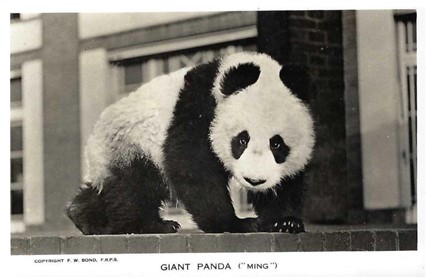


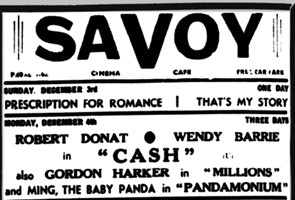
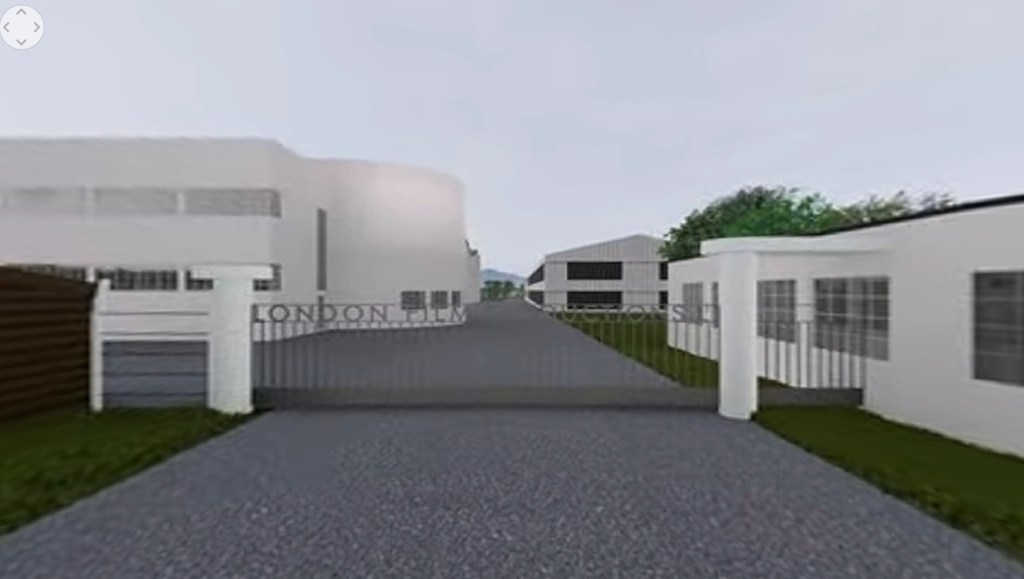



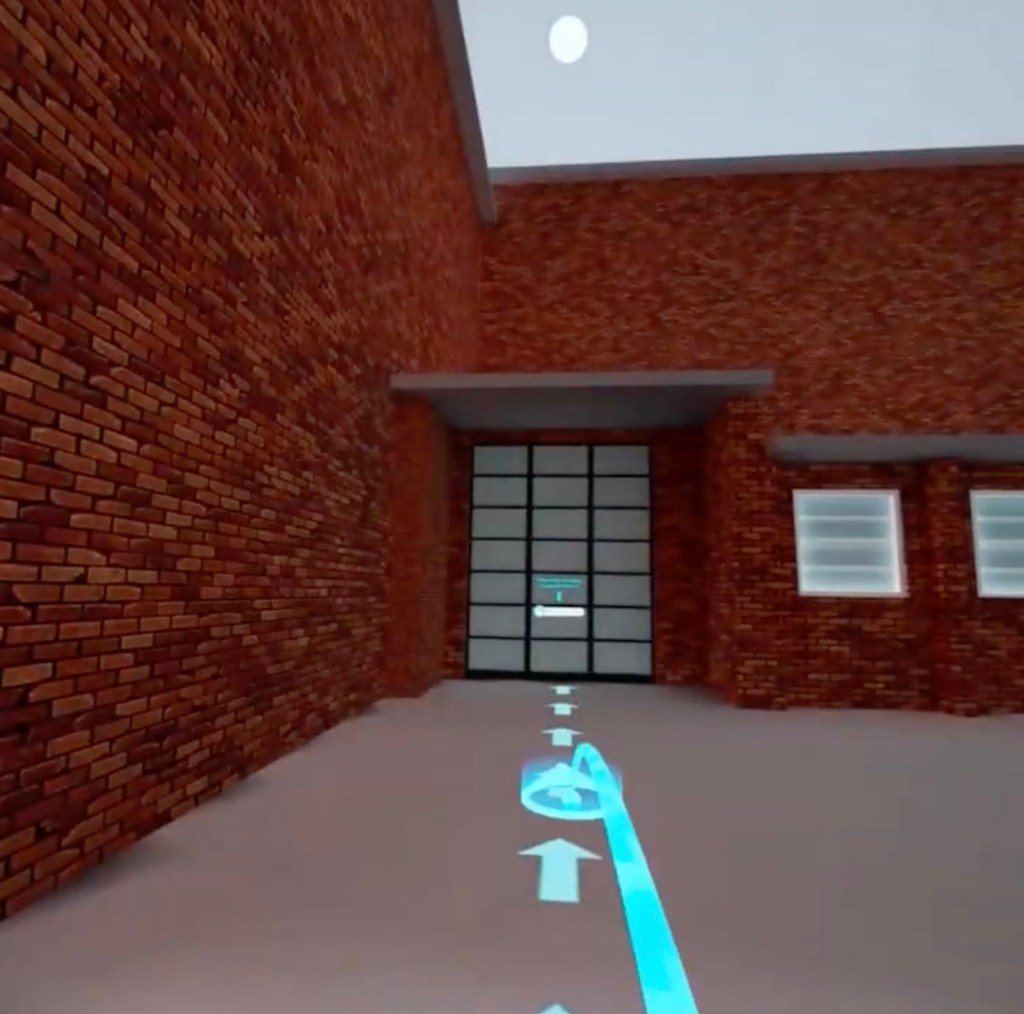


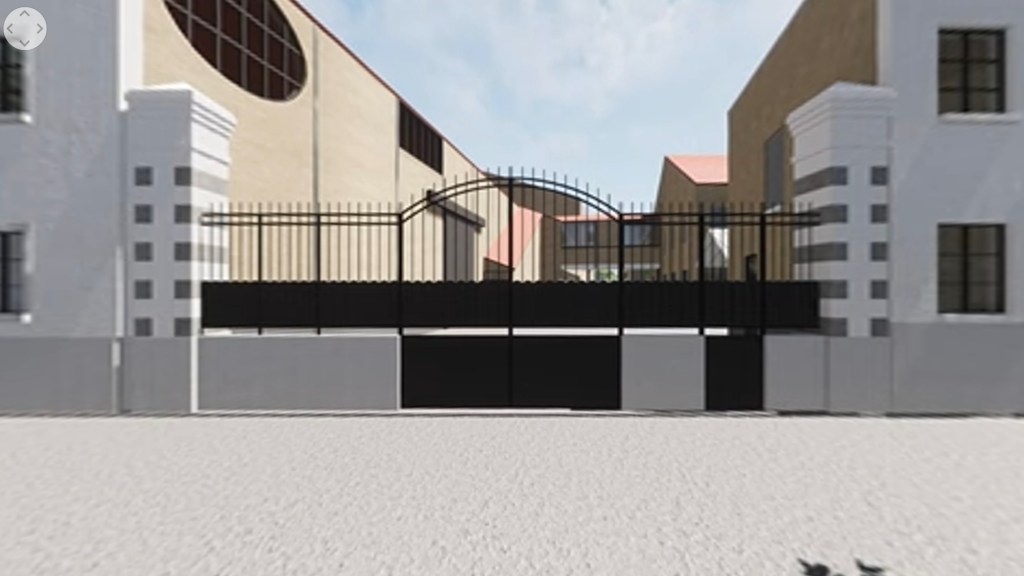
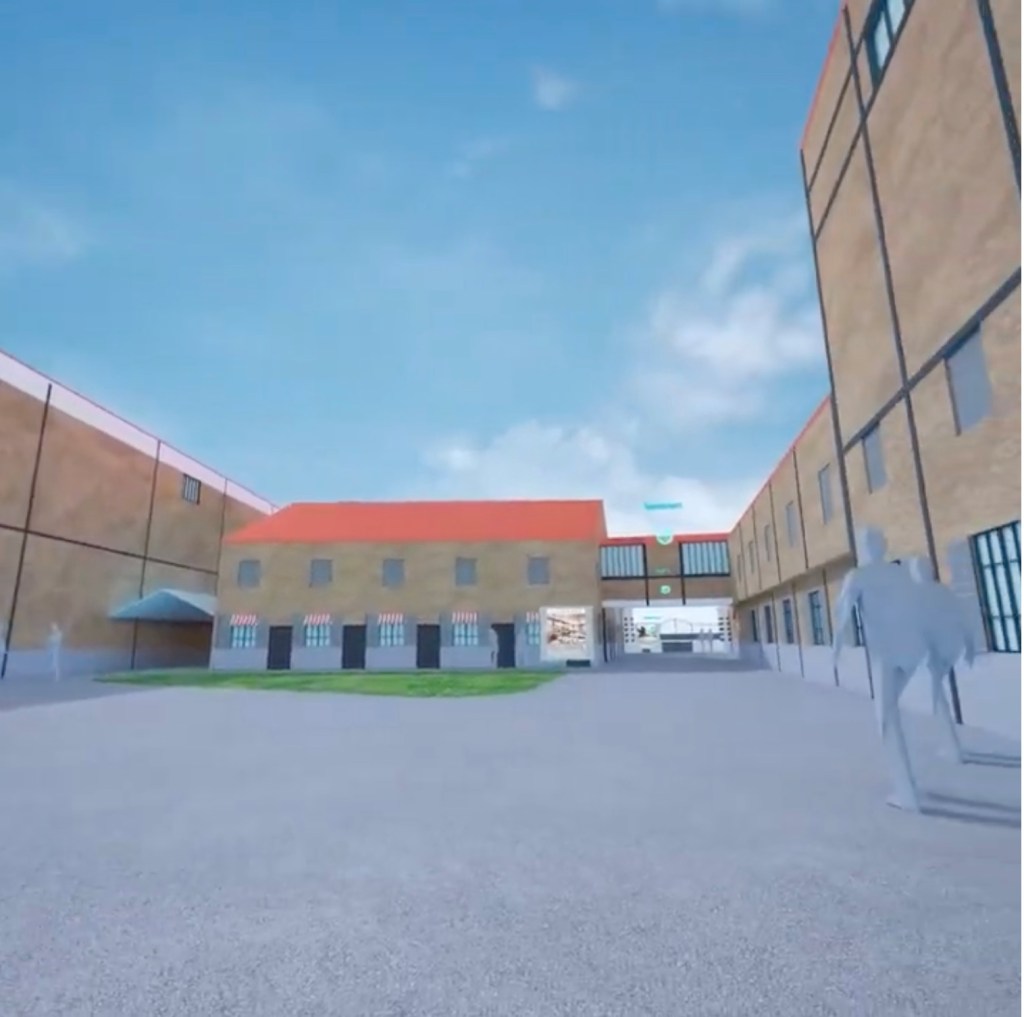


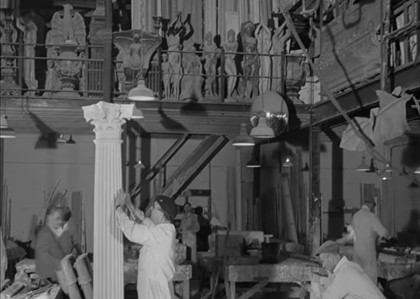
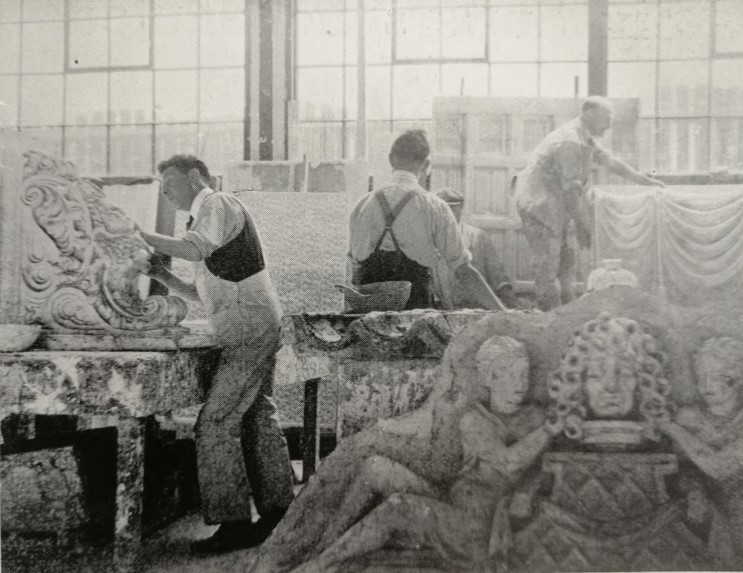


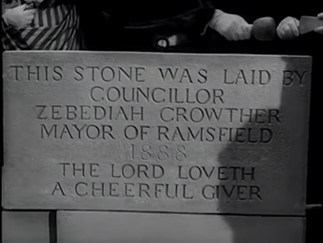


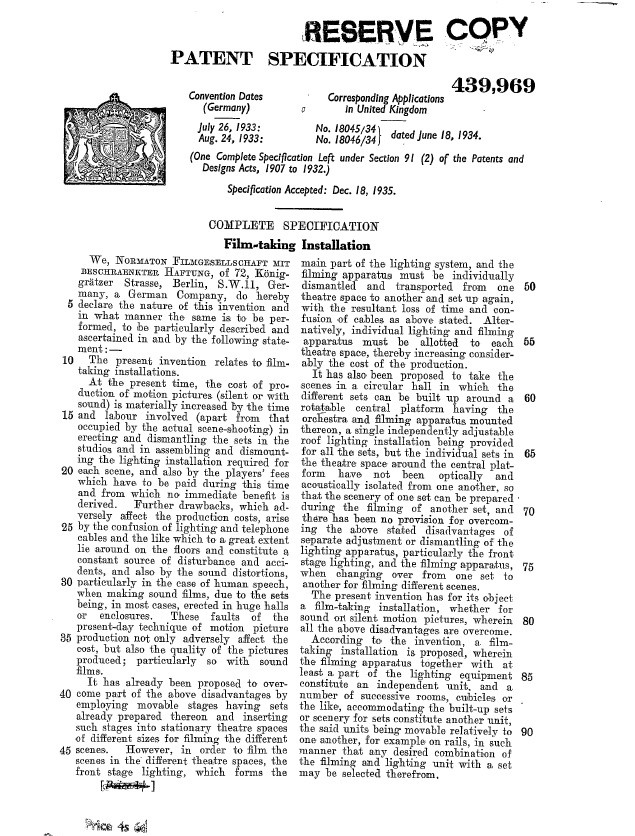
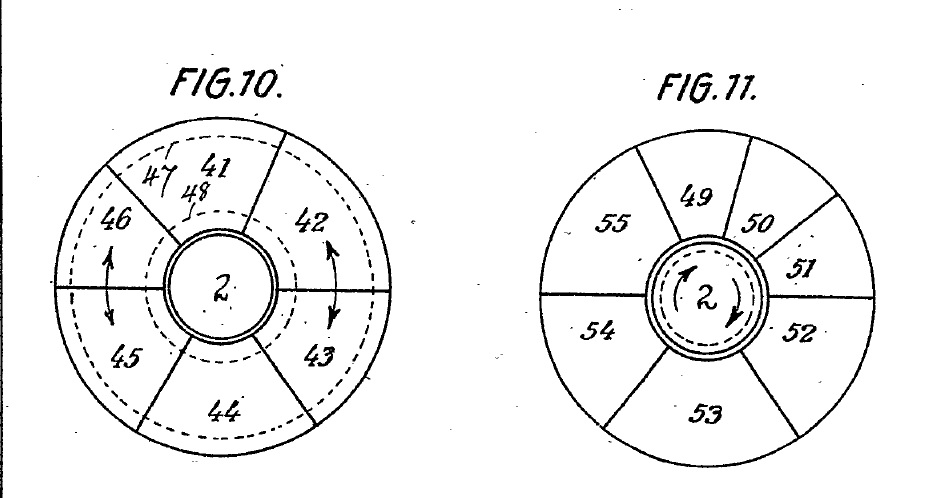

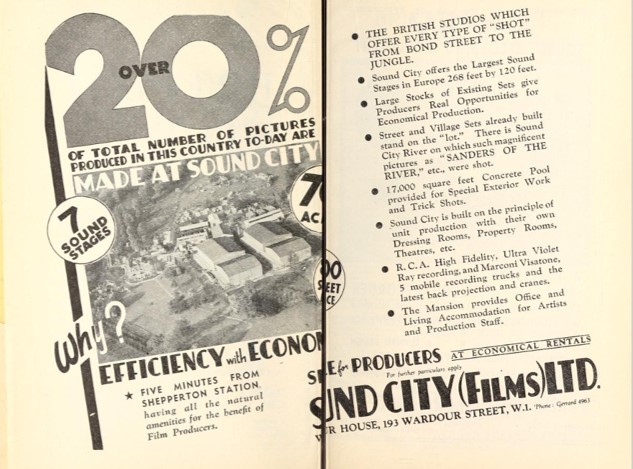


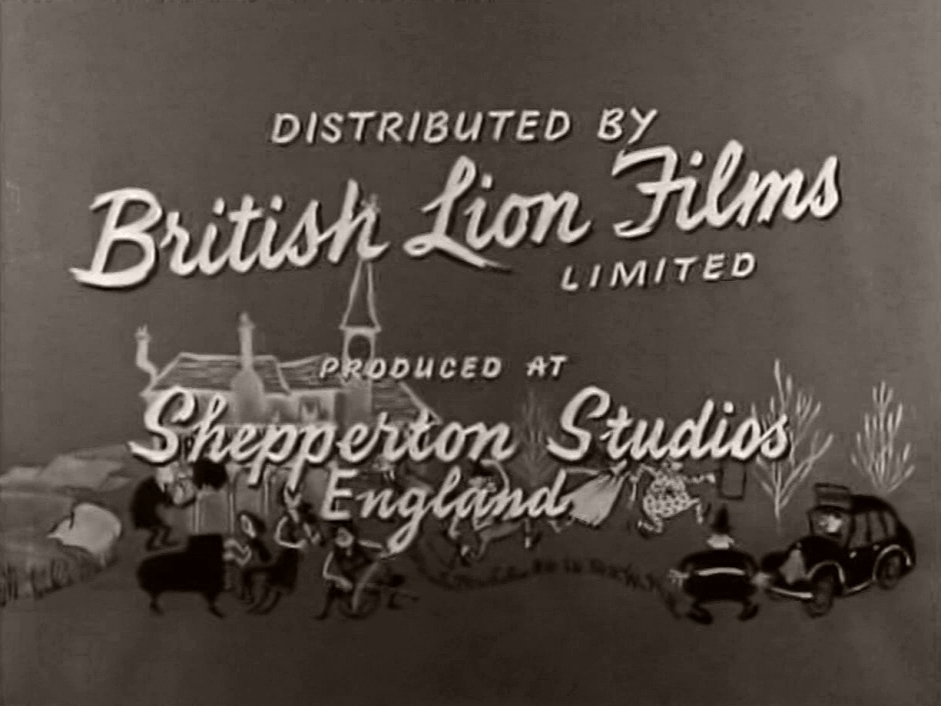


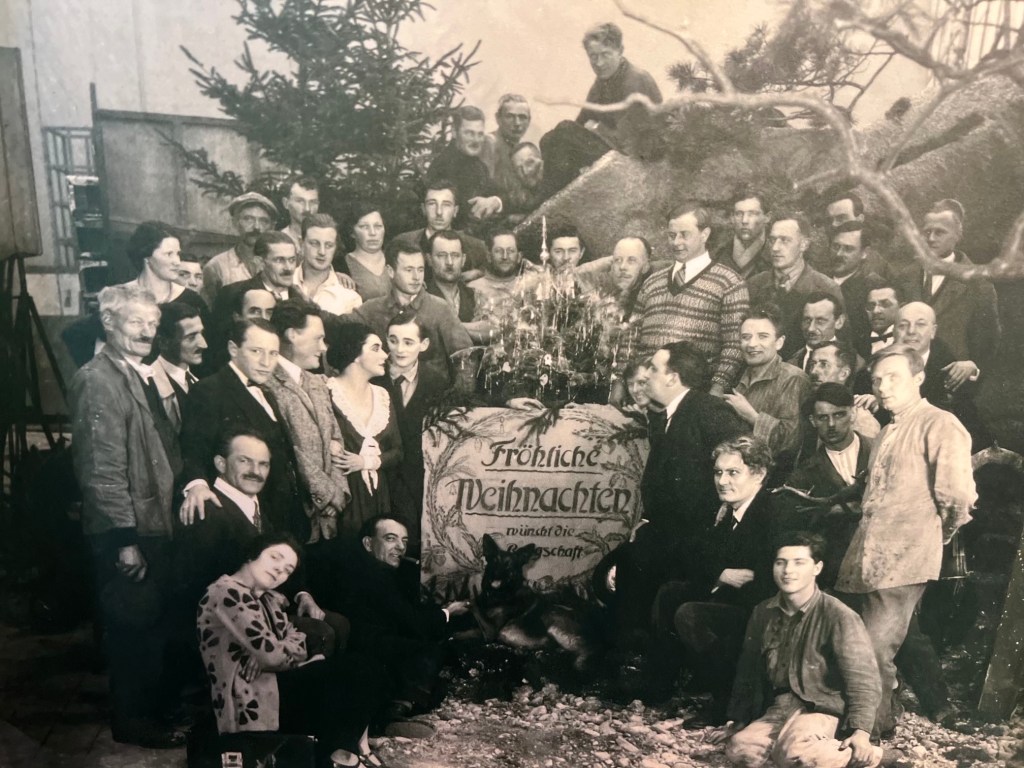
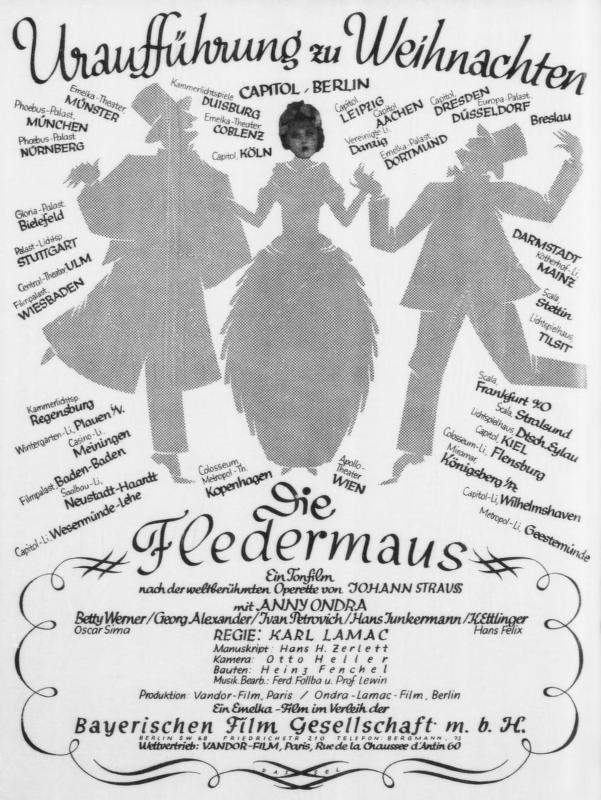
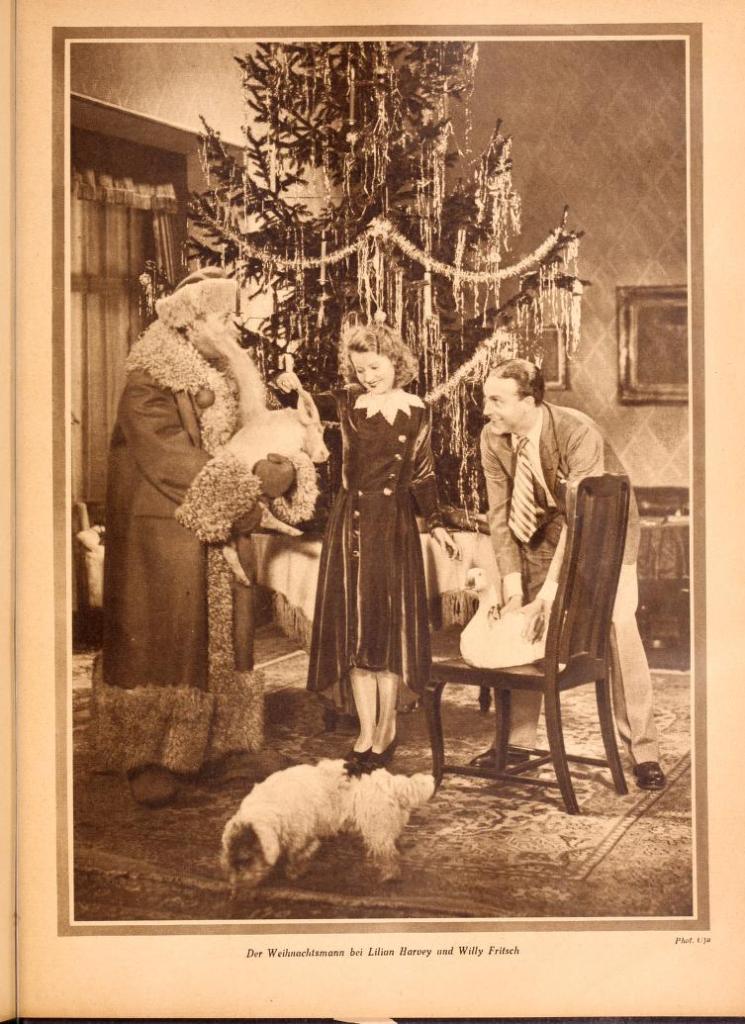
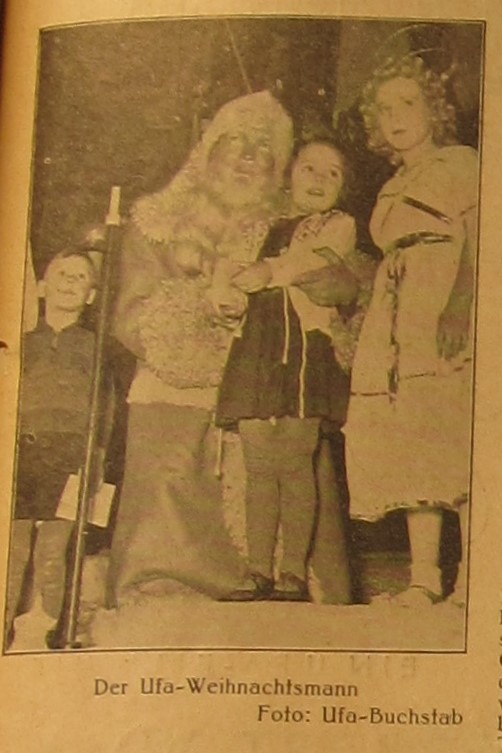

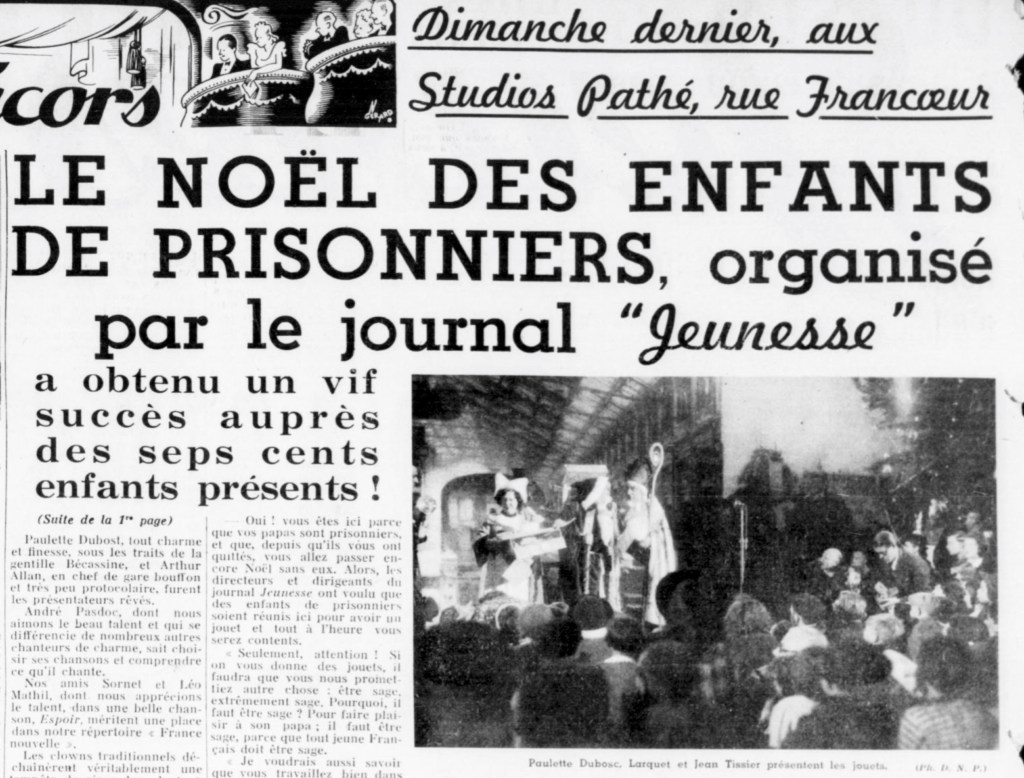

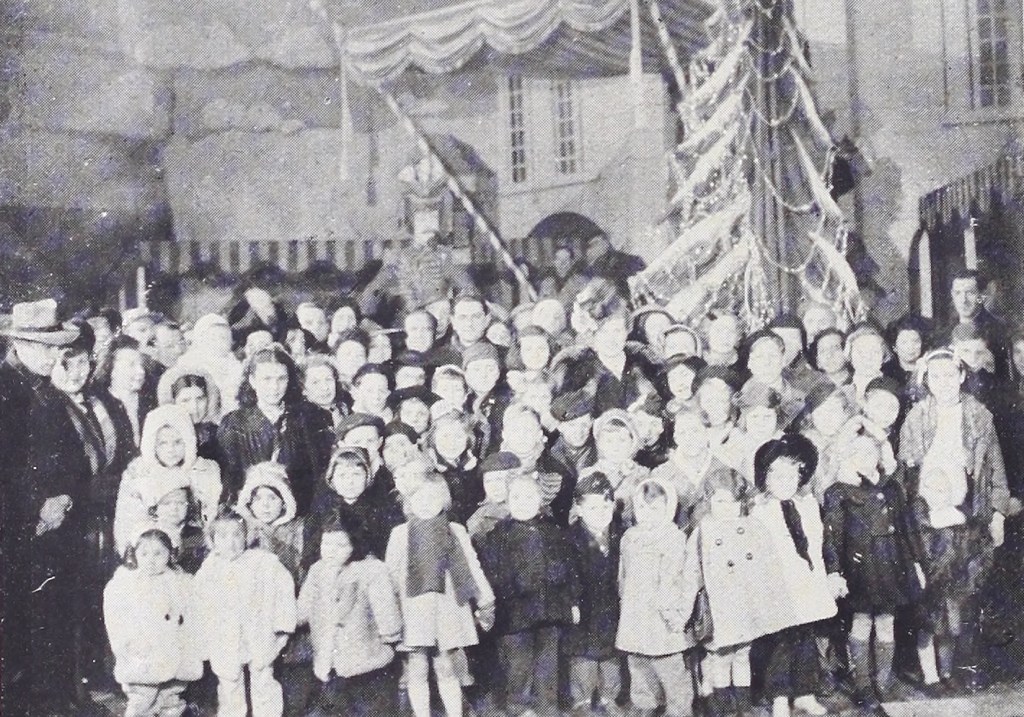


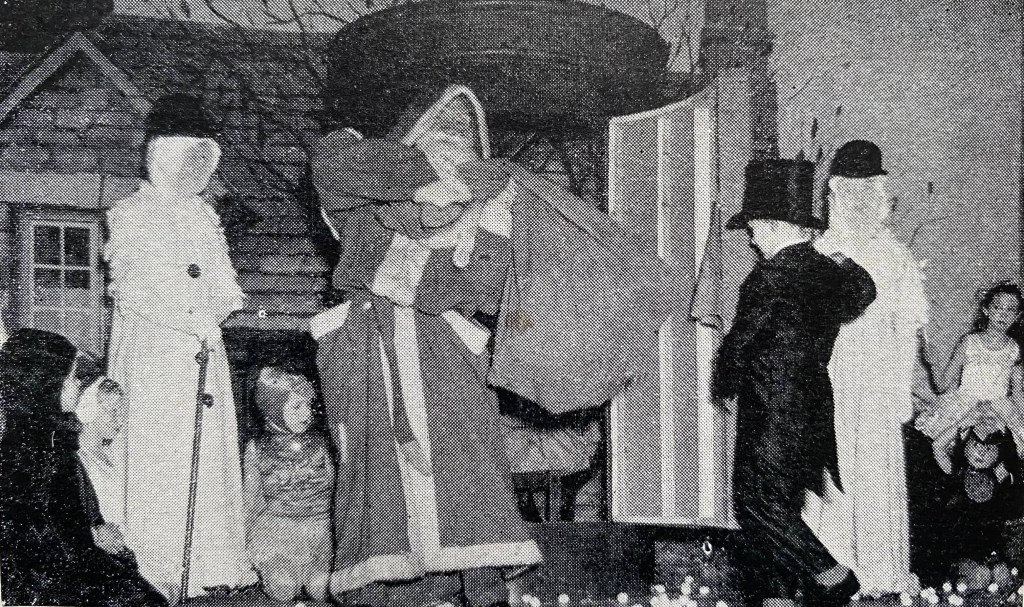


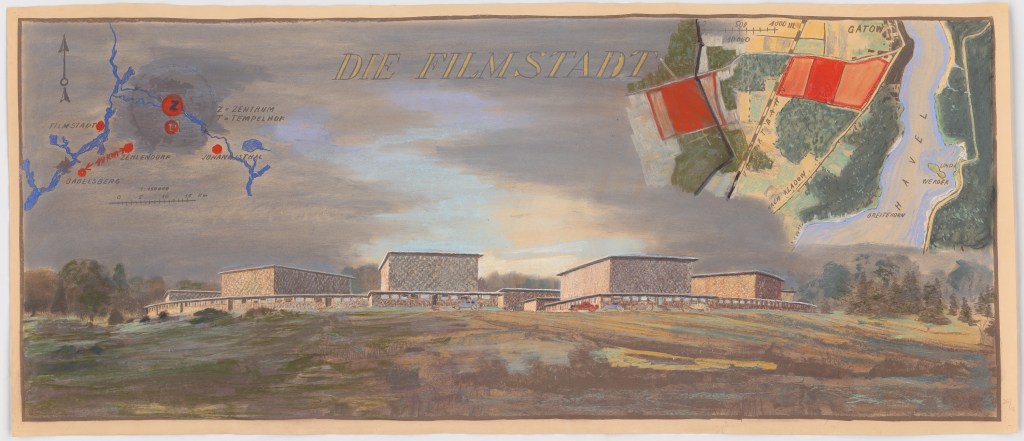


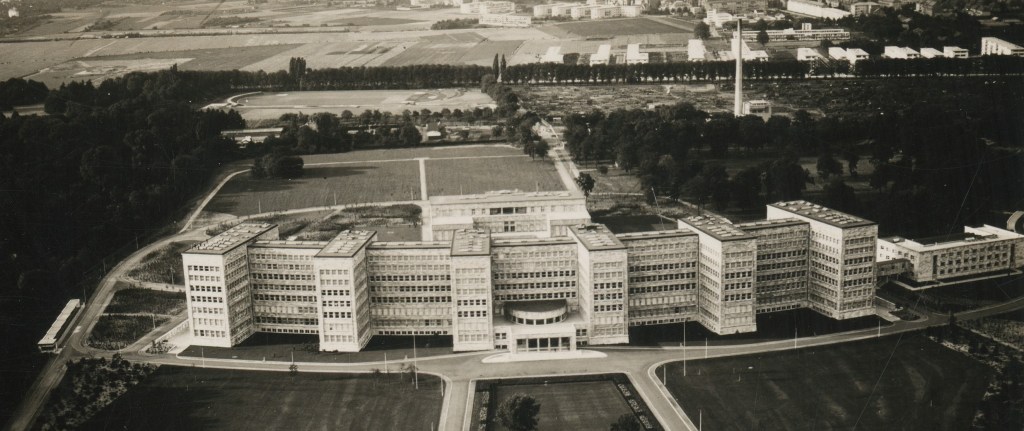
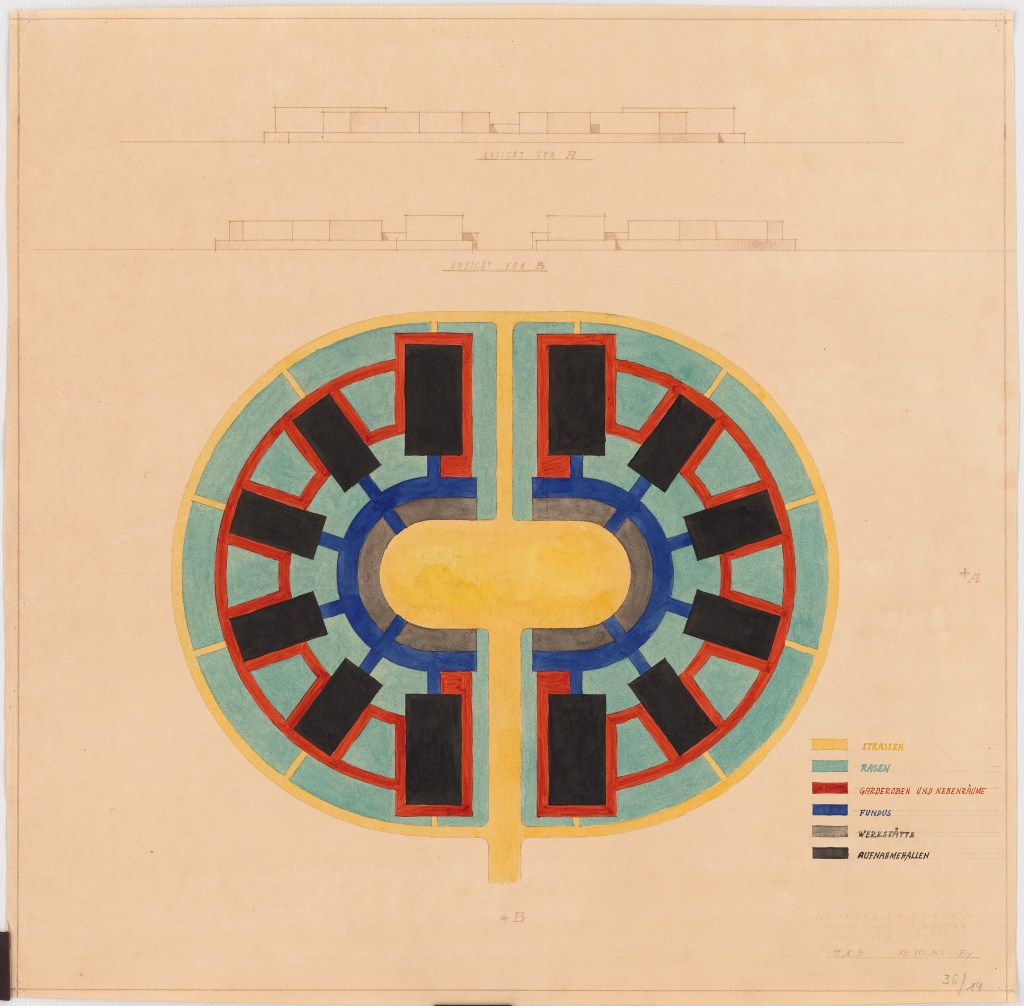


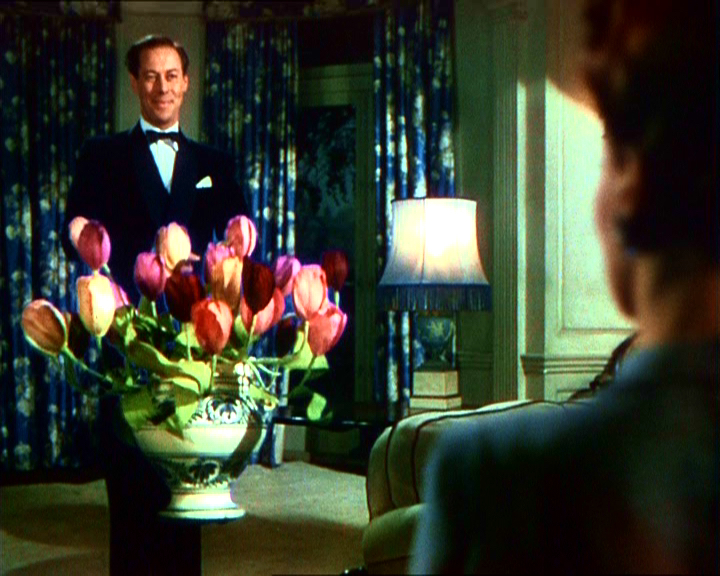


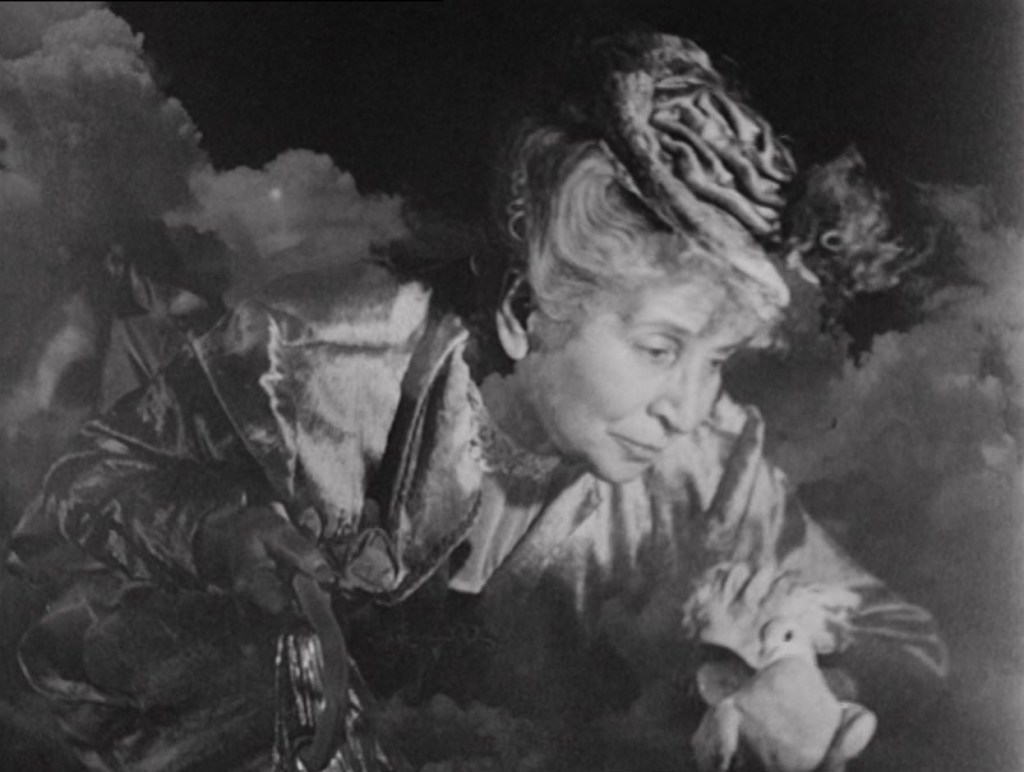


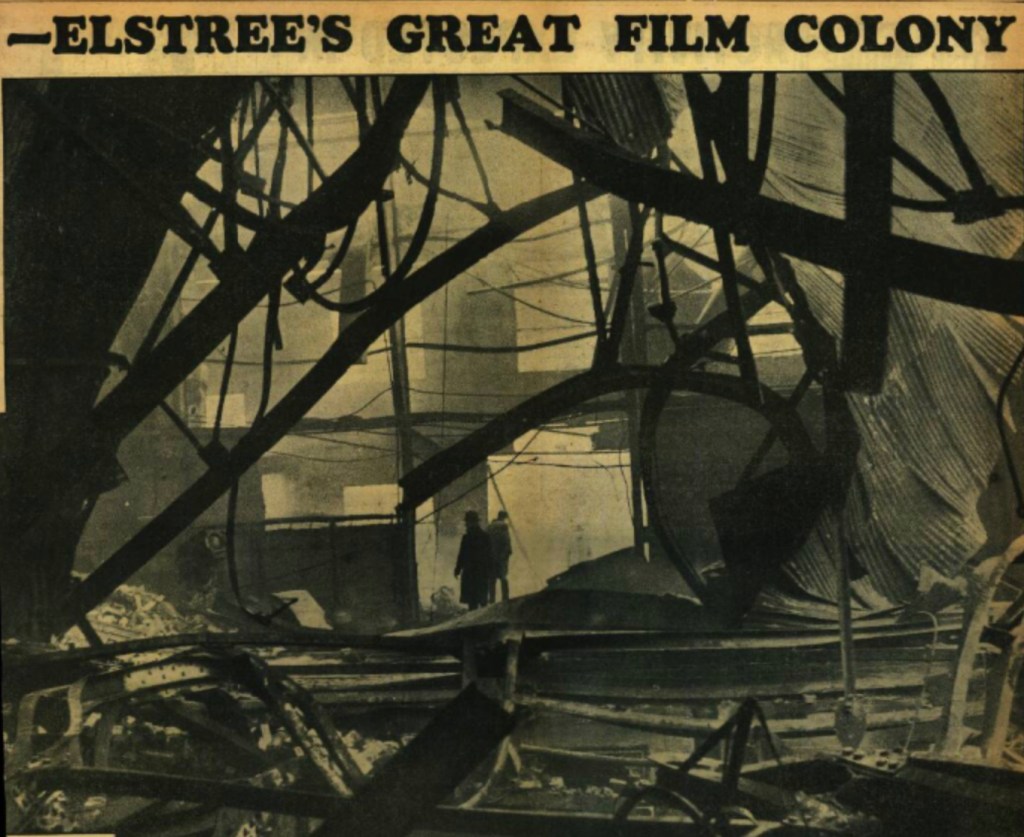
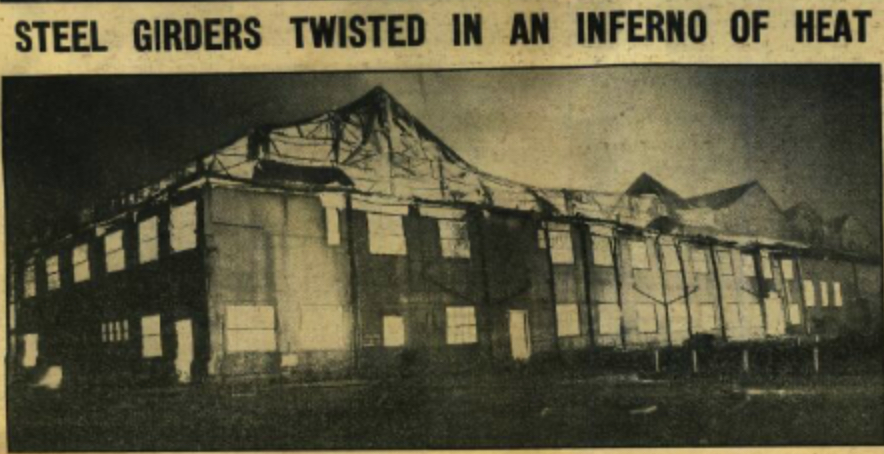
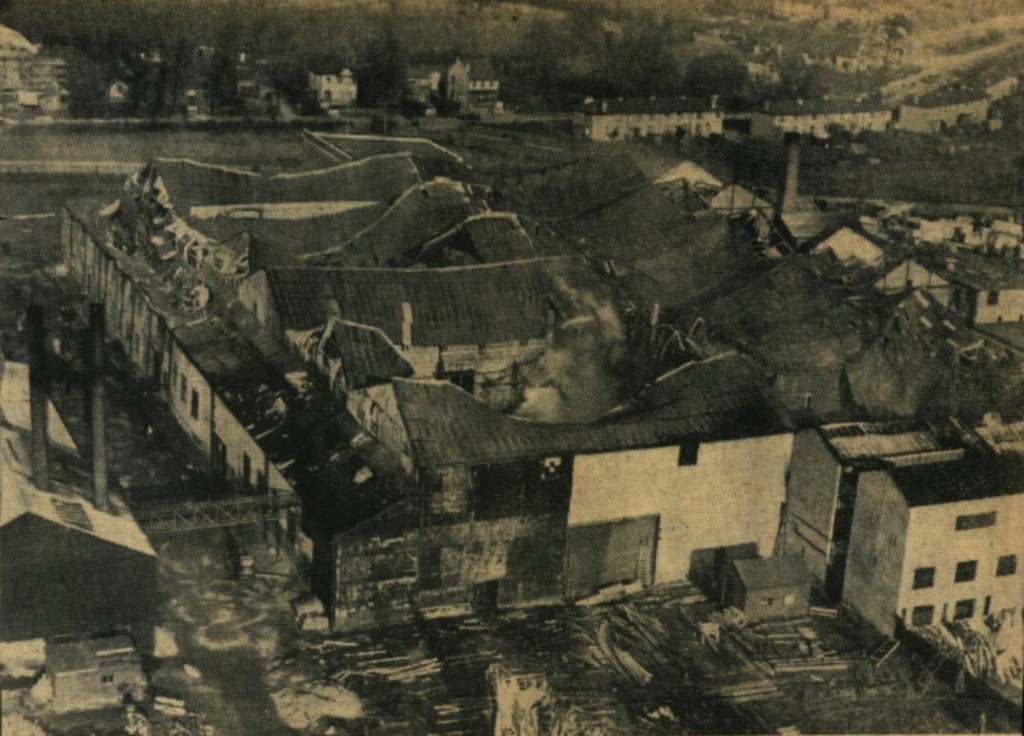


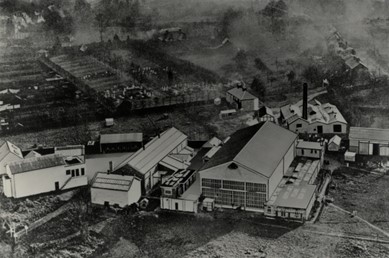
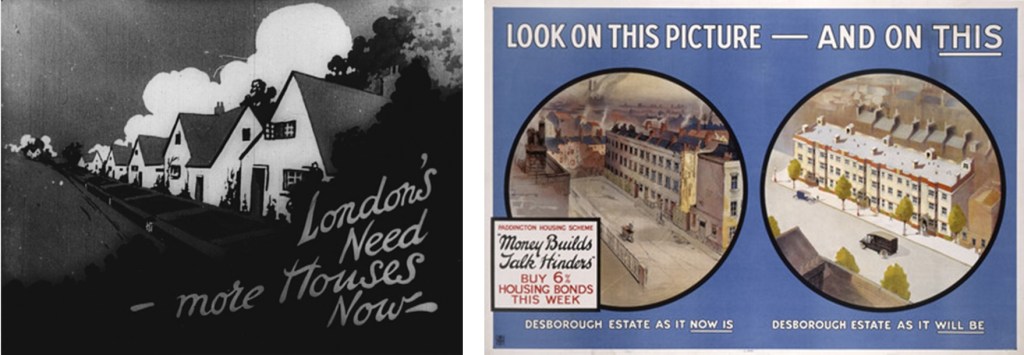
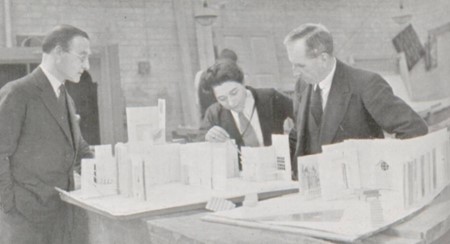
 Studiotec: Film Studios: Infrastructure, Culture, Innovation in Britain, France, Germany and Italy, 1930-60