By Sarah Street
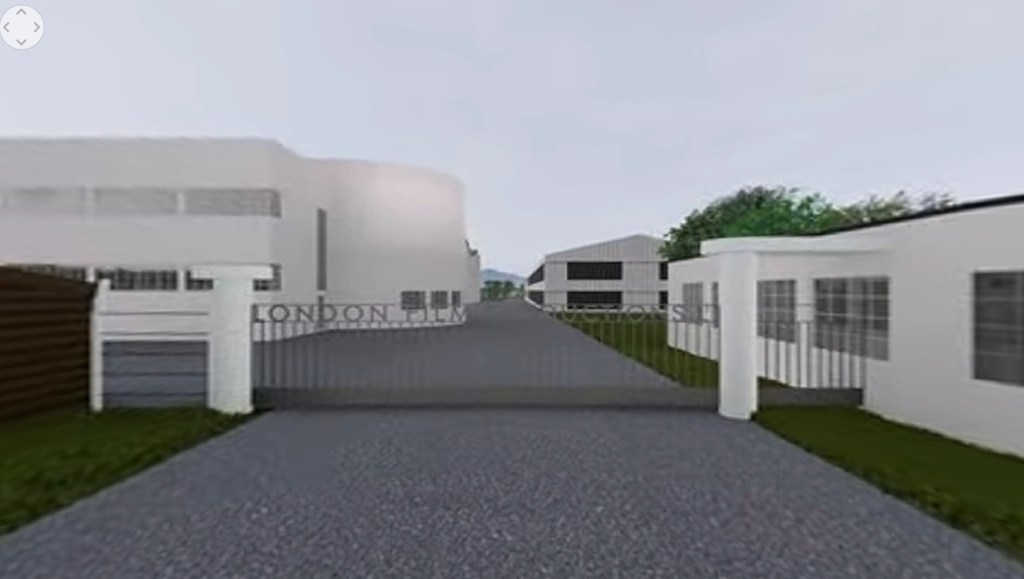
As part of our STUDIOTEC project we’ve created parts of the studios we’ve been researching in VR. This has been an exciting experience, giving participants access to studios in their heyday, introducing the main buildings and peeking inside to see how films were made, and hearing about the people who worked in studios. STUDIOTEC VR focused on four studios: Denham in the UK and Joinville in France which are no longer operational, and Cinecittà in Italy and Babelsberg in Germany which are still producing films. The technology enabled us to explore real-time virtual environments as if we were visiting the studios all those years ago, exploring working spaces where visitors were not normally allowed. As a previous post has shown, film fans were occasionally allowed to see inside the studios so they could more fully appreciate and understand the complex work and technologies which produced cinema, as well as sometimes meeting the stars. Experiencing studios in VR gave us a thrilling sensation of being able to step back in time, travelling through lobbies, stages, corridors to appreciate the sheer scale of their imposing exteriors and intricate interiors. Our research into maps, plans, photos and studio records was used to recreate the studio spaces. A lot of detective work, but we pieced together the info and visited the still existing studios to double-check things if we could. STUDIOTEC’s historians worked closely with our technologist Amy Stone, a Real-Time and Immersive Designer with a background in 3D Design and VR, providing data and voice-overs for the informational audio segments which features in each experience. Through Amy’s amazing work we’ve been able to re-create studios and buildings virtually that no longer exist, as is the case with Denham and Joinville, as well as visit still existing studios to which public access to working spaces is rarely possible.
When the project started, we didn’t know exactly how we were going to devise the VR experience. Dealing with four different countries and studio environments presented both opportunities to experiment but also technical problems. We wanted to explore themes around each studio, and to do this Amy Stone used 360-animations, photography and 3D reconstructions to a deliver a VR experience. Participants enter a ‘home’ space which looks like a cinema lobby, and from this space they choose which of the four experiences they want to enter. When they’ve finished with one, they return to the lobby to select another studio. Travelling between countries and back in time has never been easier.
If you want to go to Denham, you approach the studio from outside to see how impressive the sight of a modern Art Deco building located in the Buckinghamshire countryside would have appeared when the studios were opened in 1936. We’ve even got grazing cows and parked cars for ambience – authentic we promise because we’ve seen the photos.
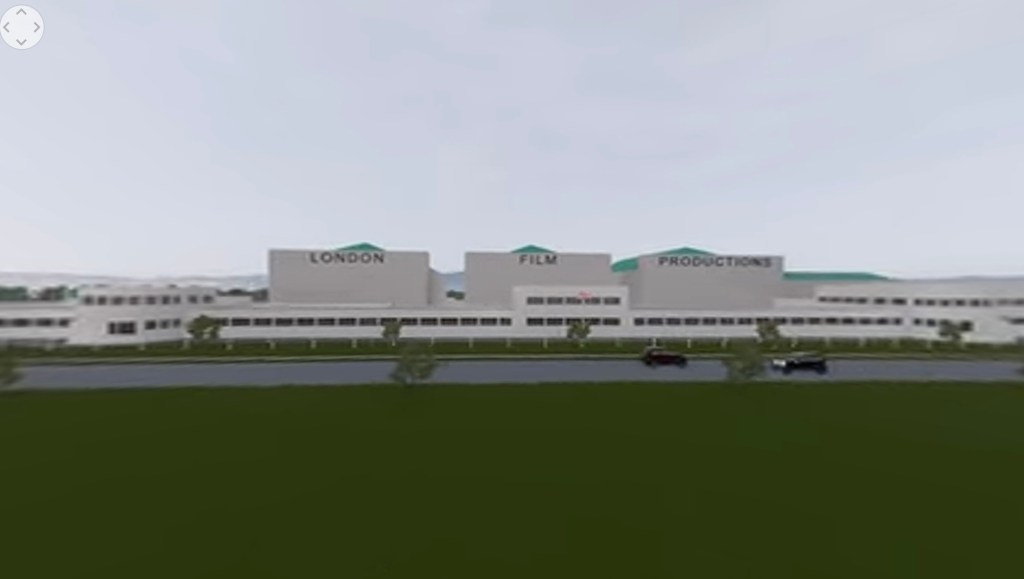
Then you go inside and see the review theatre which allows you to access videos on topics relating to Denham’s activity including A Day at Denham, a documentary made in 1939, that featured in our first blog post. Once inside one of the main stages you learn about key films that were made at Denham throughout its history.

You can wander about the stage where the famous ‘stairway to heaven’ set for A Matter of Life and Death(1946) was shot. The staircase was affectionately known as ‘Ethel’ to those who made the film.

If you then go back to the lobby, you can visit another studio. In Babelsberg, you begin on an elevated tower which enables a bird’s eye perspective of the complex’s various areas which are each described. Then you can go into the Tonkreuz building which was specially designed for sound films. Its distinctive architecture was great to re-create for VR.
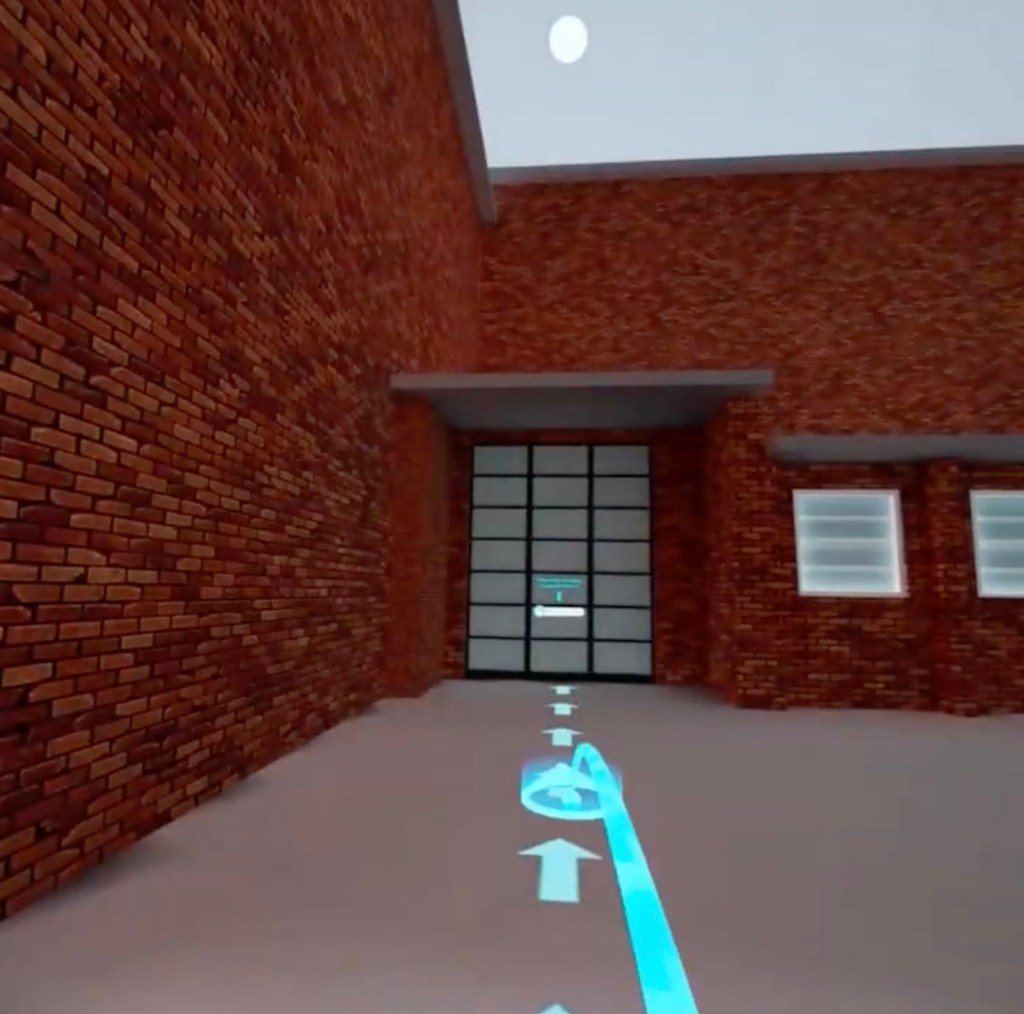
You can see a dressing room, the view of the stage from an upper walkway, and see a how a scene from Viktor und Viktoria (1933) was filmed.


In Cinecittà you begin outside the various locations of the site, learning about each part of the complex and its activities. Information panels provide participants with details about the spaces and films made at Cinecittà. Because it’s still a working studio we were able to match historical photos with those taken recently of the iconic buildings.


You then follow a guided tour of stage 8, internal circulation spaces, visit dressing rooms and see the set for Bellissima (1951).


For Joinville, the evolution of the studios and site can be explored. The history is documented via panels informing participants about key films made at Joinville, as well as the function of various studio spaces. 360-CGI panoramas were created to convey how the studios evolved over time. Over certain time periods buildings fade in and out as a voice-over narrates the story and tells the participant where to look.
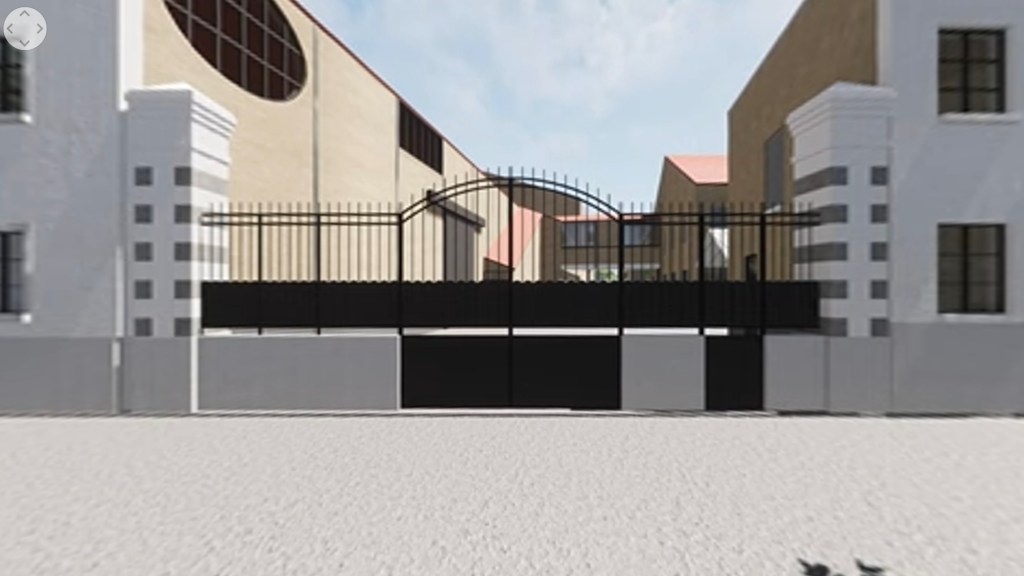
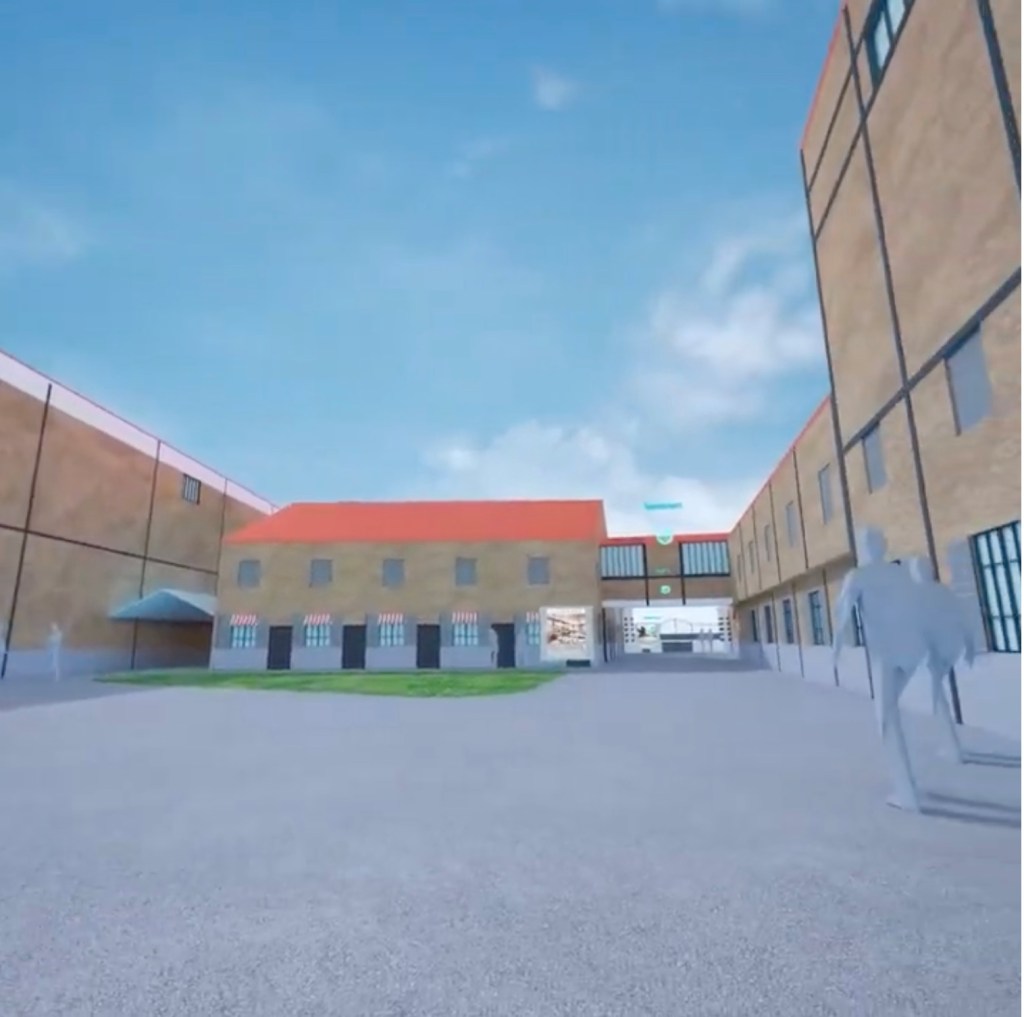
Three of the stages can be visited and the set of Le Quai de Brumes (1938). The stage is shown with lighting enabled, ready for action.

If you have the equipment to view the STUDIOTEC VR experience this can be accessed using a PCVR executable file intended for use with Meta Quest 2 & 3 headsets via the University of Bristol’s Research Data Repository. If you don’t you can get a sense of what we’ve done from videos which can be accessed on YouTube. These give a flavour of what our unique experience provides and how we approached the challenge of accessing the studios through VR. Using VR in this way has been an amazing experience for STUDIOTEC, and we hope what we have done will inspire similar work. Do get in touch if you have any questions or would like to know more about STUDIOTEC VR.
 Studiotec: Film Studios: Infrastructure, Culture, Innovation in Britain, France, Germany and Italy, 1930-60